Artemisia argyi H.Lév. & Vaniot
Summary
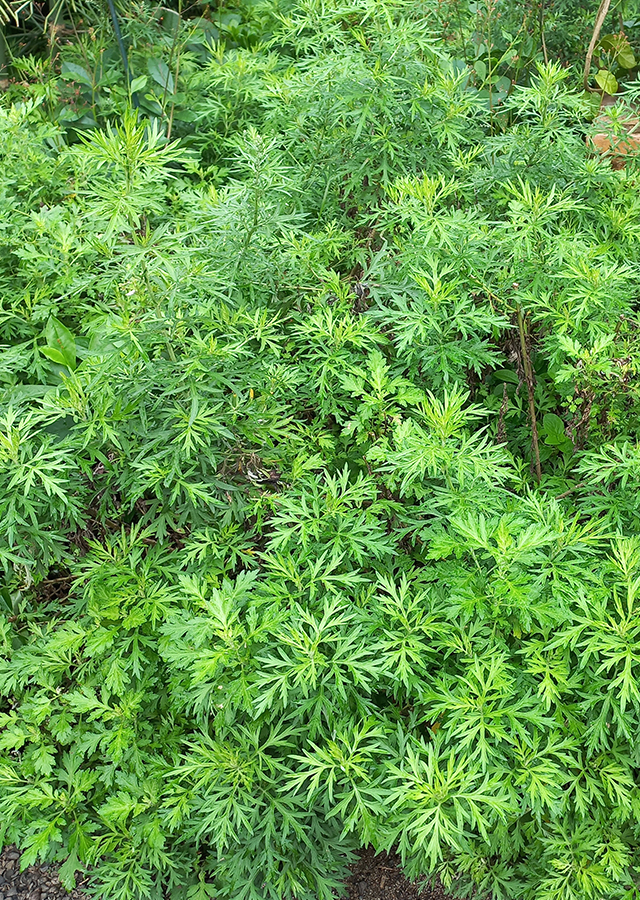
Silvery wormwood (Artemisia argyi) is a perennial herb or subshrub 80-150 cm tall from the Asteraceae family distributed from Siberia through China and Korea. This plant has long been used in traditional Chinese, Japanese, and Korean medicine to treat inflammation and hemorrhage, proven effective against various bacteria such as Staphylococcus aureus. Silvery wormwood is also an important ingredient in traditional anti-inflammatory and hemostatic remedies.
Agroecology
Artemisia argyi grows in well-drained circumneutral to slightly alkaline loamy soil, preferring a sunny position. They tend to live longer, be sturdier, and more aromatic when grown in poor, dry soil.
Morphology
- Roots many laterals, short-branched apically, gray arachnoid-puberulent, highly aromatic.
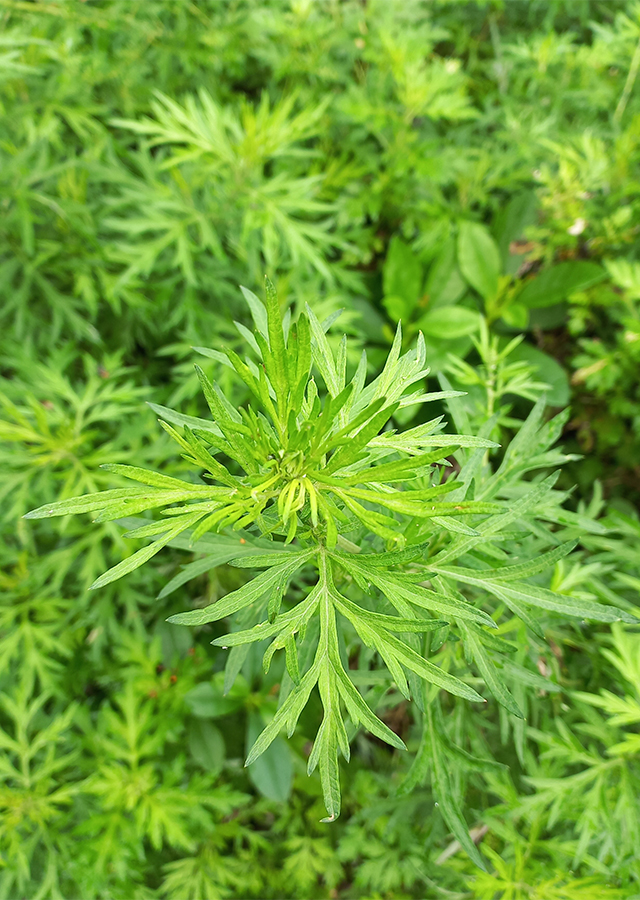
- Leaves petiole 2-3 mm, blade ovate, deltoid-ovate, or subrhombic, 5-8 × 4-7 cm, densely gray arachnoid-tomentose abaxially, puberulent and white-glandular-dotted adaxially, 1(or 2)-pinnatipartite or -parted; segments 2 or 3 pairs, usually serrate, base tapering; abaxial veins prominent. Uppermost leaves and bracts leaf-like pinnatipartite to 3-partite, or entire; bracts elliptic, elliptic-lanceolate, or lanceolate.
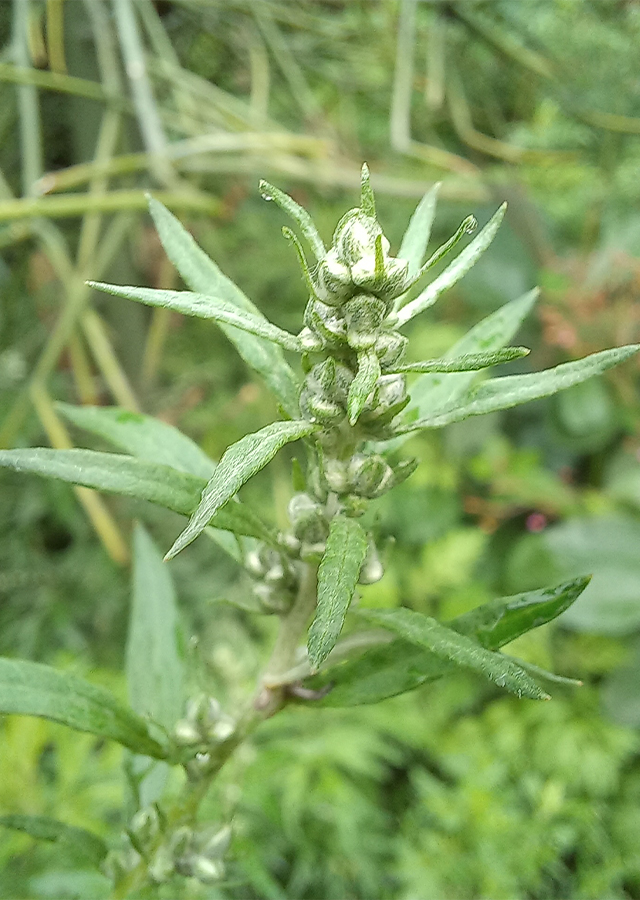
- Flowers inflorescence a narrow panicle with branches up to 10 cm, ascending, the lower ones subtended by leaf-like bracts. Capitula secund, not touching, subsessile. Involucre ellipsoid, 2.5-3 (-3.5) mm in diameter; phyllaries arachnoid-pubescent or glabrous. Marginal female florets 6-10. Disk florets 8-12, bisexual.
- Fruit achenes ovoid-oblong or oblong.
Cultivation
Propagation can be done generatively (seed) and by separating new shoots by cutting them from the root section.
Chemical Content
Flavones, organic acids, terpenes, polysaccharides, coumarins, 1,8-cineole, eupatilin, jaceosidin, and hispidulin.
Benefits
Used in the treatment of infertility, dysfunctional uterine bleeding, dysmenorrhea, cough, bronchitis and asthma, inflammation, stomach ache, hepatitis, and liver cirrhosis, reduces fever, has antibacterial action, effective against Staphylococcus aureus, Bacillus typhi, B. dysenteriae, E. coli, B. subtilis, Pseudomonas, etc. Used in the production of important anti-inflammatory, detoxifying, and hemostatic medicines, has antiseptic, expectorant, and blood-clotting properties.
Local Names
Informasi tidak ditemukan. Butuh penelusuran lebih lanjut.
Traditional Recipes
The following recipes reflect traditional knowledge passed down through generations, not a substitute for professional medical diagnosis or advice. Consult a healthcare provider before use.
1. Fever reducer
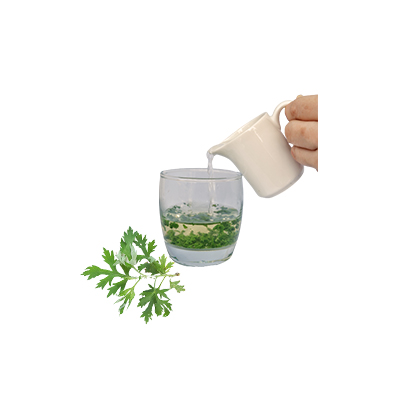
- Prepare an adequate amount of fresh silvery wormwood leaves and wash until clean.
- Mash the leaves then steep in boiling water.
- Let it cool then strain and drink.
2. Cough
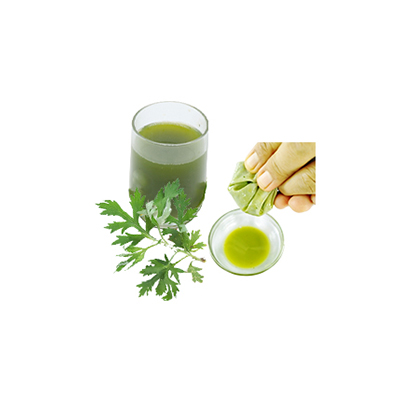
- Take an adequate amount of fresh silvery wormwood leaves and wash until clean.
- Grind the leaves into a paste.
- Squeeze the leaf paste and take the liquid.
- Drink to reduce cough.
Reference Sources
- Royal Botanic Gardens. 2017. Plants of the World Online: Artemisia argyi H.Lév. & Vaniot. http://powo.science.kew.org/taxon/179226-1 . 11-10-2021.
- Useful Temperate Plants Database. 2021. Artemisia argyi. http://temperate.theferns.info/plant/Artemisia+argyi. 11-10-2021.
- Flora of China. Artemisia argyi H. Léveillé & Vaniot. FOC Vol. 20-21 Page 694, 697, 698. http://www.efloras.org/florataxon.aspx?flora_id=2&taxon_id=200023167. 11-10-2021.
- Myoung-Sook Shin, Jaemin Lee, Jin Woo Lee, Se Hoon Park, Il Kyun Lee, Jung A. Choi, Jung Suk Lee, dan Ki Sung Kang. 2021. Anti-Inflammatory Effect of Artemisia argyi on Ethanol-Induced Gastric Ulcer: Analytical, In Vitro and In Vivo Studies for the Identification of Action Mechanism and Active Compounds. Plants 2021, 10, 332.https://doi.org/10.3390/plants10020332 . 11-10-2021.
- Raya Garden. 2021. How to Propgate Artemisia argyi. https://www.rayagarden.com/how-to-garden/propagation-methods-of-artemisia-argyi.html#Artemisia-ArgyiDivision-Propagation. 11-10-2021.