Artemisia vulgaris L.
Summary
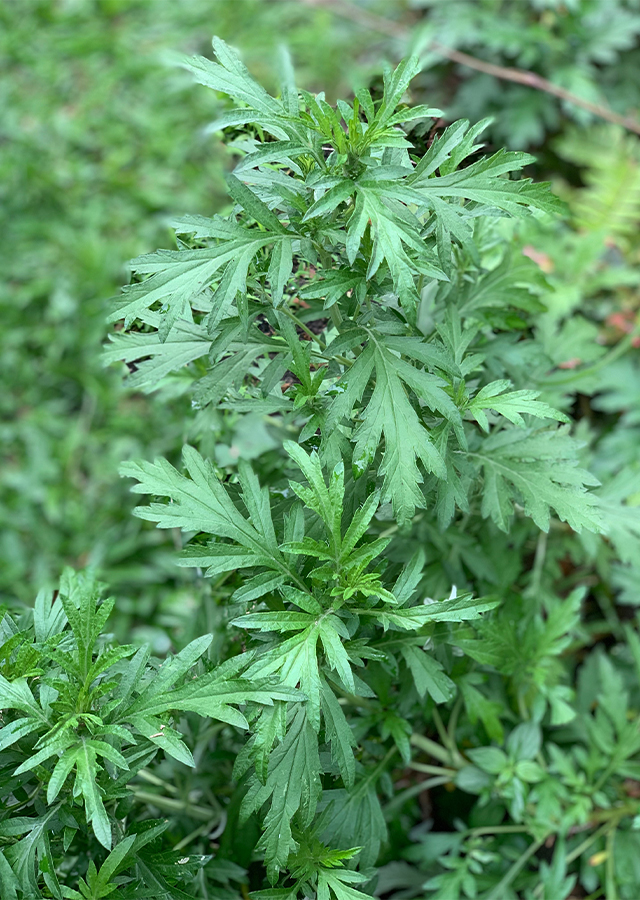
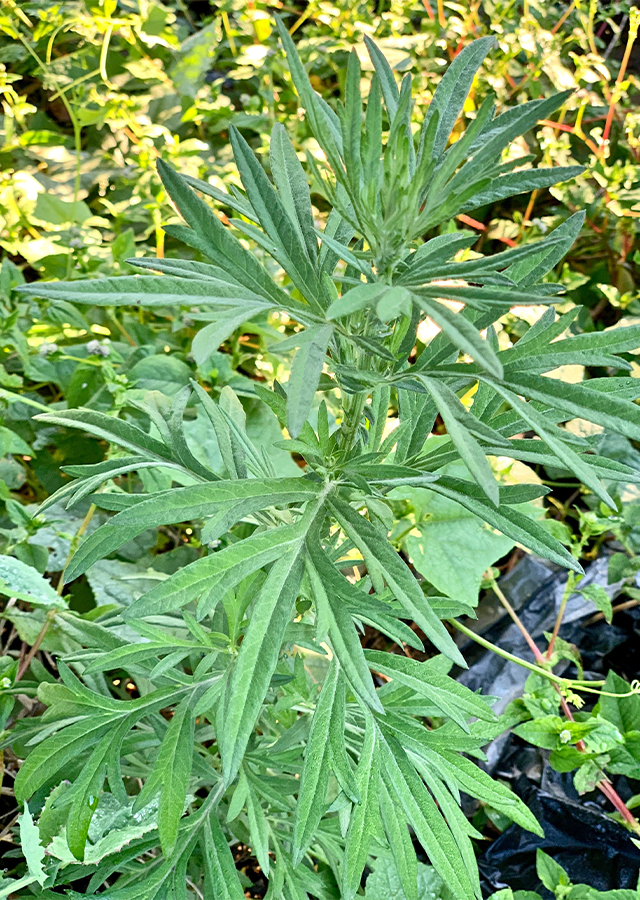
Baru cina or mugwort (Artemisia vulgaris) is an upright herb 60-160 cm tall of the Asteraceae family, originating from China as well as temperate regions of Europe and North Africa. Its distinctively aromatic leaves can be eaten as a fresh vegetable or cooking seasoning. Baru cina is traditionally believed to support women's reproductive health and help relieve menstrual pain.
Agroecology
Grows well in moist soil rich in humus and organic fertilizer, nitrogenous soil (containing a lot of nitrogen), and can live in areas at elevations up to 3,000 m above sea level.
Morphology
- Roots taproot, yellowish-brown in color.
- Stem heavily branched, grooved, and hairy.
- Leaves egg-shaped, palmately lobed edges, tapering tip, both leaf surfaces finely hairy, green in color, underside whiter.
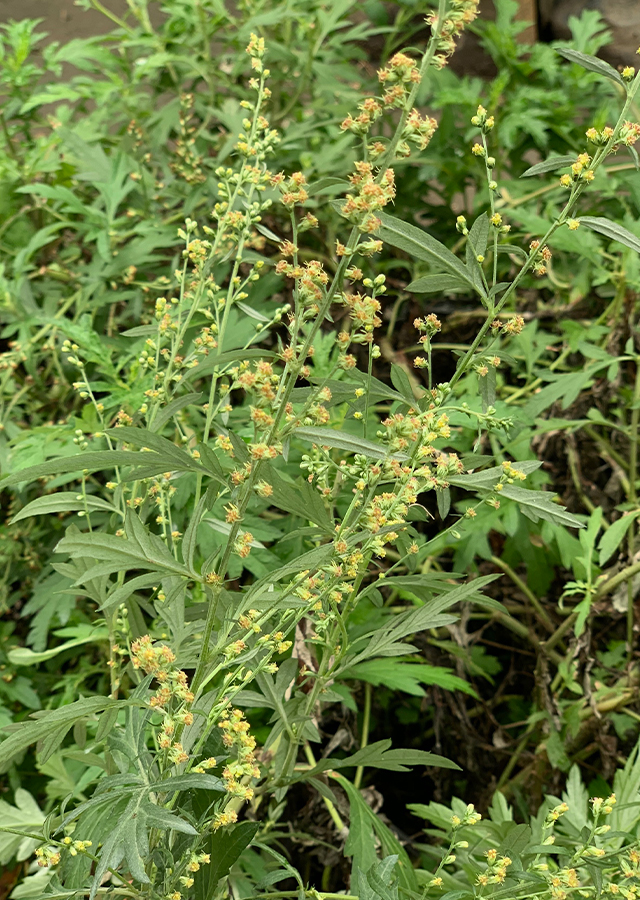
- Flowers compound small light yellow, emerging from leaf axils and stalk tips, head-shaped, growing drooping.
- Fruit small, brown in color, needle-shaped.
Cultivation
Propagated vegetatively (basal cuttings/root cuttings) as well as generatively (seed).
Chemical Content
Essential oils, alpha-amyrin, fernenol, dehydeomatricaria ester, cineole, terpinen-4-ol, 1-quebrachitol, inulin (artemose), tannins, oxytocin, yomogialcohol, ridentin, scopoletin, isoscopoletin.
Benefits
Supports women's reproductive health, epilepsy remedy, addresses menstrual pain, vaginal discharge, prolonged fatigue, depression, restlessness, insomnia, anxiety, treats wounds, swelling, canker sores, low libido. Has anticancer, antimalarial, and anti-inflammatory activity.
Simplisia
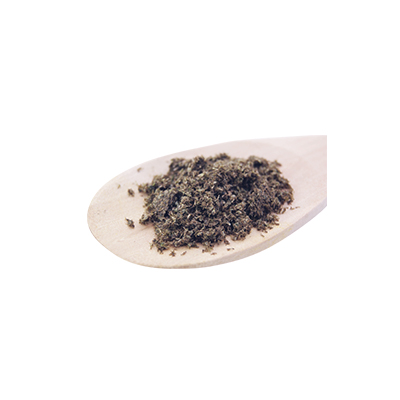
- Wash baru cina leaves thoroughly with running water then drain.
- Dry in a drying cabinet (temperature ±50 °C), until dry.
- Once dry, grind into powder.
- Put the dried material into a closed container and store at room temperature.
Local Names
Daun sundamala, Daun manis (Malay), Beungkar, Kucicing (Sunda), Suket gajahan, Rumput gajah (Central Java), Kolo (Halmahera), Goro-goro cina (Ternate).
Traditional Recipes
The following recipes reflect traditional knowledge passed down through generations, not a substitute for professional medical diagnosis or advice. Consult a healthcare provider before use.
1. Low Libido
- Take 15–45 g baru cina seeds.
- Grind the seeds until fine.
- Consume directly.
2. Epilepsy
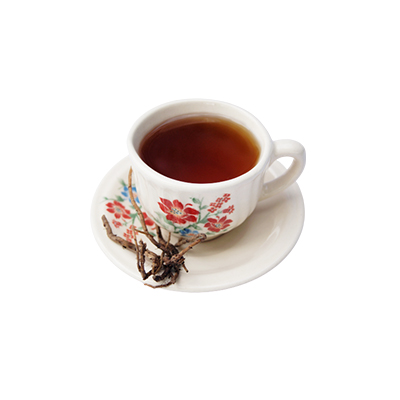
- Prepare 1 handful of baru cina root, 1 thumb-segment of ginger, 1 thumb-segment of palm sugar, 4 glasses of water.
- Boil all ingredients until it boils and 2 glasses of water remain.
- Drink 2 glasses a day, 1 glass each time.
Reference Sources
- Chevallier, Andrew. (2016). Encyclopedia of Herbal Medicine, Third Edition. United State. 173.
- Nyis.info (2019). Mugwort. http://nyis.info/invasive_species/mugwort-draft/ 16-07-2020.
- El-Sahhar,K.F., Nassar, Rania M,& Farag, Hend M., (2010), MORPHOLOGICAL AND ANATOMICAL STUDIES OF Artemisia vulgaris L. (ASTERACEAE).http://www.jofamericanscience.org/journals/am-sci/am0609/91_3639am0609_806_814.pdf 16-07-2020.
- StuartXchange. (2016). Philippine Medicinal Plants. Damong maria. http://stuartxchange.com/Damong.html 05-02-2021.
- GlobinMed. (No date). Artemisia vulgaris L. https://www.globinmed.com/index.php?option=com_content&view=article&id=106288:artemisia-vulgaris-l&catid=286&Itemid=357 05-02-2021.
- Halina Ekiert 1, al. (2020). Significance of Artemisia vulgaris L. (Common Mugwort) in the History of Medicine and Its Possible Contemporary Applications Substantiated by Phytochemical and Pharmacological Studies.pdf 16-07-2020.
- Badrunasar Anas, Santoso Harry Budi . 2017. Tumbuhan Liar Berkhasiat Obat. Forda Press, Jakarta.