Artocarpus lacucha Buch.-Ham.
Summary
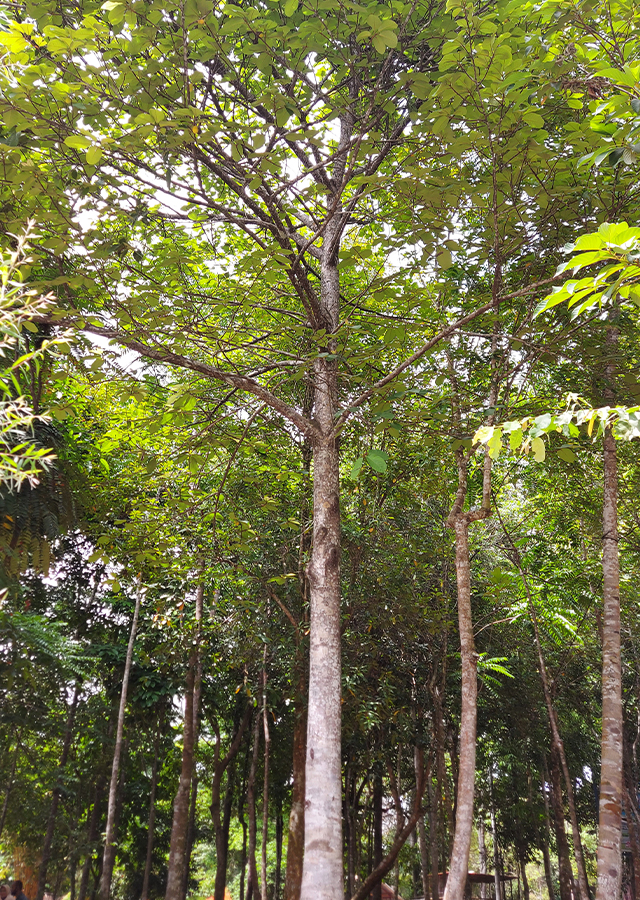
Mobe (Artocarpus lacucha) is a tree up to 15-18 meters tall of the Moraceae family, commonly found in forests of Tapanuli, North Sumatra, and used as a seasoning in signature Batak Toba dishes. Its wood and root produce a yellow textile dye, while its heartwood extract shows potential as a natural skin whitener. Mobe is traditionally believed to treat stomach ache, tapeworm infection, and constipation.
Agroecology
Mobe is commonly found in tropical regions, at elevations of 0-1,300 m above sea level. Prefers places with well-drained soil conditions, annual temperature 22-32°C, rainfall 1,500-3,000 mm/year, pH 5-6.5.
Morphology
- Stem rough bark, twigs covered with pale brown to velvet-like yellow hair.
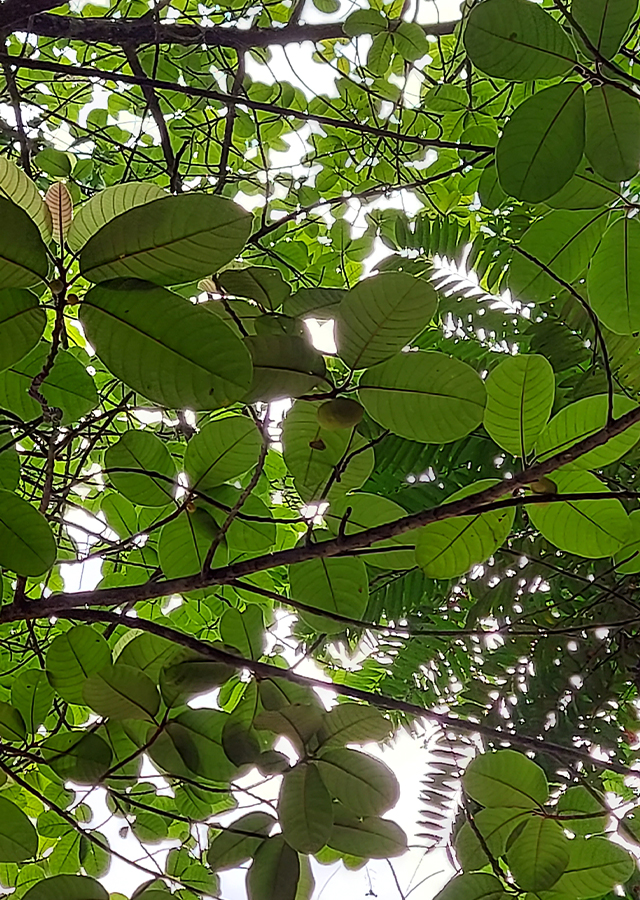
- Leaves single, oval-elliptical shaped, tapering tip and base, pinnate vein arrangement, finely and densely hairy surface, flat edges and stiff surface, large in size, 10-30 cm long, 5-15 cm wide, upper surface green, underside brownish.
- Flowers small, male flowers yellowish-orange, while female flowers reddish in color.
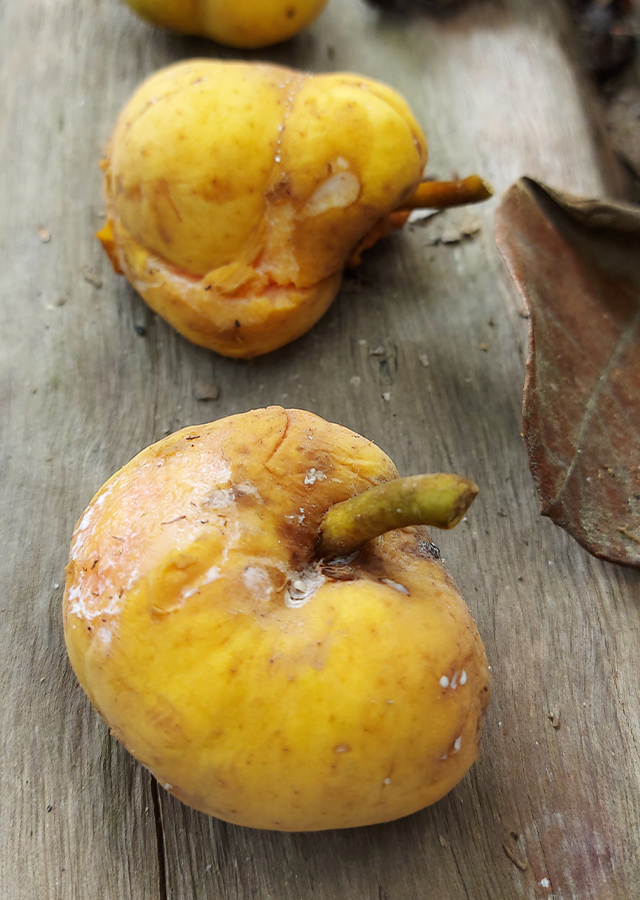
- Fruit irregularly round, sweet-sour taste, green when young turning yellow when ripe then pink, 5-10 cm in diameter.
- Seeds irregular shaped, covered with a thin white skin.
Cultivation
- Propagated using seed and root cuttings.
- Root cuttings 5 cm long, minimum 3 buds.
Chemical Content
Flavonoid, phenolic acid, aryl-benzofuran, stilbenoid, xanthone phenolic derivatives, tannin, glycoside, saponin, steroid/triterpenoid, artocarpin, norartocarpin, norcycloartocarpin, cycloartocarpin, resorcinol, oxyresveratrol.
Benefits
Treats stomach ache, headache, tapeworm infection, lower back pain, constipation, skin disease, antiviral, antitumor, anti-inflammatory, and anticancer.
Simplisia
- Pick fresh, non-rotten mobe leaves.
- Wash thoroughly with running water then drain.
- Slice thinly and air-dry in the shade for 7 days.
- Grind the dried leaves and sift using a 40 mesh sieve.
- Store the simplisia in a clean, closed container at room temperature.
Local Names
Dadak (Dayak), Lakuca.
Traditional Recipes
The following recipes reflect traditional knowledge passed down through generations, not a substitute for professional medical diagnosis or advice. Consult a healthcare provider before use.
1. Stomach ache
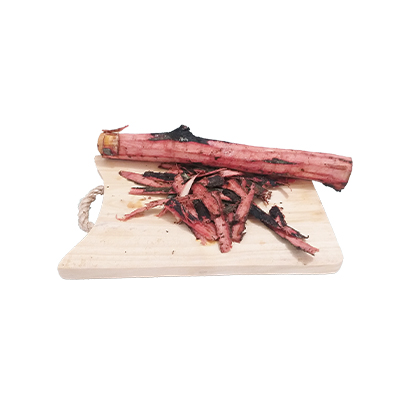
- Prepare mobe bark.
- Wash thoroughly with running water.
- Bruise the material then apply to the stomach.
Reference Sources
- Badan Penelitian dan Pengembangan Kesehatan. 1997. nventaris Tanaman Obat Indonesia (IV). Departmen Kesehatan Badan Penelitian dan Pengembangan Kesehatan.