Aster tataricus L.f.
Summary
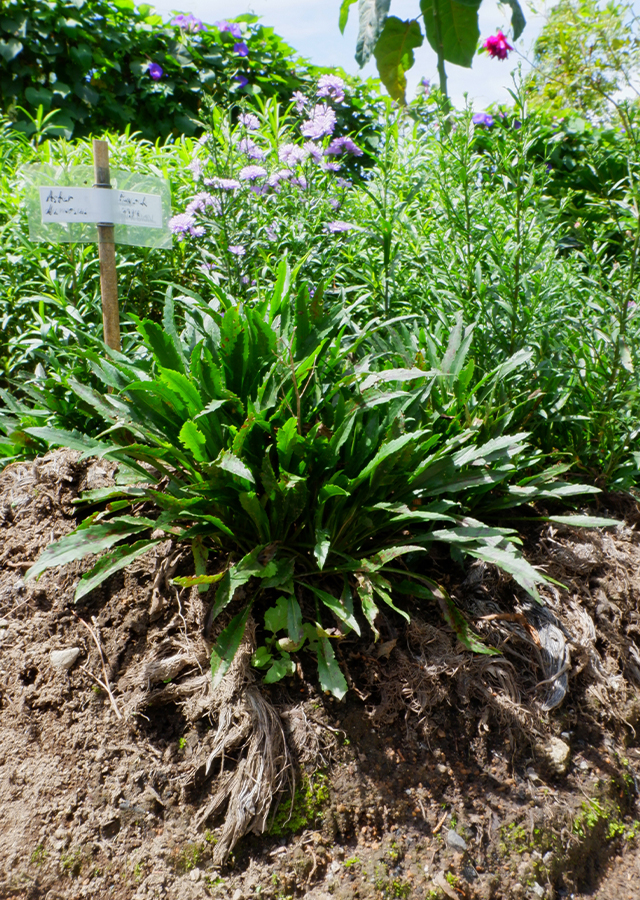
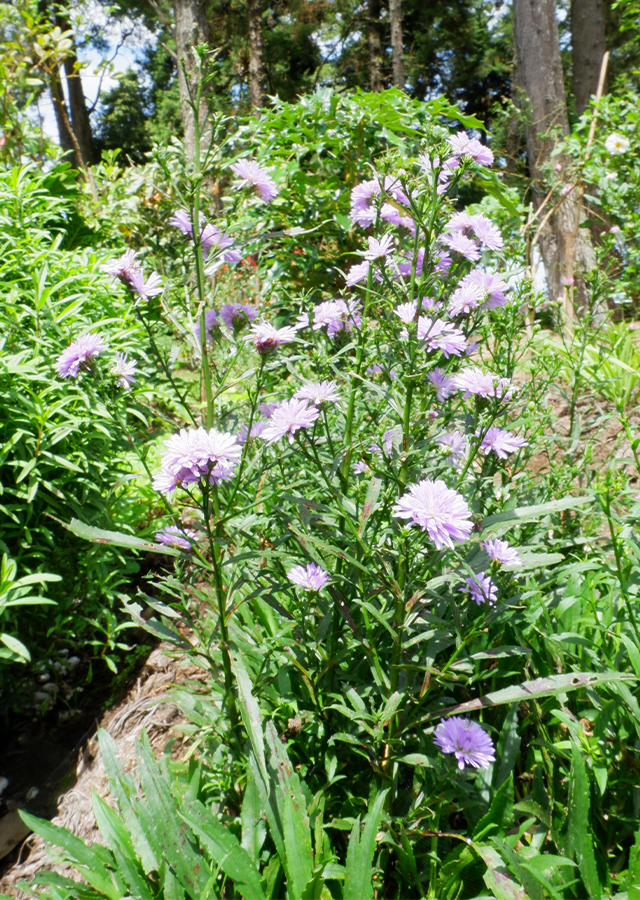
Aster tataricus or bunga pikok is native to Siberia and spread to Mongolia, China, Japan, and Korea. Its root, known in traditional Chinese medicine as zi wan, has long been used to address respiratory disorders, while its leaves are often sold as food in Korean markets. Besides its medicinal value, this plant is also occasionally cultivated as a garden ornamental.
Agroecology
Bunga pikok can survive at elevations of 400-3,300 m asl and temperatures down to at least -15°C. Succeeds in most good garden soils, preferring those that are well-drained and moisture-retentive. Prefers a sunny position, but also succeeds in partial shade. The plant can suffer from mildew when grown in dry conditions.
Morphology
- Roots have a fleshy rhizome, becoming somewhat woody with age, with abundant fibrous roots.
- Stem 1-3+, upright, sparsely to densely strigillose (distally).
- Leaves basal and cauline, very rough, margins scabrous, tips mucilaginous, face scabrous; basal leaves usually deciduous by flowering time; proximal cauline leaves persistent, long-petiolate (petioles ± winged, sheathing at the base), blade strongly 1-nerved, oblanceolate, 300-500 × (50-)60-120 mm, base tapering, margin wavy, recurved, coarsely toothed, teeth mucronate, apex acuminate, pointed, or rounded; mid and distal leaves subpetiolate to sessile, blade oblanceolate to lanceolate, 40-180 × 10-50 mm, base tapering to pointed, sheathing, margin toothed or entire, apex pointed to sharp; distal (array) leaves abruptly reduced, lanceolate, 5-10 mm, apex acute to acuminate.
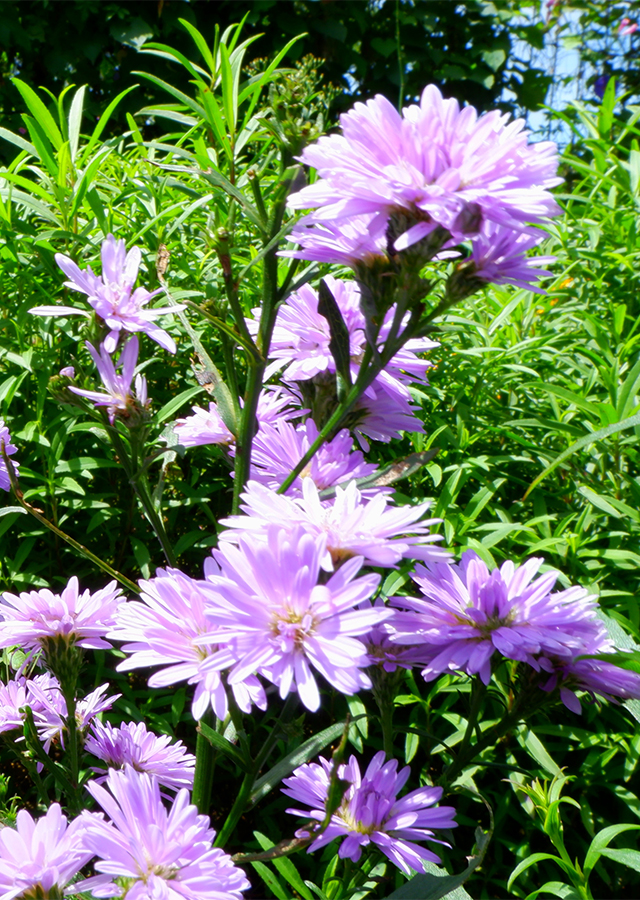
- Flowers, heads 14-50+ in a corymbiform arrangement, ascending branches. Involucres campanulate, (6.5-)7-10(-12) mm. Phyllaries in 3-4 series, ovate to lanceolate (outer) or linear-lanceolate to linear (inner), green to the base along the midnerve, or outer sometimes mostly leafy, apex acute (outer) to long-pointed (inner), abaxial surface hairless or slightly strigillose. Rays 14-30; laminae pale lavender or purple, 10-15 × 1.5-2.5 mm. Disc florets (20-)25-30(-50); corolla pale yellow turning lavender at least on the lobes, (4.5-)5-6 mm, tube about as long as the campanulate throat.
- Cypselae pale brown, linear-obconic, slightly compressed or plump, 1.5-2 mm, with 4-5(-6) nerves, faces glabrate to thinly strigillose; pappi white or cream, 6-8 mm, shorter than the disc corolla.
Cultivation
- Propagation is generative using seed. Seeds will germinate after 2 weeks at 20°C.
- Vegetative propagation is done with basal cuttings and division of offshoot clumps.
Chemical Content
Epifriedelinol, friedelin, friedel-3-ene, astersaponin, quercetin (flavonoid), lachnophyllol, lachnophyllol acetate, aurantiamide acetate, anethole, astersaponin (A, B, C, D, E, F, G), asterprosaponin, hederasaponin (shionosides A, B), asterin, cyclochlorotine, (astin A, B, C), astertarone (a triterpenoid), pentapeptides (possibly antibacterial), beta-amyrin (possibly sedative), oleic acid, aromatic acid, carotene, oleic acid (an omega-9 fatty acid), stigmasterol, beta-sitosterol, spinasterol (a triterpene similar to cholesterol, but unsaturated), shionone (a triterpene), suberone (a suberic acid ketone; peppermint aroma).
Benefits
Treatment of chronic bronchitis and tuberculosis. Has antibacterial, antifungal, antitussive, expectorant, and stimulant activity. Shows anticancer activity, and is used as a traditional remedy for cancer.
Local Names
Bunga aster.
Traditional Recipes
The following recipes reflect traditional knowledge passed down through generations, not a substitute for professional medical diagnosis or advice. Consult a healthcare provider before use.
1. Treatment of chronic bronchitis
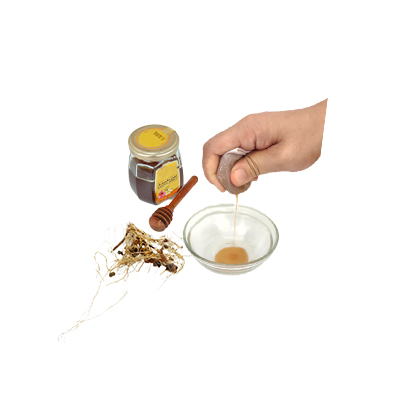
- Take an adequate amount of bunga pikok root and wash until clean.
- Grind until it becomes a paste.
- Add a little water then squeeze.
- Drink with the addition of a little honey to treat chronic bronchitis.
Reference Sources
- Royal Botanic Gardens. Plants of the World Online: Aster tataricus L.f.. https://powo.science.kew.org/taxon/urn:lsid:ipni.org:names:182425-1#synonyms. 09-04-2022.
- Useful Temperate Plants. 2022. Aster tataricus. http://temperate.theferns.info/plant/Aster+tataricus. 09-04-2022.
- Robyn Klein, AHG, MS,. 2007. Preliminary Research on Aster tataricus. Medical Botanist Department of Plant Sciences and Plant Pathology MSU-Bozeman. https://www.academia.edu/2536662/Preliminary_Research_on_Aster_tataricus.
- World Flora Online Data. 2018. Aster tataricus L.f.. http://www.worldfloraonline.org/taxon/wfo-0000135188#C. 09-04-2022.