Auricularia auricula-judae (Bull.) Quél.
Summary
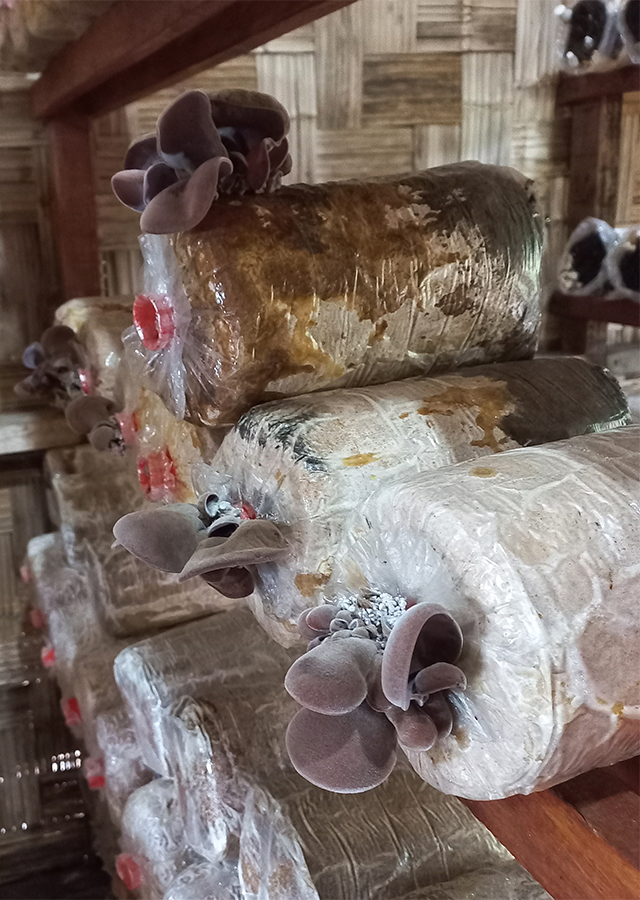
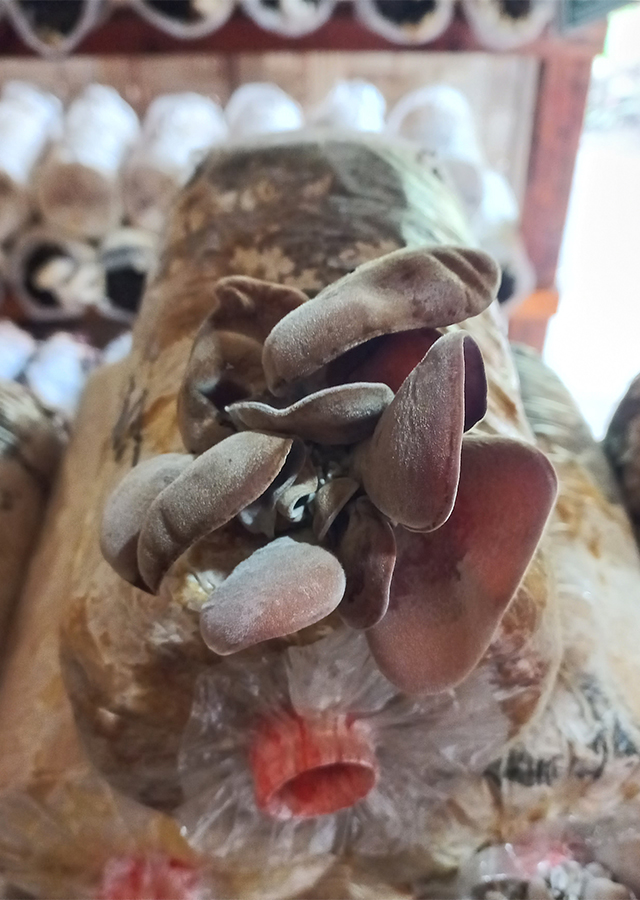
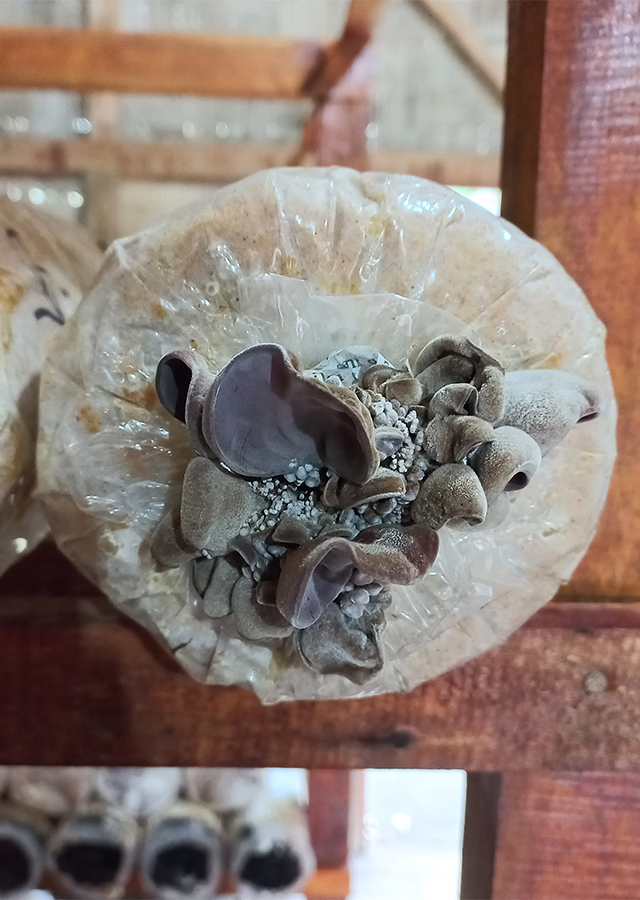
Wood ear mushroom (Auricularia auricula-judae) is a saprophytic fungus with a diameter of 2-15 cm of the Auriculariaceae family, native to humid Asia and Pacific islands, popular in Chinese cuisine as 'jelly ear'. Since the 19th century, Western herbalists have recommended boiling this mushroom in milk for sore throat. Its mucus produced during cooking is believed to be able to neutralize cholesterol.</p>
Agroecology
Lives solitary or in clusters on wood trunks, dead twigs, wood stumps and others, attached to the substrate centrally or laterally. Distributed on hardwood and conifers. Prefers moist and shaded conditions. Generally, wood ear mushroom can be grown in cold to hot climate regions. In areas with 4 seasons, wood ear mushroom can grow in all seasons. This mushroom can live in a fairly wide temperature range, namely between 12-35ºC, but grows optimally at temperatures of 20-30ºC, the ideal humidity needed by wood ear mushroom ranges between 80-90%. Fruiting bodies of the mushroom are often found in the rainy season.
Morphology
- Stalk absent or rudimentary.
- Fruiting body chewy (gelatin-like) when fresh. However, in a dry state, the fruiting body of this wood ear mushroom will become hard like bone. The fruiting body part of the wood ear mushroom is shaped like a bowl or sometimes with ear-like lobes, soft on the outside, with a wrinkled and glossy inner surface, having a diameter of 2-15 cm, and thin-fleshed. The color of this mushroom's fruiting body is generally reddish-brown.
- Spores white, spores are on the inner surface usually on the underside, 12-8 x 4-8 microns in size, sausage-shaped, smooth. The basidium has three transverse septa.
Cultivation
The vegetative reproduction method of wood ear mushroom is by forming buds, with conidia, and mycelium fragmentation. Meanwhile, the generative reproduction of wood ear mushroom is using an organ called the basidium, basidia gather in a body called the basidiocarp, which then produces spores called basidiospores.
Chemical Content
Polysaccharide (glucose, mannose, xylose, fructose), essential amino acids, and polyphenol.
Benefits
Used to treat urinary tract disease, dysentery, bleeding hemorrhoids, sore throat, cramps or numbness, dysentery, enteritis, heavy menstrual bleeding, vaginal discharge, blood tonic, lowers cholesterol, prevents tumors.
Simplisia
- Prepare wood ear mushroom, sort to choose and take the appropriate mushroom part.
- Wash thoroughly then chop.
- Dry in direct sunlight for 1-2 days until obtaining simplisia results with a hard texture and brown color.
- Grind with a blender until it becomes powder.
- Store in a dry, tightly closed container, protected from light, moisture, and animals.
Local Names
No information found. Further research needed.
Traditional Recipes
The following recipes reflect traditional knowledge passed down through generations, not a substitute for professional medical diagnosis or advice. Consult a healthcare provider before use.
1. Lowering cholesterol
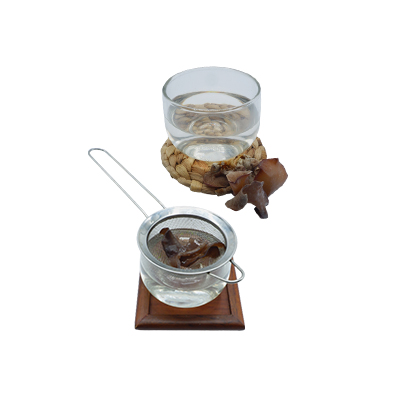
- Wash a handful of wood ear mushroom thoroughly.
- Boil the mushroom with a glass of water until boiling.
- Strain the decoction.
- Drink.
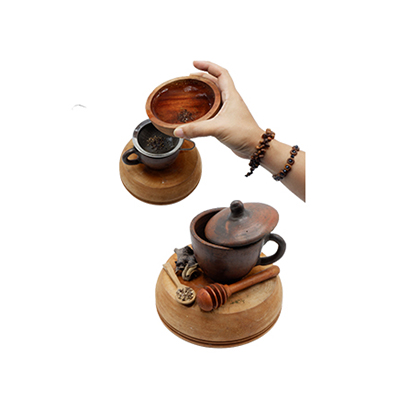
2. Preventing tumors
- Pour 2 tsp wood ear mushroom powder into a glass.
- Steep with 200 ml boiling water.
- Stir and let stand for a while until the residue settles then strain.
- Add honey or other natural sweetener to remove the bitter taste.
Reference Sources
- Stuartxchange. 2017. Philippine Medicinal Plants: Taingan-daga. http://www.stuartxchange.org/Taingan-daga.html. 5-09-2021.
- Kumpulan Materi Pengetahuan umum. 2016. Klasifikasi dan Morfologi Jamur Kuping (Auricularia auricula). https://www.teorieno.com/2016/11/klasifikasi-dan-morfologi-jamur-kuping.html. 5-09-2021.
- Jurnal Hasil Riset. 2016. Jamur Kuping. https://www.e-jurnal.com/2013/04/jamur-kuping.html. 5-09-2021.
- Woodland Trust . 2021. Jelly ear. https://www.woodlandtrust.org.uk/trees-woods-and-wildlife/fungi-and-lichens/jelly-ear/. 5-09-2021.
- A. Teddy . 2006. BUDI DAYA JAMUR KUPING (Auricularia auricula Judae). Tugas Akhir. Fakultas Pertanian Universitas Sebelas Maret. Surakarta. https://eprints.uns.ac.id/2278/1/62551506200903011.pdf.