Azadirachta indica A.Juss.
Summary
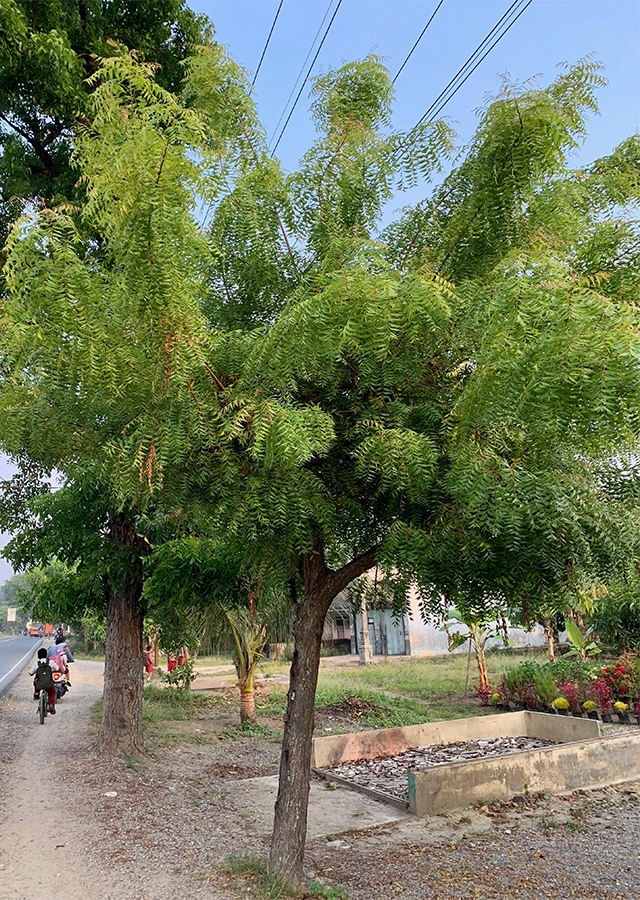
Neem (Azadirachta indica) is a tree up to 10-25 meters tall of the Meliaceae family, native to Madhya Pradesh, India, estimated to have entered Java since the 1500s. Its nimbin and nimbidin compound content makes it effective as a natural pesticide as well as an ingredient in Chinese, Ayurvedic, and Unani medicine. Neem is traditionally believed to be anti-inflammatory and to help address diabetes.
Agroecology
A plant that can be found in areas up to elevations of 1,500 m above sea level, annual temperature 26-40°C, and soil pH range of 5.5-7. Grows in tropical and subtropical regions, with annual rainfall of 450-1,200 mm/year.
Morphology
- Root a taproot, cylindrical, brown.
- Stem upright and woody, thick bark, rough.
- Leaves compound opposite arrangement, evenly pinnate, oblong shape with serrated edges, pointed tip, arranged spirally clustered at the chain tip, up to 5-7 cm long, 3-4 cm wide.
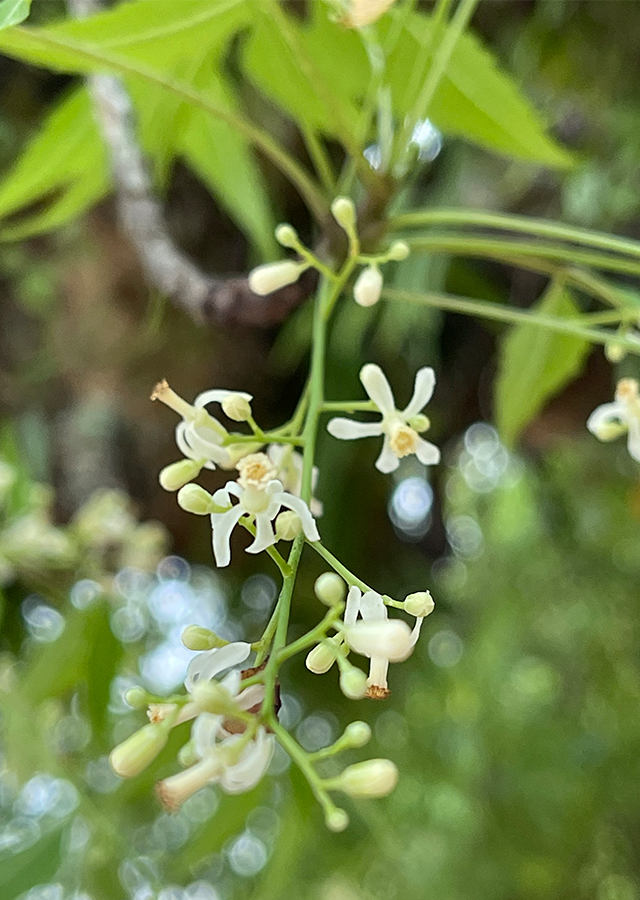
- Flowers white in color both the sepals and stamens, sepals and corolla five each.
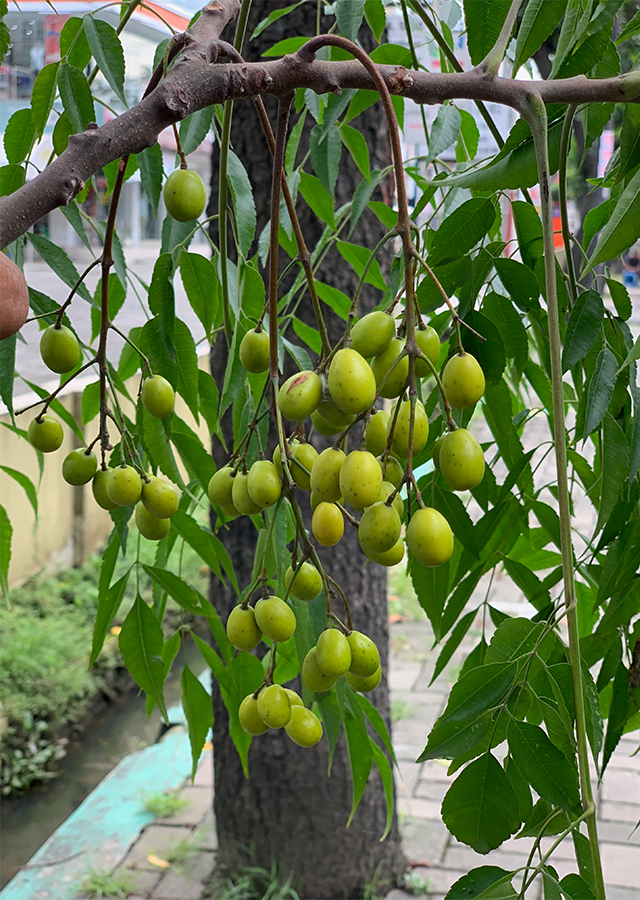
- Fruit oval-shaped, when ripe the fruit flesh is yellow in color.
- Seeds round, diameter approximately 1 cm, green in color, seed coat somewhat hard.
Cultivation
- Propagated generatively (seed), seeds come from physiologically ripe fruit.
- Propagated vegetatively (cuttings) from young woody branches.
Chemical Content
Leaves: β-sitosterol, hyperoside, nimbolide, quercetin, quercitrin, rutin, azadirachtin, nimbine, 6-desacetylnimbine, nimbolide compounds. Seeds: azadirachtin, salanin, meliantriol, nimbin, nimbidin.
Benefits
Anti-inflammatory, antibacterial, antidiabetic, addresses fever, cardiovascular disease. Leaves: appetite booster, addresses dysentery, ulcers, malaria. Oil: addresses eczema, germ-killing healing. Bark: addresses stomach pain, fever reducer.
Simplisia
- Prepare fresh neem leaves.
- Wash thoroughly.
- Dry by air-drying or using an oven at 40°C.
- Once dry, grind into powder.
- Store the simplisia in an airtight container.
Local Names
Imba, Mempheuh (Madura), Intaran (Bali).
Traditional Recipes
The following recipes reflect traditional knowledge passed down through generations, not a substitute for professional medical diagnosis or advice. Consult a healthcare provider before use.
1. Dysentery
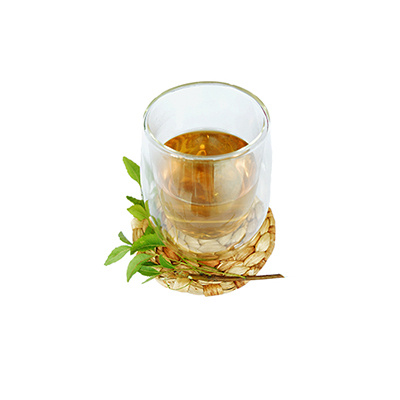
- Boil ⅓ handful of neem leaves, 2 finger-lengths of neem stem (cut into pieces) with 3 glasses of water until boiling and reduced to ¾ of the water.
- Drink twice a day, ¾ glass each time.
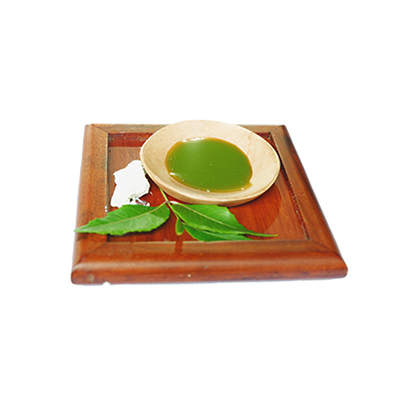
2. Eczema (skin inflammation)
- Grind 20 neem leaves finely, knead with slaked lime water as needed.
- Apply to the skin affected by eczema and bandage with cloth.
- Change the bandage twice a day or as needed.
Reference Sources
- Widyaningrum Herlina, Tim Solusi Alternatif. 2019. Kitab Tanaman Obat Nusantara. Media Pressindo, Jakarta.