Thespesia populnea (L.) Sol. ex Corrêa
Summary
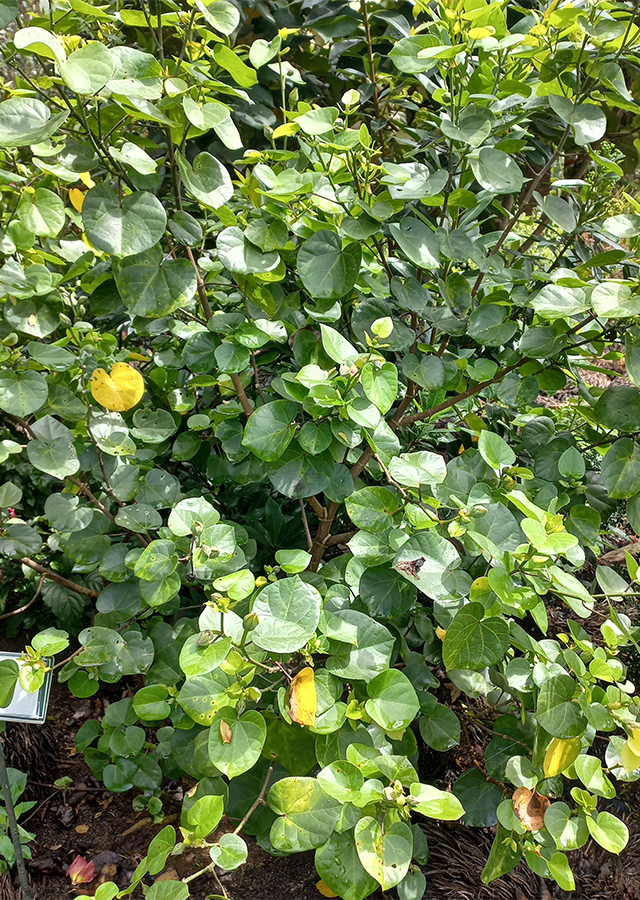
Waru laut (Thespesia populnea) is a shrub or small tree 6-10 meters tall, up to 20 meters in the wild, from the Malvaceae family widely spread across tropical coasts worldwide. Considered a sacred tree in many Pacific regions and often planted near temples, its strong wood is used to build ships and traditional musical instruments. Waru laut is traditionally used to treat cholera, dysentery, and various skin diseases.
Agroecology
Waru laut is a coastal species of humid to wet, warm tropical and subtropical lowlands, usually found at elevations from sea level up to 150 m asl. This plant is generally found in coastal habitats such as along beaches, bay edges, coral and sandy areas, volcanic soil, limestone and rocky areas, along mangrove forest edges, also in periodically waterlogged areas, grasslands, thickets and forests. Grows best in areas where average annual daytime temperature is in the range of 20-30 °C, but can tolerate 10-35 °C, average annual rainfall in the range of 1,000-3,000 mm, but tolerates 800-5,000 mm, and a position in full sun with growth hindered in shade. This species prefers moist, well-drained soil with a soil acidity (pH) in the range of 6.5-8, but tolerating 6-8.5. This species is also tolerant of drought, wind, occasional waterlogging, saline conditions.
Morphology
- Roots taproot.
- Stem straight, unbranched up to 3 m, bark gray or light brown, smooth or slightly cracked, becoming thick and rough, and the inner bark pink to yellowish, hard and fibrous. Twigs hairless, green turning gray with age, and covered with very small brown scales when young.
- Leaves alternate, spirally arranged, leaf blade round, deltoid, ovate or oblong shape with 7 yellow leaf veins, leaf tip pointed, base heart-shaped (cordate), smooth leaf margin, glossy dark green on the upper surface and pale below, somewhat thick, rough.
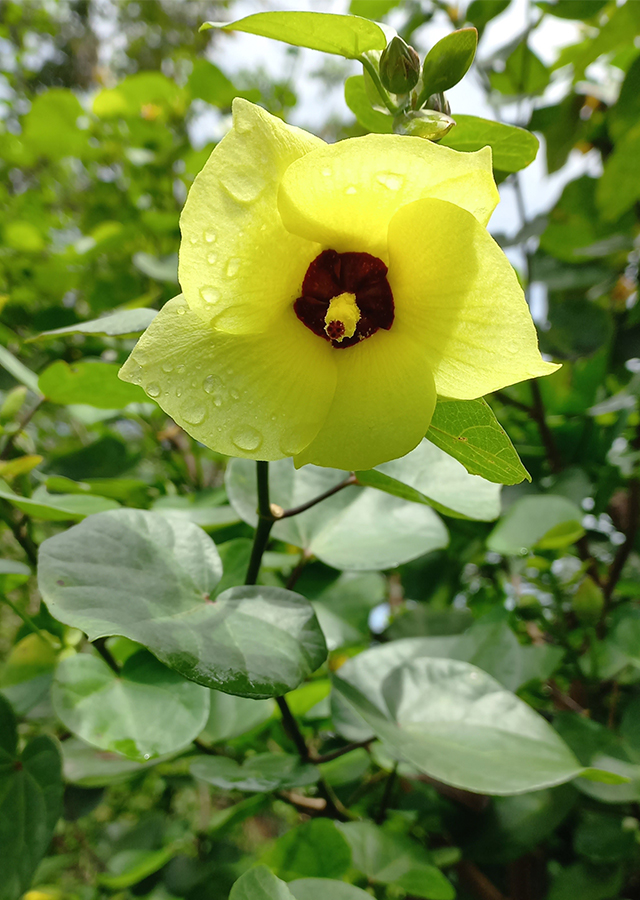
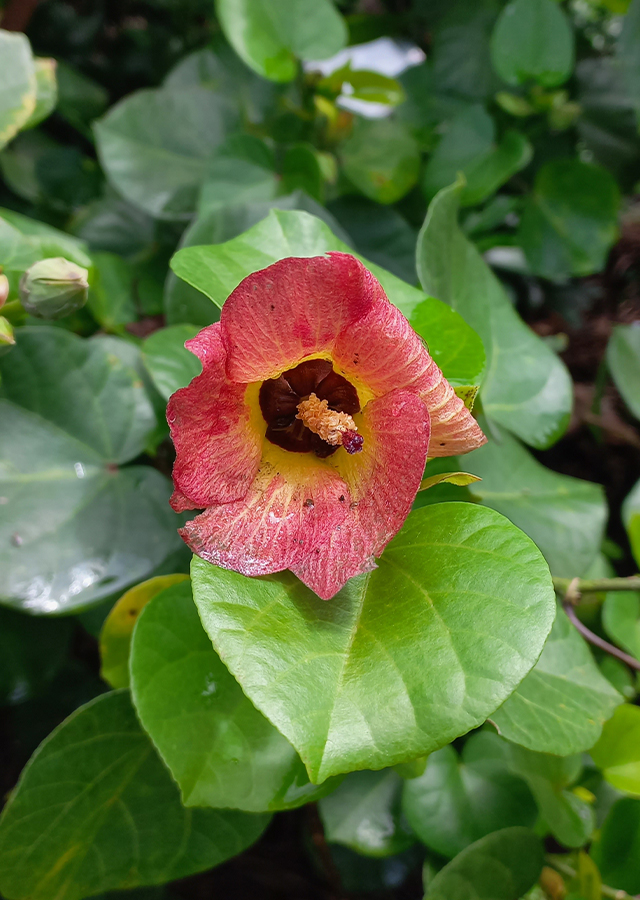
- Flowers solitary in the leaf axil, bisexual, bell-shaped. Calyx cup-shaped, green, with 3-5 narrowing green bracts. Corolla 5-lobed, wide, pale yellow, with a maroon center, and small star-shaped hairs on the outer surface. Stamens numerous, fused at the base of the corolla. Pistil has a five-celled ovary with a slender style and five broader stigmas. Flowers open and close on the same day, with the petals wilting, and turning purple or pink.
- Fruit round but flattened, 5-celled, greenish-yellow and turning dark brown when ripe, hard, woody and dry, containing yellow sap, and can split into 5 parts when ripe, containing 3-4 seeds in each part.
- Seeds elliptical, 1 cm long, brown haired.
Cultivation
- Propagation is done generatively (seeds) and vegetatively (stem or root cuttings).
- Germination from seed takes 8-70 days.
- Cultivation from seed is preferred because the wood is straight, evenly grained, and hard.
Chemical Content
Phosphoric acid, sesquiterpenoid (populnene A-H), sesquiterpenoid quinone (mansonone D and H, thespone, and thespesone), tannin, phenol, flavonoid, terpene, saponin, alkaloid, steroid, coumarin, anthraquinone, amino acid, glycosides, cardiac glycosides, anthocyanidins, gallic acid, catechin, myricetin, protocatechuic acid, epigallocatechin gallate, rosmarinic acid, ellagic acid, rutin, naringenin.
Benefits
Treats pleurisy, cholera, colic, high fever, cough, influenza, canker sores, headache, herpes, dysentery, hemorrhoids, diabetes, rheumatism, urinary retention, worms, addresses urinary tract problems and abdominal swelling, high blood pressure, infertility, loss of appetite, insect bites, kills lice, speeds wound healing, treats various skin diseases (external remedy), breast cancer, inhibits tumor formation. Has antifungal, antibacterial, antihepatotoxic, antiamoebic, carminative, antimalarial, laxative properties.
Local Names
Salimuli (Maluku), Waru lot (Java), Baru laut.
Traditional Recipes
The following recipes reflect traditional knowledge passed down through generations, not a substitute for professional medical diagnosis or advice. Consult a healthcare provider before use.
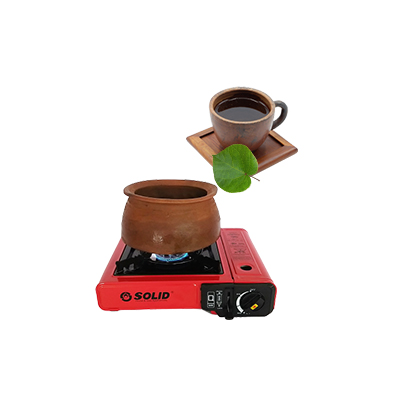
1. Cough
- Prepare fresh waru laut leaves as needed and wash until clean.
- Boil the leaves until boiling.
- Strain, then drink while warm.
Reference Sources
- Royal Botanic Gardens. 2021. Plants of the World Online: Thespesia populnea (L.) Sol. ex Corrêa. http://powo.science.kew.org/taxon/urn:lsid:ipni.org:names:564713-1. 11-11-2021.
- CAB International. 2021. Invasive Species Compendium: Thespesia populnea (portia tree). https://www.cabi.org/isc/datasheet/53592#tosummaryOfInvasiveness. 11-11-2021.
- Useful Tropical Plants Database. 2021. Thespesia populnea. http://tropical.theferns.info/viewtropical.php?id=Thespesia+populnea. 11-11-2021.
- Flora Fauna Web. 2021. Thespesia populnea (L.) Sol. ex Corrêa. https://www.nparks.gov.sg/FloraFaunaWeb/Flora/3/1/3190. 11-11-2021.
- Stuartxchange. 2020. Phillipine Medicinal Plants: Banago. http://www.stuartxchange.org/Banago.html. 11-11-2021.
- PROSEA. 2020. Thespesia populnea (PROSEA). https://uses.plantnet-project.org/en/Thespesia_populnea_(PROSEA). 11-11-2021.