Thunbergia alata Bojer ex Sims
Summary
Mata susan (Thunbergia alata) is a vine up to 5 meters long from the Acanthaceae family that originates from tropical Africa, now considered an invasive weed in many tropical regions. Its attractive flowers make it a popular ornamental plant as well as a ground cover. In India, fresh root extract is traditionally used as a health tonic and aphrodisiac.
Agroecology
Mata susan grows as a weed commonly found along riverbanks, forest edges, plantations, roadsides, and disturbed humid areas in tropical, subtropical, and warm temperate regions from lowlands up to 900 m asl. It grows best in sunny locations, prefers well-drained soil, and thrives with an average annual rainfall of 600-2,500 mm and temperatures ranging from 10-30 °C.
Morphology
- Roots taproot.
- Stem cylindrical, slender, pubescent.
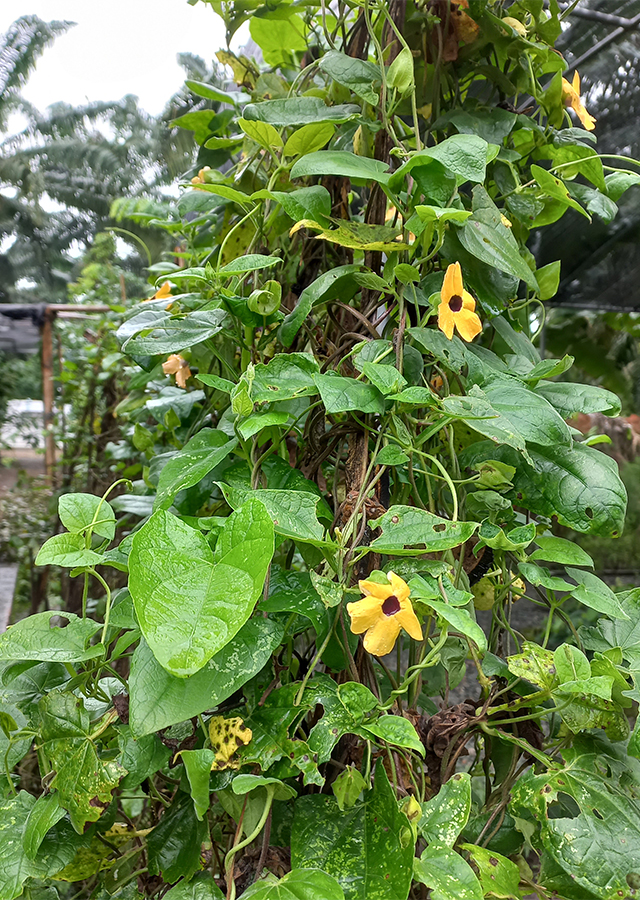
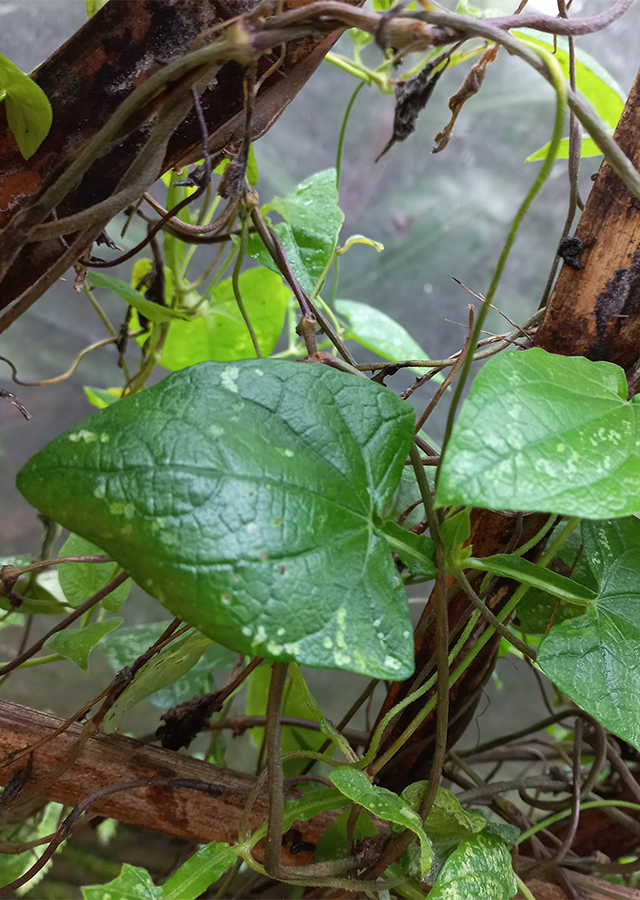
- Leaves heart-shaped or arrow-ovate, smooth or serrated margins, covered with fine hairs, oppositely arranged, tapering tip. Upper surface dark green, dull, pubescent (short, soft hairs). Lower surface pale green, dull, with prominent veins.
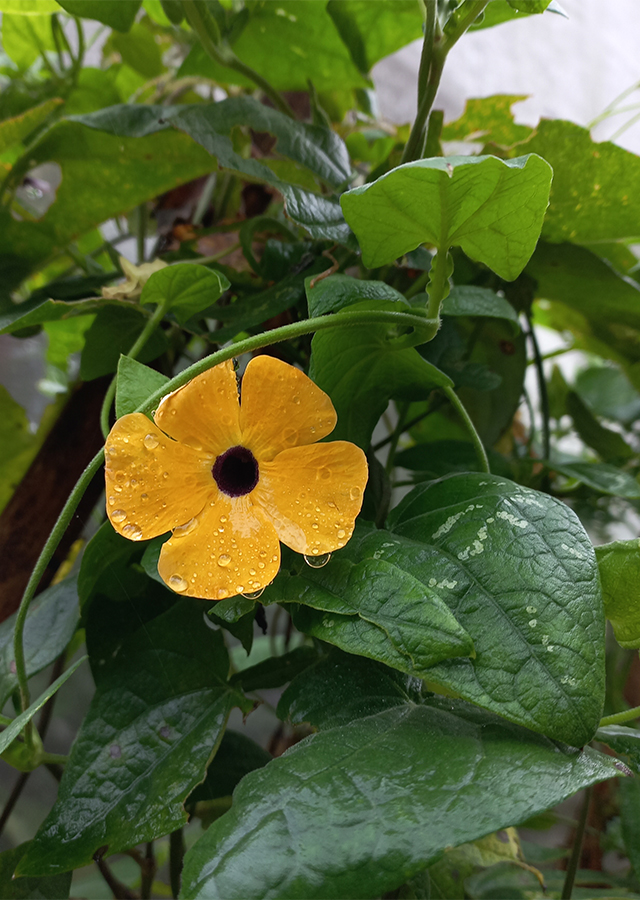
- Flowers yellow to orange, with 5 square to oblong petals, narrowing at the base. Petal tips truncate, with a curved indentation in the middle. The inside of the flower tube is lined with purplish-black or dark maroon color. Calyx yellowish-green. Appears singly in the leaf axils. Flower stalk pubescent.
- Fruit round, but with a long, pointed beak.
- Seeds semicircular, 1.2-1.5 mm long, each fruit contains 2-4 seeds.
Cultivation
Propagation is done generatively (seeds) and vegetatively (stem and root cuttings).
Chemical Content
Saponins, steroids, phenolic compounds (caffeoylmalic acid, feruloylmalic acid, p-coumaroylmalic acid), iridoid glucosides (thunaloside and alatoside), stilbericoside, 6-epi-stilbericoside, and thunbergioside.
Benefits
Health tonic, skin problems, back and joint pain, eye inflammation, hemorrhoids, rectal cancer, treats headaches, boils, treats snake bites, has aphrodisiac and antioxidant, anti-inflammatory properties.
Local Names
Patuk manuk (Java).
Traditional Recipes
The following recipes reflect traditional knowledge passed down through generations, not a substitute for professional medical diagnosis or advice. Consult a healthcare provider before use.
1. Headache
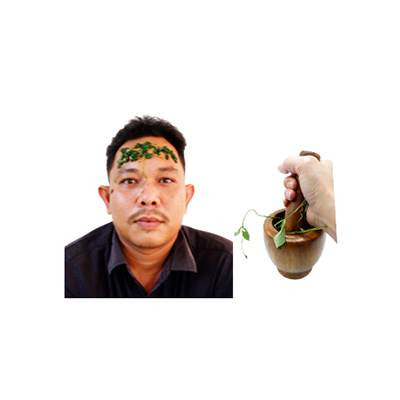
- Wash mata susan leaves as needed until clean.
- Mash the leaves into a paste.
- Apply the leaf paste to the forehead.
Reference Sources
- CAB International. 2021. Invasive Species Compendium: Thunbergia alata (black eyed Susan). https://www.cabi.org/isc/datasheet/53646#toPictures. 14-09-2021.
- Sultana KW, Chatterjee S, Roy A, Chandra I. 2015. An Overview on Ethnopharmacological and Phytochemical properties of Thunbergia sp. Med Aromat Plants 4: 217. doi:10.4172/2167-0412.1000217.
- Flora Fauna Web. 2019. Thunbergia alata. https://www.nparks.gov.sg/florafaunaweb/flora/1/5/1518. 14-09-2021.
- Useful Tropical Plants Database. 2021. Thunbergia alata. https://tropical.theferns.info/viewtropical.php?id=Thunbergia+alata. 14-09-2021.