Thunbergia mysorensis (Wight) T.Anderson
Summary
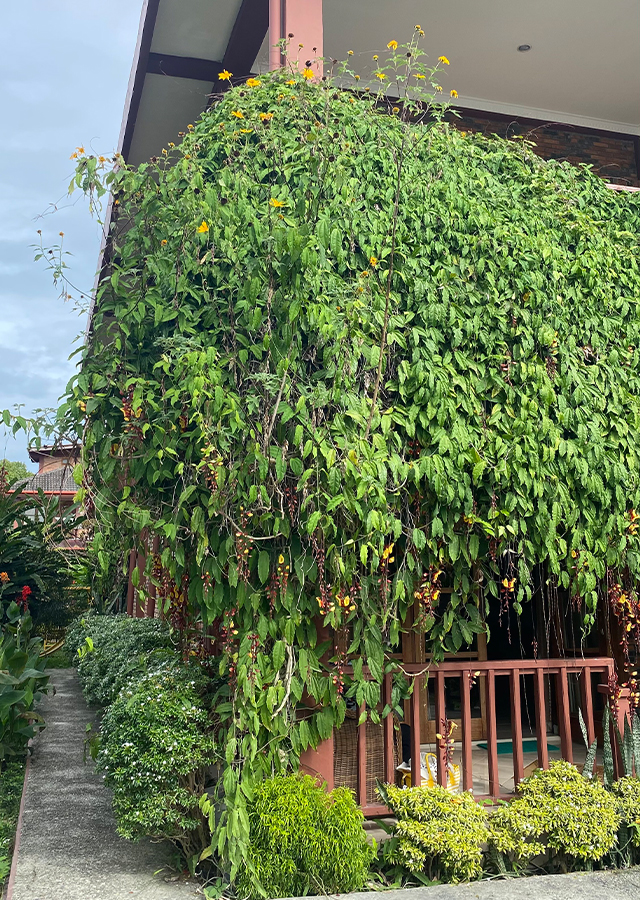
Thunbergia mysorensis or clock vine is a climbing plant native to southern India that now grows widely across the world's tropical and subtropical regions. The beauty of its flower clusters that attract nectar-feeding birds earned it the Royal Horticultural Society Award of Garden Merit in 1993, while traditionally this plant is also believed to help relieve cough and fever.
Agroecology
Thunbergia mysorensis can be found growing in areas ranging in elevation from near sea level up to 750 m asl. Usually grows around towns or in old settlement locations. This species prefers open areas and can tolerate conditions with both full sun and partial shade. Requires humus-rich soil and prefers well-drained acidic soil, and being native to a tropical monsoon climate, T. mysorensis will require plenty of watering during summer. This species is also tolerant of cooler climates.
Morphology
- Stem woody, hairless, twining clockwise.
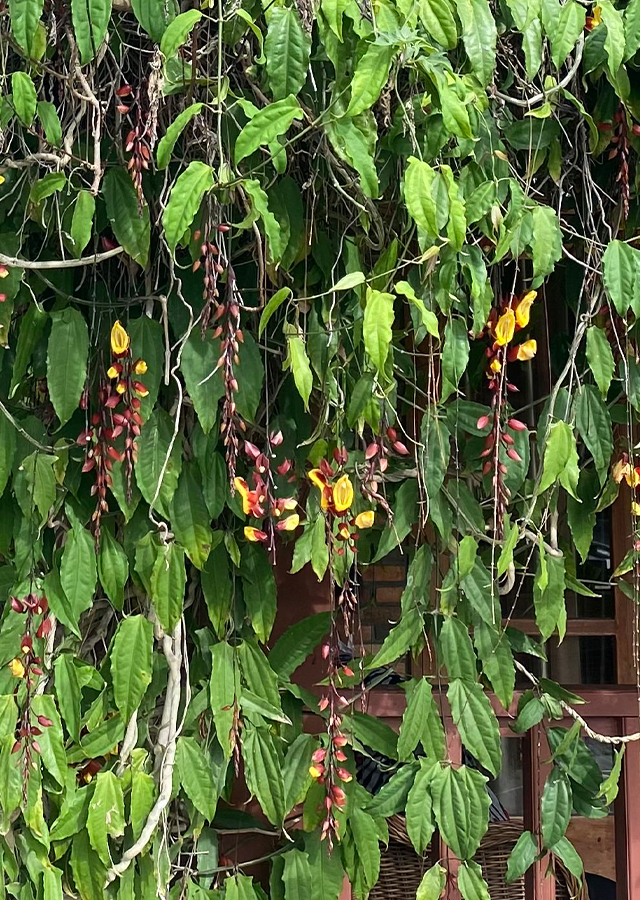
- Leaves arranged opposite, dark green, glossy, narrow, lanceolate, tip acuminate, margin toothed, with 3 distinct veins, hairless.
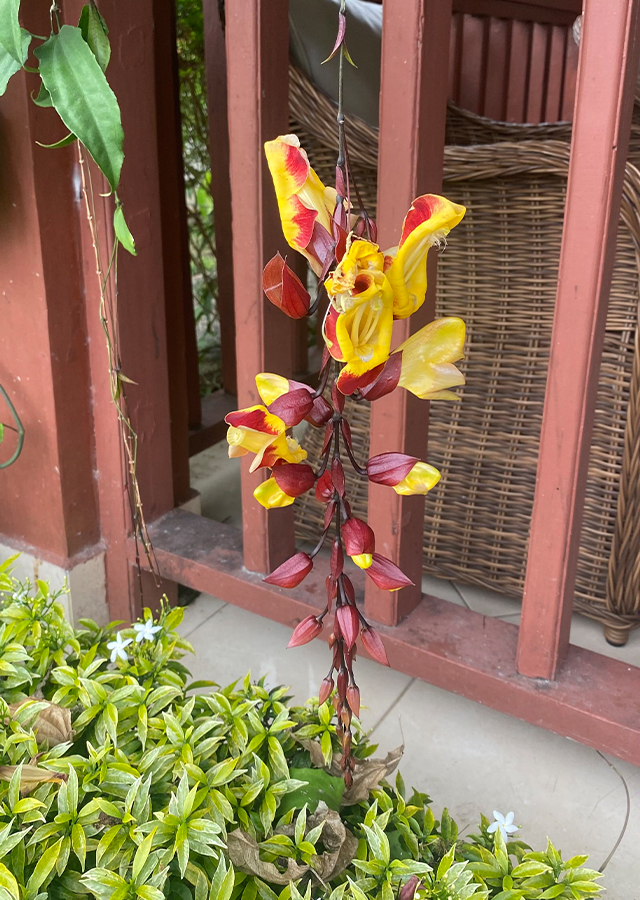
- Flowers bilaterally symmetric, tubular with a wide gaping mouth, consisting of five fused petals. Petal tips red, reflexed to reveal a yellow throat (along the margin and down the throat), and bloom from summer to autumn. Stamens large and stigma hairy. Each flower is up to five centimeters long with striking red bracts. Inflorescence a pendent, elongated, drooping, slender raceme, emerging from the leaf axils.
Cultivation
- Plant propagation through seed and stem cuttings.
- In its native region, Thunbergia mysorensis is pollinated by sunbirds.
Chemical Content
Alkaloids, amino acids, flavonoids, tannins, and phenolates.
Benefits
Treats cough, liver disease, reduces fever. Has antioxidant, antidiabetic, antifungal, anthelmintic, and anti-inflammatory activity.
Local Names
Informasi tidak ditemukan. Butuh penelusuran lebih lanjut.
Traditional Recipes
The following recipes reflect traditional knowledge passed down through generations, not a substitute for professional medical diagnosis or advice. Consult a healthcare provider before use.
1. Cough
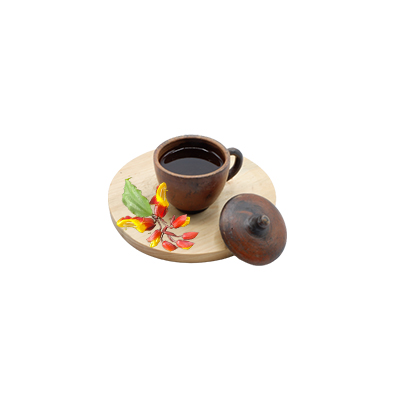
- Take an adequate amount of clock vine flowers and wash until clean.
- Boil until it boils.
- Let it cool to warm/cold.
- Strain then drink to reduce cough.
2. Liver disease
- Pick an adequate amount of clock vine flowers and wash until clean.
- Boil until it boils.
- Let it cool to warm/cold.
- Strain then drink to reduce liver disease.
Reference Sources
- Royal Botanic Gardens. Plants of the World Online: Thunbergia mysorensis (Wight) T.Anderson. https://powo.science.kew.org/taxon/urn:lsid:ipni.org:names:60447289-2. 26-04-2022.
- Stuartxchange. 2020. Philippine Medicinal Plants: Mysore clock vine. http://www.stuartxchange.org/ClockVine. 26-04-2022.
- IndiaPlants.com. Thunbergia mysorensis. https://www.indiaplants.com/plant-details.php?x=LiBcdPzB/5M=. 26-04-2022.
- Singh M., Kimothi G. 2018. Phytochemical Estimmation and Antioxidative Potential of Thunbergia mysorensis (Wight) T.Anders. ex Bedd in Uttarakhand, India. International Journal of Pharma and Bio Sciences, 9(3): (B) 271 - 279.
- Efendi M., Hapitasari I. G., Rustandi, Supriyatna A. 2016. Inventarisasi Tumbuhan Penghasil Pewarna Alami di Kebun Raya Cibodas. Jurnal Bumi Lestari, 16(1): 50-58.
- University of Oxford. Oxford Plants 400: Thunbergia mysorensis T.Anderson (Acanthaceae). https://herbaria.plants.ox.ac.uk/bol/plants400/Profiles/ST/Thunbergia. 26-04-2022.
- Australian Tropical Rainforest Plants. 2020. Thunbergia mysorensis (Wight) T.Anderson. https://apps.lucidcentral.org/rainforest/text/entities/thunbergia_mysorensis.htm. 26-04-2022.