Thymus vulgaris L.
Summary
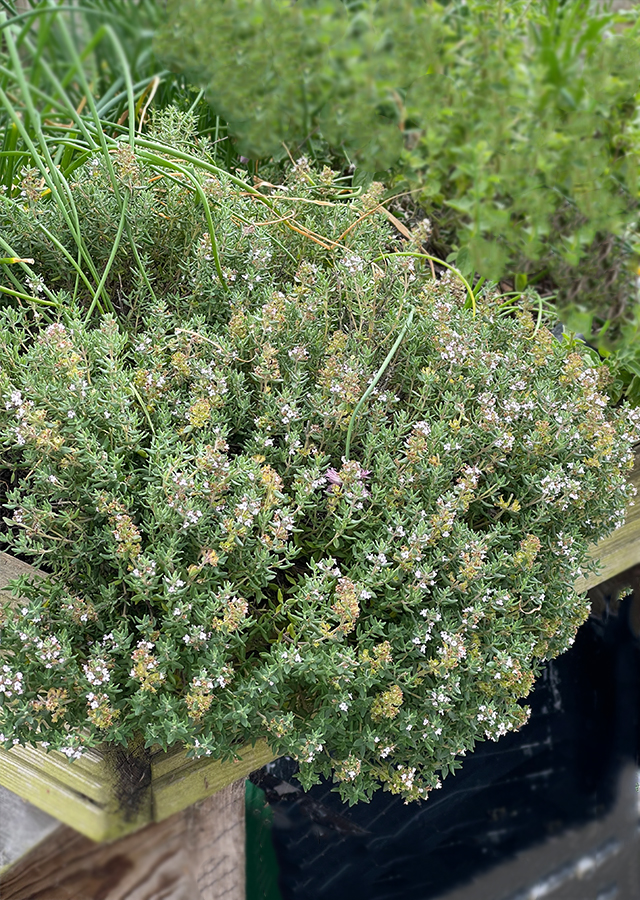
Thyme (Thymus vulgaris) is an erect or creeping shrub 20-30 cm tall from the Lamiaceae family that originates from Mediterranean countries such as France and Spain. Its essential oil, proven antimicrobial and antioxidant, makes it one of the most important aromatherapy ingredients in the world. Thyme is traditionally used to treat dry coughs, bronchitis, and digestive disorders, though not recommended for pregnant women.
Agroecology
Prefers light, dry, chalky soil and a sunny position. Succeeds in dry soil, poor soil and tolerates drought once established. Thyme is hardy down to about -15 °C even when grown in old walls in poor, light, well-drained soil.
Morphology
- Stem base becomes woody over time.
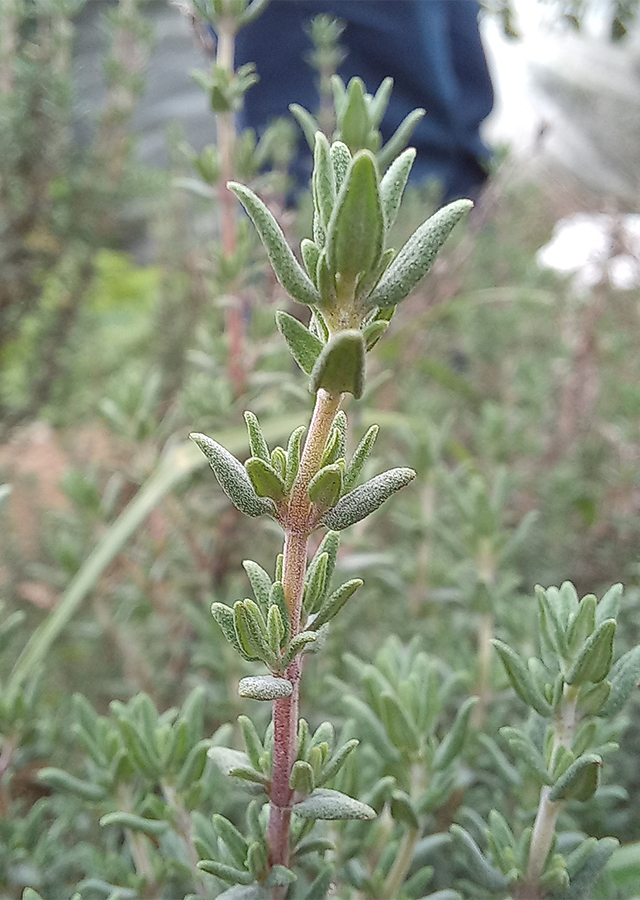
- Leaves paired, linear to elliptical with an entire margin (3-8 mm long, 0.5-2.5 mm wide). Leaf surface tomentose, densely covered with fine hairs.
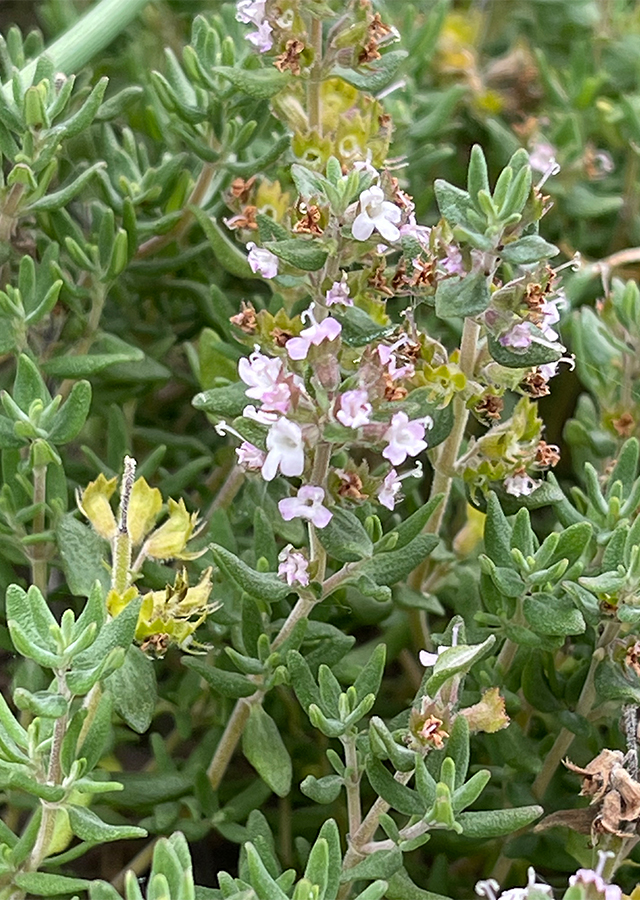
- Flowers pale purple, tubular and two-lipped. Arranged in whorls along the inflorescence.
- Fruit consists of 4 seeds, single-seeded, brown and round (1 mm wide).
Cultivation
- Propagation using seeds. Seeds take 14-21 days to germinate. Let the soil dry between watering sessions to minimize root rot from overwatering.
- Besides seeds, vegetative propagation is done by clump division, young shoot cuttings and semi-mature stem cuttings.
Chemical Content
Thymol, carvacrol, terpenoids, flavonoid aglycones, flavonoid glycosides, phenolic acids.
Benefits
This plant is used internally in treating dry cough, whooping cough, bronchitis, inflammation of the nasal mucous membrane, asthma, sore throat, digestive disorders, gastritis and diarrhea, enuresis in children, relieves menstrual cramps. Externally, it is used in treating tonsillitis, gum disease, rheumatism, stimulating hair growth, arthritis and fungal infections. Should not be prescribed for pregnant women. Has anthelmintic, antiseptic, antispasmodic, carminative, deodorant, diaphoretic, disinfectant, expectorant, sedative activity.
Simplisia
- Prepare fresh thyme leaves as needed and wash with clean water.
- After clean, drain to remove excess wash water.
- Dry by air-drying in a place protected from sunlight.
- Blend into powder.
- Store in a clean, airtight container.
Local Names
No information found. Further research needed.
Traditional Recipes
The following recipes reflect traditional knowledge passed down through generations, not a substitute for professional medical diagnosis or advice. Consult a healthcare provider before use.
1. Relieving menstrual cramps
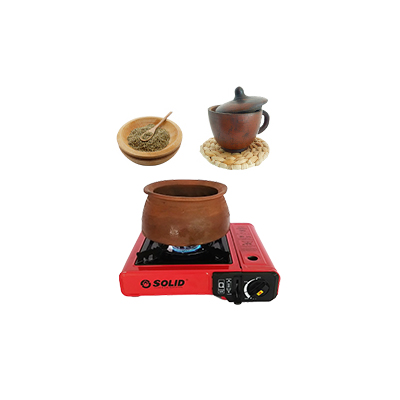
- Prepare 4 tablespoons of dried thyme and 250 ml of water.
- Heat the water in a container then turn off the heat.
- Add the dried thyme and wait 15 minutes.
- Strain, then drink.
Reference Sources
- Flora Fauna Web. 2021. Thymus vulgaris L. https://www.nparks.gov.sg/florafaunaweb/flora/5/3/5393. 28-09-2021.
- Useful Plants Database. Thymus vulgaris. https://temperate.theferns.info/plant/Thymus+vulgaris. 28-09-2021.
- Royal Botanic Gardens. Plants of the World Online. Thymus vulgaris L. http://www.plantsoftheworldonline.org/taxon/urn:lsid:ipni.org:names:461765-1. 28-09-2021.
- Alexandre Porte dan Ronoel L. O. Godo. 2007. Chemical composition of Thymus vulgaris L. (thyme) essential oil from the Rio de Janeiro State (Brazil). J. Serb. Chem. Soc. 73 (3) 307–310 (2008) UDC 635.71:581.19:665.52/.54(815.3) JSCS–3712. 28-09-2021.
- Fernanda Carolina Fachini-Queiroz, Raquel Kummer, Camila Fernanda Estevão-Silva, Maria Dalva de Barros Carvalho, Joice Maria Cunha, Renata Grespan, Ciomar Aparecida Bersani-Amado, dan Roberto Kenji Nakamura Cuman. 2012. Effects of Thymol and Carvacrol, Constituents of Thymus vulgaris L. Essential Oil, on the Inflammatory Response. Jurnal Hindawi. https://www.hindawi.com/journals/ecam/2012/657026/. 28-09-2021.