Tillandsia usneoides (L.) L.
Summary
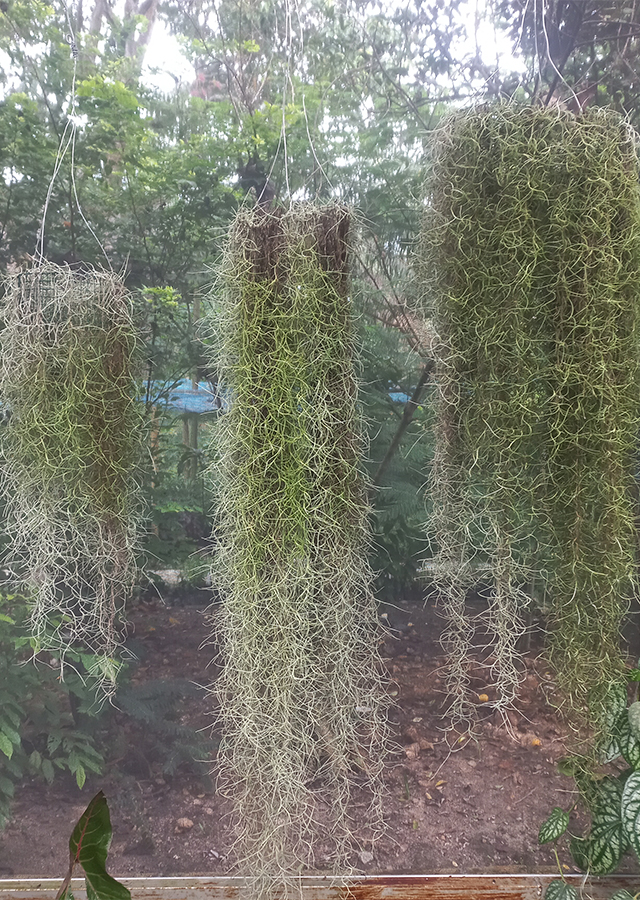
Tillandsia usneoides, known in Indonesia as jenggot musa, is a hanging epiphyte native to Mexico and the Americas now also naturalized in Queensland, Australia. Besides being popular as an ornamental and a stuffing material for pillows and car seats, this plant is known to accumulate mercury, functioning as an air pollution indicator, and has long been traditionally used as an herbal medicine for various ailments such as diabetes, rheumatism, and open wounds.
Agroecology
Tillandsia usneoides or jenggot musa can usually be found growing in many types of subtropical and tropical habitats. Usually found hanging on tree branches, especially oak and cypress trees. This species prefers moist and partially shaded conditions and also likes a warm climate with high humidity. The jenggot musa plant absorbs most of its moisture and nutrients from the moist air around it, through a layer of absorbent scales covering the leaves, so it does not need soil to grow.
Morphology
- Roots absent.
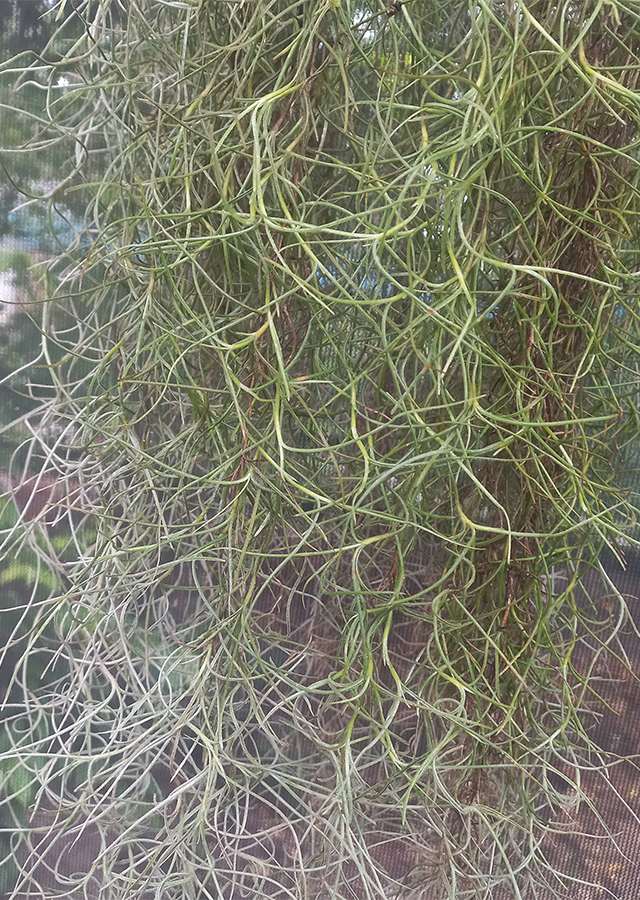
- Stem thin and elongated like a thread.
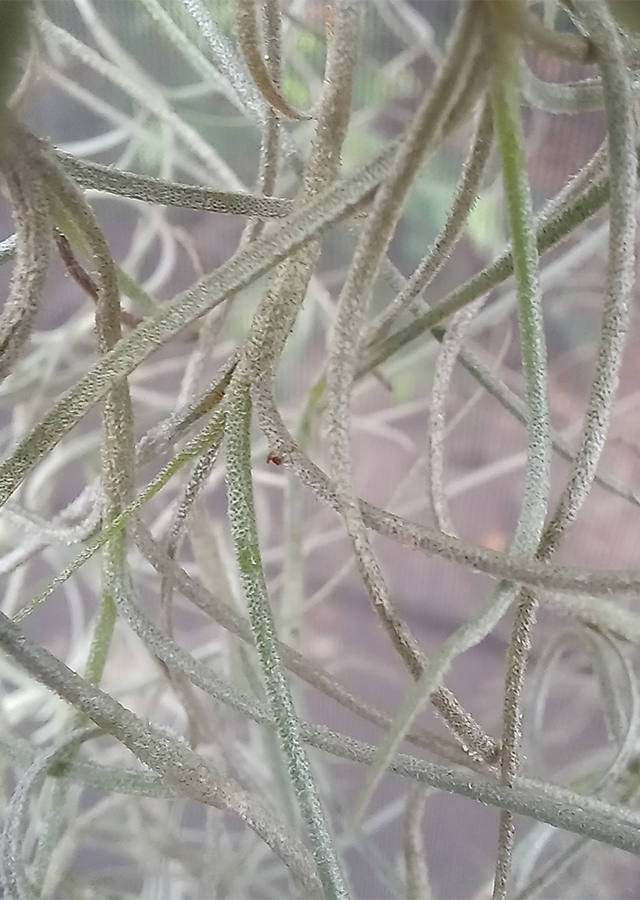
- Leaves simple, unifoliate, scattered, thin, short (1.5-3 cm long, 0.1-0.2 cm wide) found in small curved clusters, narrowly linear, densely covered with short silvery to gray hairs known as trichomes. The hairs function to help absorb moisture and nutrients from the air. Leaves silvery to gray when dry, but light green when wet. Margin entire, tip acute, base truncate.
- Flowers small, pale green or blue and most fragrant at night, flowers appear solitary in the leaf axils. In cultivation, they rarely produce flowers.
Cultivation
- Plant propagation through division and stem cuttings (breaking off the stem and replanting it).
- An easy-to-grow plant. Simply hang the plant in partial shade and mist regularly with warm water.
Chemical Content
Cycloartane triterpenoids, cycloartenol, 4,5-dihydroxy-3',7-demethoxyflavanone, a mixture of steroids (stigmasterol, ß-sitosterol, campesterol), 26 cycloartane derivatives ((22E)-25,26,27-trisnor-3-oxocycloart-22-en-24-al, (24E)-3-oxocycloart-24-en-26-al, 24-hydroxycycloart-25-en-3-one, (23E)-25-methoxycycloart-23-en-3-one, (23E)-25-hydroperoxycycloart-23-en-3-one, 25,26,27-trisnor-24-hydroxycycloartan-3-one, methyl (24E)-26-carboxy-3,4-seco-cycloart-4(29),24-dien-3-oate, methyl (23E)-25-hydroxy-3,4-seco-cycloart-23-en-3-oate, methyl (23E)-25-methoxy-3,4-seco-cycloart-23-en-3-oate, and methyl 24-hydroxy-3,4-seco-cycloart-25-en-3-oate), carotenoids, tocotrienols, flavonoids, alkaloids, polycarpol 3-hydroxy-methylglutaric acid (HMG).
Benefits
Treats diabetes mellitus, rheumatism, open wounds, hemorrhoids, cough, asthma, bronchitis, boils, reduces fever, gallbladder problems, lung disease, liver, kidney, heart, addresses sexual weakness, chills, digestive disorders from overeating, speeds up labor, a natural contraceptive, strengthens and makes hair shinier and more attractive, removes dandruff. Has antioxidant, antiepileptic, astringent, antipyretic, and analgesic activity.
Simplisia
- Prepare an adequate amount of jenggot musa plant, wash clean with running water.
- Dry under the sun or with an oven at 40°C until the moisture content reaches 10%.
- Store in a clean, airtight container.
Local Names
Janggut dewa, Janggut firaun, Janggut nabi.
Traditional Recipes
The following recipes reflect traditional knowledge passed down through generations, not a substitute for professional medical diagnosis or advice. Consult a healthcare provider before use.
1. Rheumatism
- Prepare an adequate amount of jenggot musa plant and wash until clean.
- Boil until it boils.
- Let it cool to warm.
- Use for soaking in the bathtub.
2. Makes hair shiny
- Prepare an adequate amount of jenggot musa plant and wash until clean.
- Soak in a pot of water until it breaks down.
- Use as a hair rinse to give shine to the hair.
Reference Sources
- Royal Botanic Gardens. Plant of the World Online: Tillandsia usneoides (L.) L. https://powo.science.kew.org/taxon/urn:lsid:ipni.org:names:1169665-2. 29-05-2022.
- Stuartxchange. 2018. Philippine Medicinal Plants: Buhok ni Ester. http://www.stuartxchange.org/BuhokNiEster. 29-05-2022.
- Tropical Plants Database, Ken Fern. 2021. Tillandsia usneoides. http://tropical.theferns.info/viewtropical.php?id=Tillandsia+usneoides. 29-05-2022.
- Flora Fauna Web. 2021. Tillandsia usneoides (L.) L. https://www.nparks.gov.sg/florafaunaweb/flora/2/5/2515. 29-05-2022.
- WholisticMatters. 2019. The Antioxidant Benefits of Spanish Moss. https://wholisticmatters.com/the-antioxidant-power-of-spanish-moss/#:~:text=Tillandsia%20usneoides%20. 29-05-2022.
- E Estrella-Parra, M Flores-Cruz, G Blancas-Flores, SD Koch, FJ Alarcón-Aguilar. 2019 The Tillandsia genus: history, uses, chemistry, and biological activity. Bol Latinoam Caribe Plant Med Aromat 18 (3): 239 – 264.
- Planter and Forester. 2019. Tillandsia usneoides, Sang Jenggot Musa, Tanaman Hias yang berbentuk Unik. https://www.planterandforester.com/2021/09/tillandsia-usneoides-sang-jenggot-musa.html. 29-05-2022.