Tradescantia spathacea Sw.
Summary
Adam hawa (Tradescantia spathacea) is a herb up to 0.5 meters tall of the Commelinaceae family, originating from southern Mexico and commonly found around Mayan civilization sites. In China, its flowers are used as traditional dysentery medicine, while in Yucatan and Guatemala it is used for beauty treatments. Its distinctive green-purple leaves are also believed to cleanse the lungs and relieve productive cough.
Agroecology
Adam hawa is found growing in coastal forests, shrubland, hanging places, secondary forests, cultivated land, and disturbed areas, and prefers tropical and subtropical regions with temperatures ranging from 14-27 °C. Grows well in well-drained soil including rocky, sandy, and limestone soil. Has broad adaptability in both lowlands and highlands, hot, cold, dry or watery areas, and shade.
Morphology
- Roots fibrous, brownish.
- Stem rough, short, upright, brown in color, herbaceous, round shaped, showing leaf scars, unbranched.
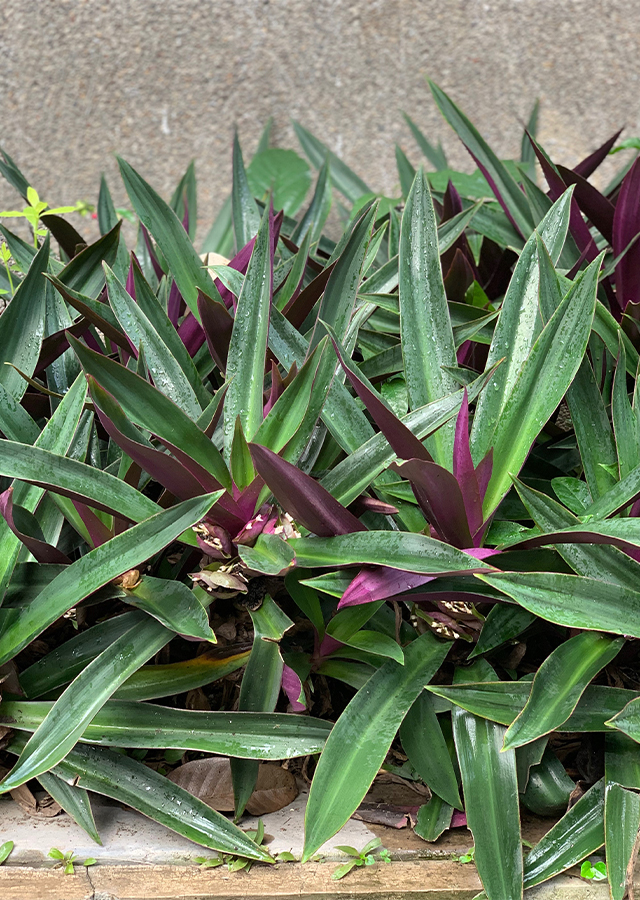
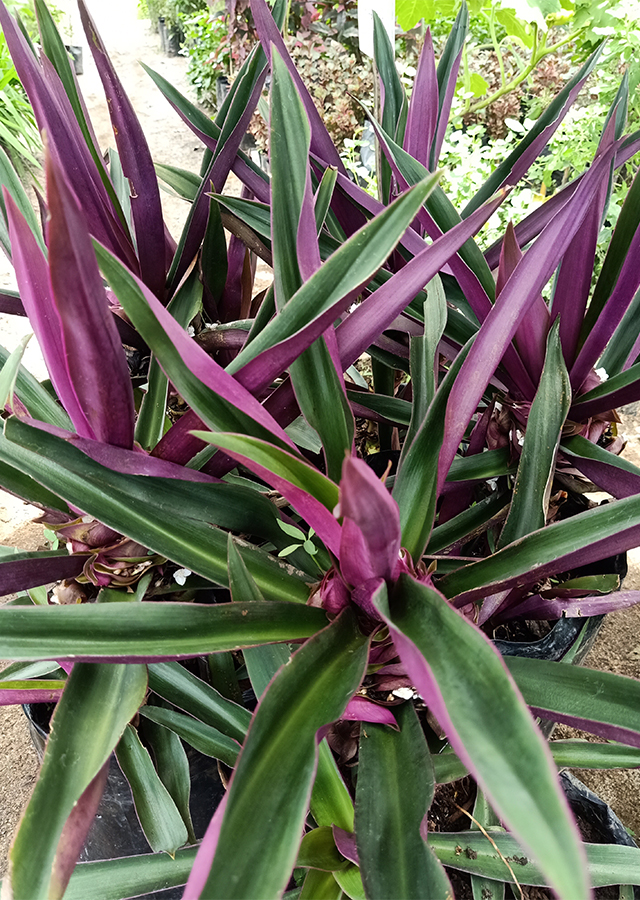
- Leaves single, sword-shaped, tapering leaf tip, flat leaf base clasping the stem, smooth edges, soft, smooth, parallel venation, green on top, reddish-brown-purple underneath.
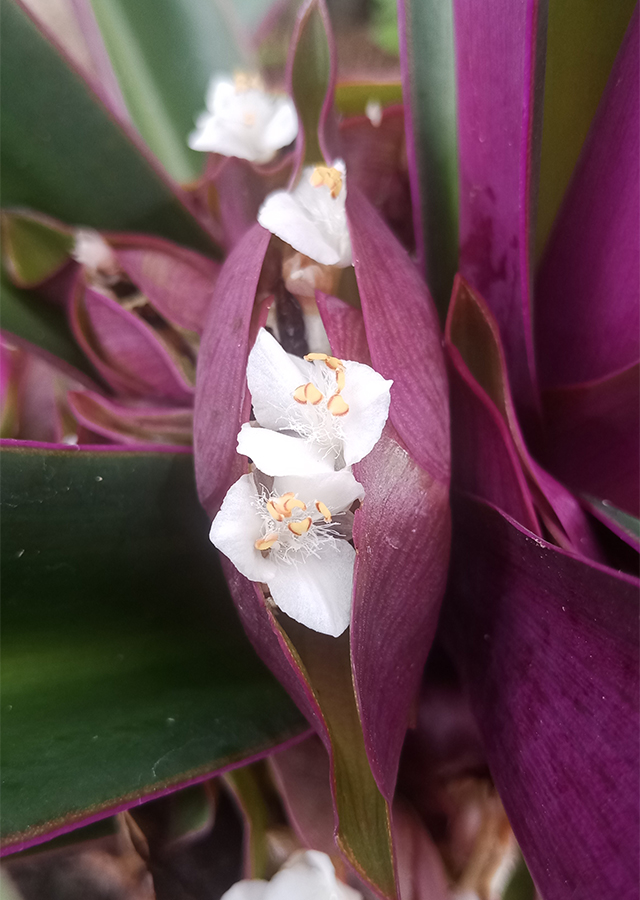
- Flowers compound, at leaf axils, small, protected by two boat-like bracts, cylindrical stamens, white in color. Pistil head yellow, triangular corolla, three petals, white.
Cultivation
Propagated vegetatively (cuttings, root fragments) and generatively (seed).
Chemical Content
P-coumaroyl-delphinidin 3,5-diglucoside, flavonoids, anthocyanins, saponins, carotenoids, terpenoids, coumarinic and steroids.
Benefits
Cough (whooping, productive, dry), dysentery, diarrhea, fungal infections, measles, cleanses the lungs and phlegm, treats nosebleeds, bloody bowel movements (melena), rheumatism, constipation, anemia, swelling, wounds, antioxidant, antitumor, and antimutagenic.
Simplisia
- Wash adam hawa leaves thoroughly.
- Dry in the sun or oven at 40 °C until the moisture content reaches 10%.
- Store in a closed container.
Local Names
Nanas kerang (Java), Sosongkokan.
Traditional Recipes
The following recipes reflect traditional knowledge passed down through generations, not a substitute for professional medical diagnosis or advice. Consult a healthcare provider before use.
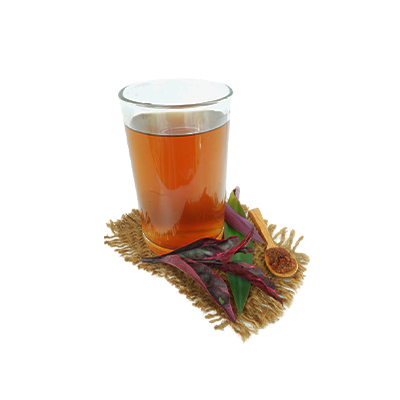
1. Melena (Bloody Bowel Movement)
- Prepare 10-15 adam hawa leaves or 30-50 g of its flower blooms, 15 g Persian shield leaves, palm sugar to taste, 600 ml water.
- Clean the ingredients then boil all of it until it boils and the water is reduced to 300 ml. Strain.
- Drink twice a day.
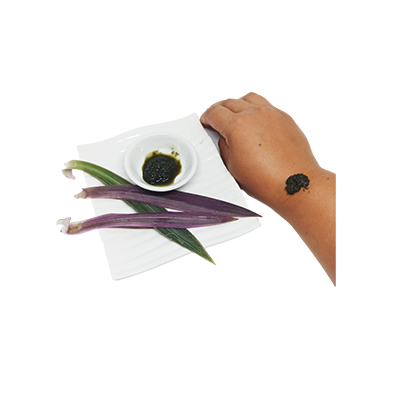
2. Rheumatism
- Roast several fresh adam hawa leaves until wilted, limp and soft.
- Apply the adam hawa leaves to the affected area while still warm, use a cloth to hold the leaves in place.