Tradescantia zebrina Bosse
Summary
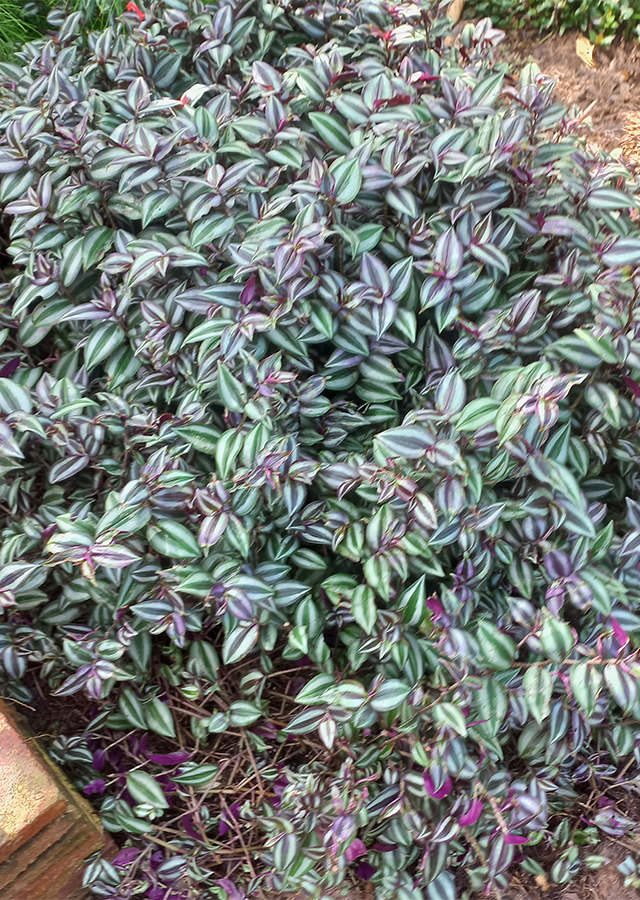
Telinga kera zebra (Tradescantia zebrina) is a creeping herb up to 15 cm tall from the Commelinaceae family that originates from Mexico, now popular as a ground cover plant worldwide. Its silver-purple striped leaf pattern makes it a distinctive ornamental. In China, telinga kera zebra is traditionally recommended to improve kidney function, while in Mexico it is used to address diarrhea.
Agroecology
Telinga kera zebra is a weed in waste areas, disturbed sites, roadsides, urban thickets, riparian vegetation, open forests and woodlands in subtropical and warm temperate regions. Can be found, both in lowlands and highlands, at elevations up to 1,400 m asl. This species generally prefers semi-open or bright, moist shaded places, but can also grow well in full sun. Prefers moist, fertile, well-drained organic soil with a soil acidity (pH) in the range of 6-8.
Morphology
- Roots fibrous, light brown.
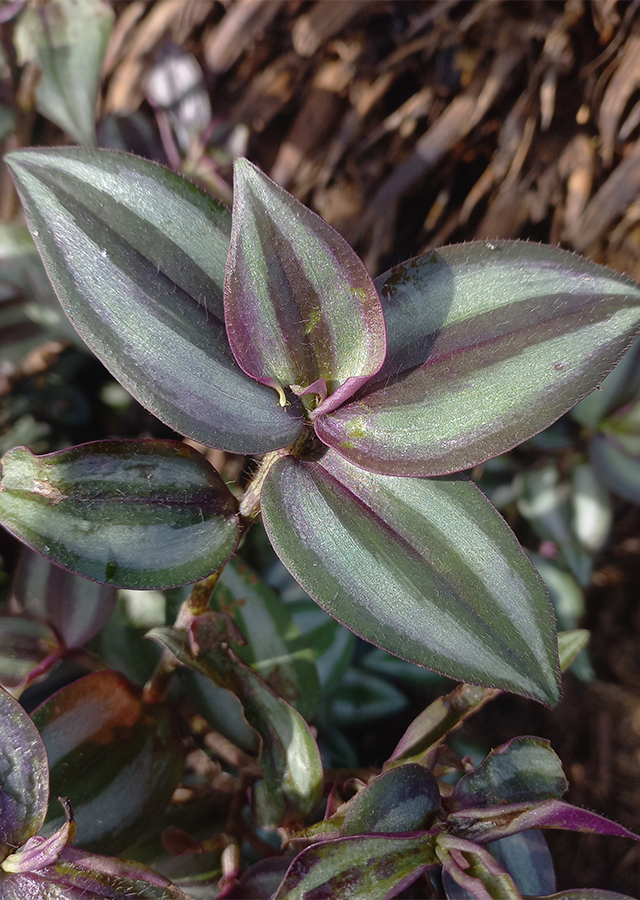
- Stem round, soft, watery, green with purplish spots, producing clear thin sap when cut, jointed with roots at the nodes, hairy.
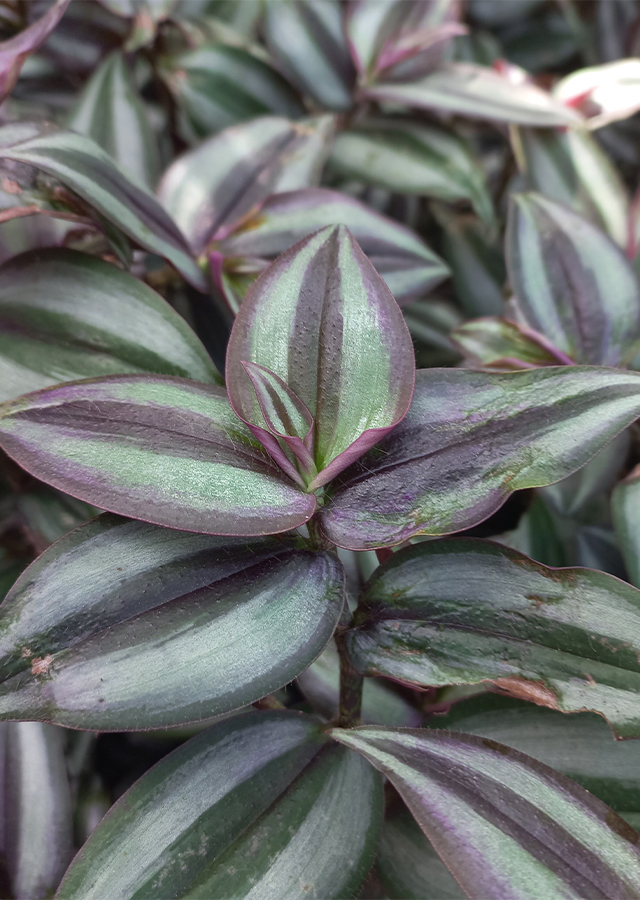
- Leaves paired and opposite, hairy, dark green to purple, with 2 longitudinal silver stripes on the upper surface (adaxial), and uniformly purple on the lower surface, ovate shaped, smooth leaf margin, tip tapering (acuminate), base cuneate (wedge or inverted triangle shaped), asymmetric at the base, fleshy.
- Flowers have three petals, ovate shaped, fused at the base into a narrow white tube, pink or purple-magenta colored, small and appearing in terminal clusters. Supported by 2 narrowing bracts. Stamens numbering 6.
- Fruit a small capsule with 3 chambers.
- Seeds numbering 1-2 per capsule, grayish-brown.
Cultivation
Plant propagation is vegetative (stem cuttings and stolons).
Chemical Content
β-sitosterol, 3β,5α,6β-trihydroxy stigmast, succinic acid, 3-ecdysone, sterol, saponin, flavonoid, and tannin.
Benefits
Treats kidney disease, urinary tract infections, hypertension, tuberculosis, uterine disorders, digestive disorders, diabetes, cough, flu, hemorrhoids, conjunctivitis, venomous snake bites, boils, vaginal discharge, increases stamina, reduces swelling, triggers menstruation, and cleanses the blood.
Simplisia
- Prepare fresh telinga kera zebra leaves, wash clean with running water then drain.
- Dry under sunlight or with an oven at 40 °C until moisture content reaches 10%.
- Store in a clean, airtight place.
Local Names
Zebrina, Rumput belang.
Traditional Recipes
The following recipes reflect traditional knowledge passed down through generations, not a substitute for professional medical diagnosis or advice. Consult a healthcare provider before use.
1. Flu
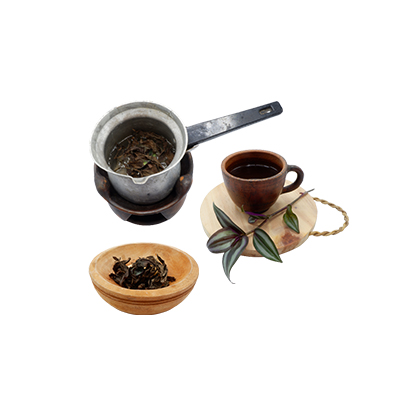
- Prepare dried telinga kera zebra leaves.
- Boil until boiling.
- Let stand until warm/cool.
- Strain, then drink.
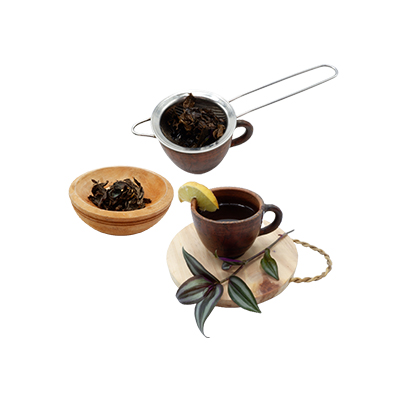
2. Increasing stamina
- Prepare dried telinga kera zebra leaves.
- Boil until boiling.
- Let stand until warm/cool.
- Strain, then add lemon juice.
- Drink to increase stamina.
Reference Sources
- Royal Botanic Gardens. 2021. Plants of the World Online: Tradescantia zebrina Bosse. http://www.plantsoftheworldonline.org/taxon/urn:lsid:ipni.org:names:30049896-2. 12-11-2021.
- CAB International. 2021. Invasive Species Compendium: Tradescantia zebrina (wandering jew). https://www.cabi.org/isc/datasheet/110354#toPictures. 12-11-2021.
- Flora Fauna Web. 2021. Tradescantia zebrina Bosse. https://www-nparks-gov-sg.translate.goog/florafaunaweb/flora/2/5/2528?_x_tr_sl=en&_x_tr_tl=id&_x_tr_hl=id&_x_tr_pto=sc. 12-11-2021.
- Stuartxchange. 2021. Philippine Medicinal Plants: Sebrina. http://www.stuartxchange.org/Sebrina. 12-11-201.
- Dash G. K., Swe M., Mathews A. 2017. Tradescantia zeberina: A Promising Medicinal Plant. Indo American Journal of Pharmaceutical Sciences, 4(10): 3498- 3502.
- Greeners.co. 2020. Rumput Belang, Tanaman Obat dari Meksiko. https://www.greeners.co/flora-fauna/rumput-belang/. 12-11-2021.