Trianthema portulacastrum L.
Summary
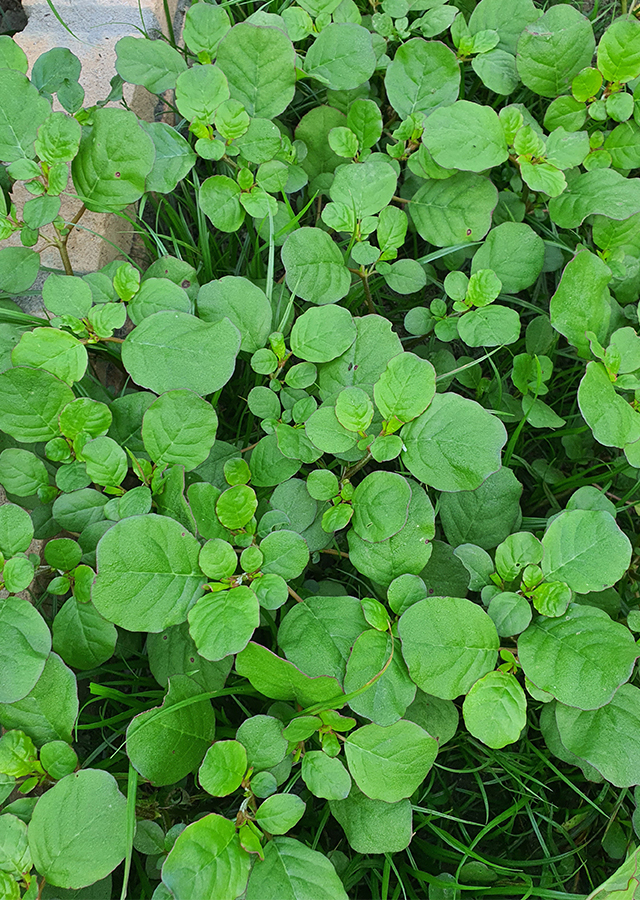
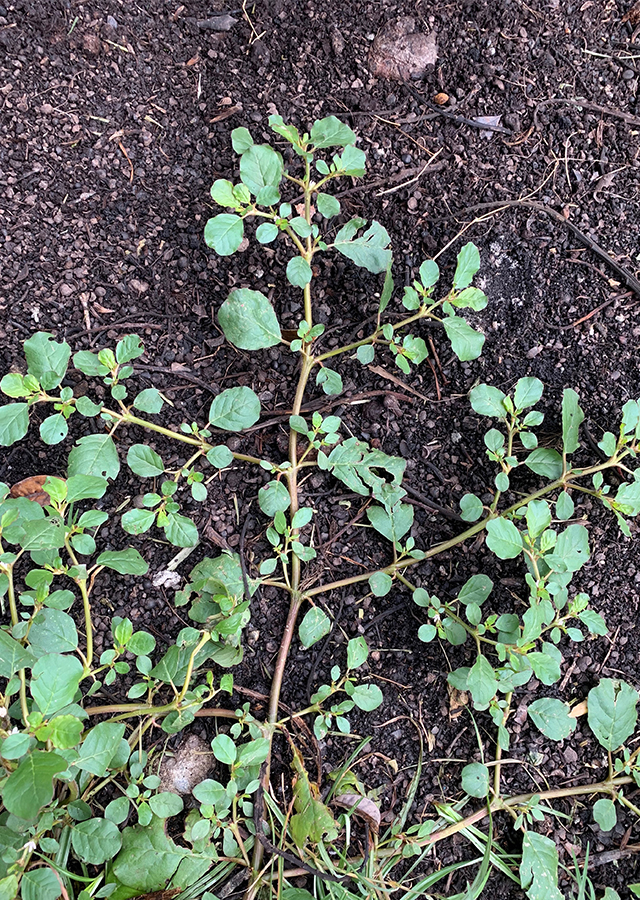
Krokot kuno (Trianthema portulacastrum) is an annual creeping herb about 30-50 cm long of the Aizoaceae family, native to tropical America, growing in tropical regions such as India and Ceylon. This exotic plant, often considered a weed, has great traditional value in Ayurvedic medicine. Krokot kuno is traditionally believed to treat jaundice, rheumatism, and snake bites.
Agroecology
Krokot kuno can grow in tropical to subtropical regions with various habitats and can survive in soil that tends to be wet. Often found in clay soil near the sea up to elevations of 800 m above sea level. Grows in open, sunny places.
Morphology
- Root thin, slender, curved, and winding, with lateral branching fibrous roots, 5-15 cm long, 0.3-2.5 cm in diameter, bright yellow externally, yellowish-white inside, fibrous fracture.
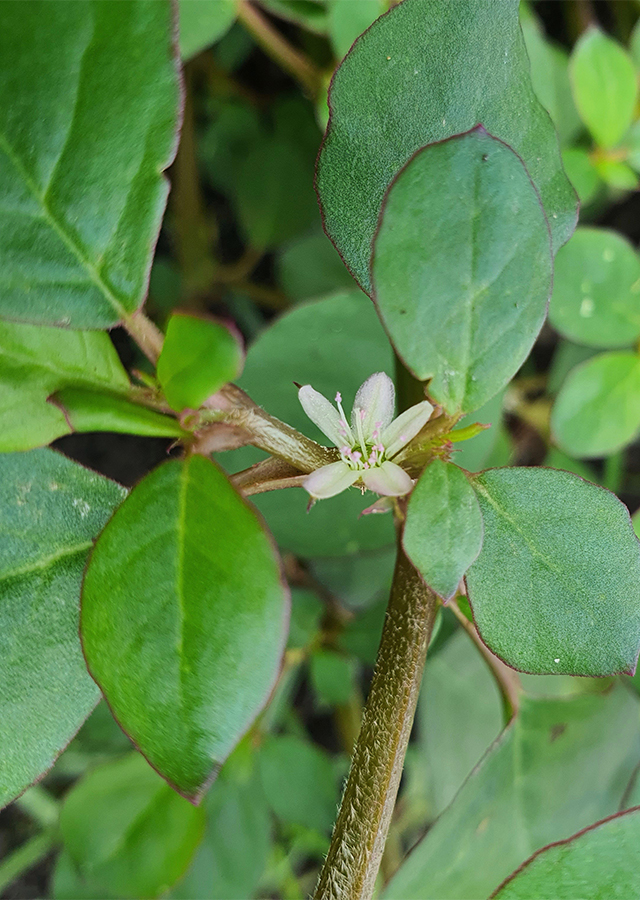
- Stem cylindrical, green to red in color, dichotomously branched, fresh and fleshy stem.
- Leaves have small round or oval blades, up to 4 cm long on a short petiole, blunt leaf tip.
- Flowers small, solitary, without petals but has pink to purple sepals, 10-15 stamens.
- Fruit capsule-shaped, curved and cylindrical emerging from the stem, 3-5 mm long.
- Seeds kidney-shaped, red, brown to black in color
Cultivation
- Propagated generatively (seed) as well as vegetatively (stem cuttings).
- Not commercially cultivated
Chemical Content
Glucoside, saponin, trianthenol, ecdysterone, carotene, essential oil, sesquiterpenes, hexahydro-farnesyl acetone, verbenene, incensole acetate, 3-p-manthane.
Benefits
Remedy for jaundice, wound dressing (poultice), remedy for rheumatism, antidote for alcohol poisoning, kidney, bladder, remedy for snake bites, and relieves asthma.
Simplisia
- Prepare and wash the whole krokot kuno plant thoroughly with running water.
- Dry the material with an oven at 50°C for 5 days until evenly dry.
- Once dry, grind the material into powder form.
- Store in an airtight package
Local Names
No information found. Further research needed.
Traditional Recipes
The following recipes reflect traditional knowledge passed down through generations, not a substitute for professional medical diagnosis or advice. Consult a healthcare provider before use.
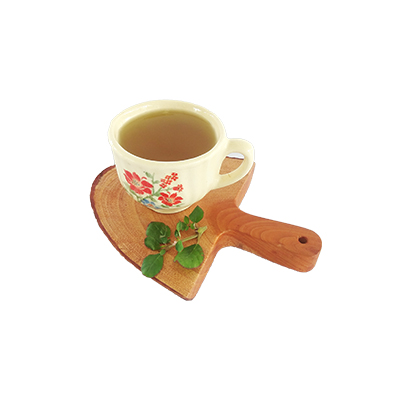
1. Treating rheumatism
- Wash the whole plant thoroughly.
- Boil with 3 glasses of water, wait until boiling and the water reduces to 1 glass, remove and strain.
- Drink regularly, once a day.