Trichosanthes cucumerina L.
Summary
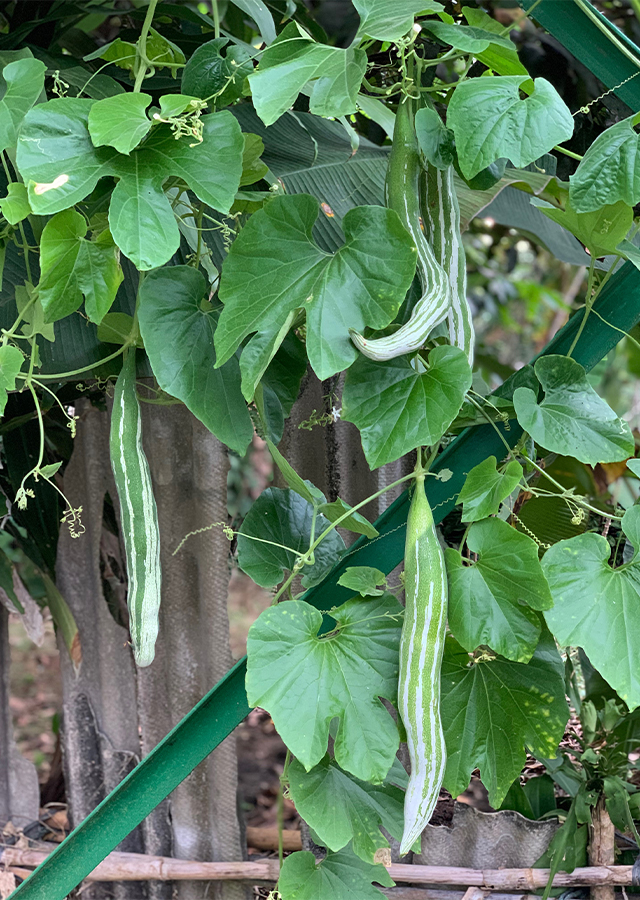
Snake gourd (Trichosanthes cucumerina) is an annual climbing plant up to 6 meters long of the Cucurbitaceae family, distributed from India and China to Indonesia, the Philippines, and Australia. Its elongated young fruit is commonly cooked as a vegetable or processed into a health juice. Traditionally, snake gourd is believed to help ease the effects of diabetes and expel intestinal parasitic worms.
Agroecology
Snake gourd can be found in open forests, marginal forests, and shrub vegetation at elevations of 400-1,500 m above sea level. Grows well in humid tropical regions with good drainage, a temperature range of 22-35°C, rainfall of 2,000-2,500 mm/year, pH 6-8. Favors full sun and is drought-tolerant.
Morphology
- Roots single, white.
- Stem soft, green, four-angled.
- Leaves suborbicular or kidney-shaped to ovate; young leaves are hairy, which is lost with maturity; leaves alternately arranged.
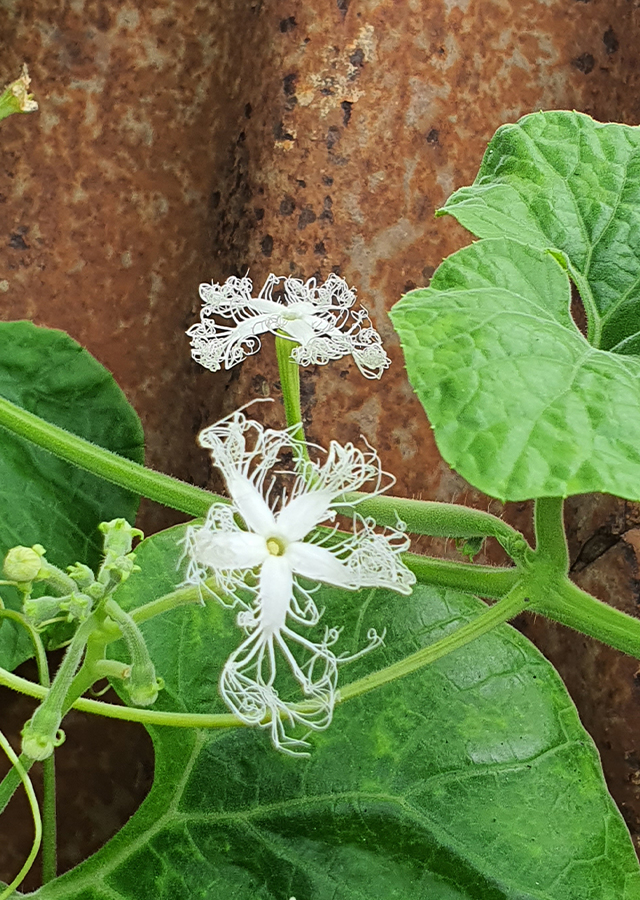
- Flowers unisexual, emerging in the leaf axils, white corolla.
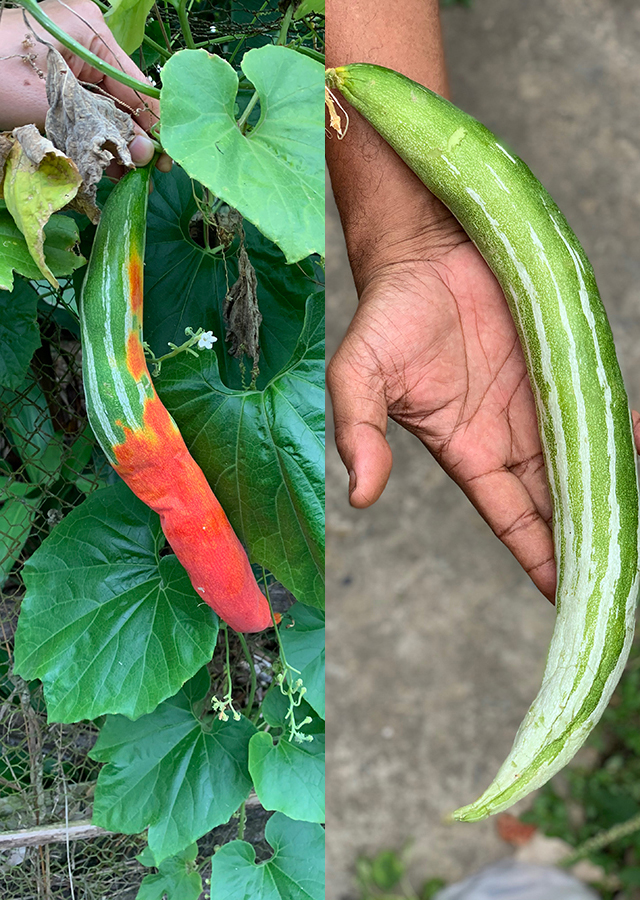
- Fruit solitary, long, pointed, green turning yellow-orange when ripe, ridged surface
- Seeds flat, yellowish-white.
Cultivation
- Propagated generatively (by seed).
- Planting is done during the rainy season.
Chemical Content
Alkaloids, flavonoids, cardiac glycosides, phenol, steroids, tannins, saponins, lignin, carotenoids, lycopene, oxalate, and quercetin.
Benefits
Stimulates expulsion of intestinal worms or parasites; eases the effects of diabetes; treats dengue fever, malaria, jaundice, constipation; supports heart health; has antiseptic activity.
Simplisia
- Wash the snake gourd flesh, peel the skin, and remove the seeds.
- Slice thinly, then dry in an oven at 40°C for 3 days.
- Once dry, grind the fruit flesh using a blender until it forms a powder.
- Store the dried material (simplisia) in a clean, closed container.
Local Names
Paria (Batak Toba), Prine (Gayo), Kambeh (Minangkabau), Paria belut (Sunda), Pare welot (Java), Lindung (Malay), Patola ulara (Makassar).
Traditional Recipes
The following recipes reflect traditional knowledge passed down through generations, not a substitute for professional medical diagnosis or advice. Consult a healthcare provider before use.
1. Antiseptic
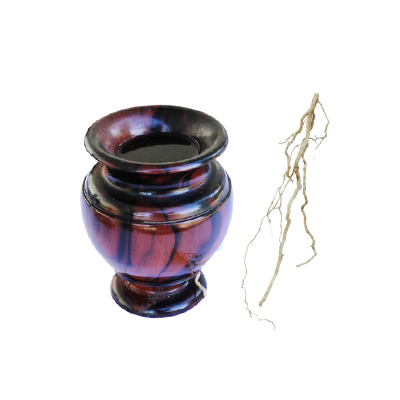
- Wash 50 g of root thoroughly, then boil in 3 cups of water for 20 minutes over low heat; once cool, strain.
- Use the strained liquid to clean fresh wounds.
Reference Sources
- Useful Tropicalm Plants. https://tropical.theferns.info/viewtropical.php?id=Trichosanthes+cucumerina 14-05-2020
- Prosea. 2016. Trichosanthes cucumerina L. https://uses.plantnet-project.org/en/Trichosanthes_cucumerina_(PROSEA) 07-11-2019
- Kage DN, Seetharam YN, Malashetty VKB. 2009. In vitro antibacterial property and phytochemical profile of Trichosanthes cucumerina L. Var. cucumerina. Advances in Natural and Applied Sciences 3(3): 438-441.
- Stellus S, Nair GA. 2015. Preliminary phytochemical analysis and anti-oxidant activity of Trichosanthes cucurmerina L. (Cucurbitaceae). Journal of Pharmacy Research 9(2): 101-104.
- Ugbaja CC, Fawibe OO, Oyelakin AS, Fadimu IO, Ajiboye AA, Agboola DA. 2017. Comparative phytochemical and nutritional composition of Trichosanthes cucumerina (L.) and some Solanum lycopersicumn(L.) cultivars in Nigeria. American Journal of Plant Sciences 8: 297-309.
- https://www.pertanianku.com/manfaat-pare-belut-untuk-atasi-berbagai-penyakit/