Tropaeolum majus L.
Summary
Tropaeolum majus or nasturtium is native to the Andes Mountains of South America and was introduced to Europe in the sixteenth century before spreading to various parts of the world. Its vitamin C-rich leaves and flowers are often used as garnish or mixed into salads, its dried seeds can be ground as a pepper substitute, while in the Andes and Brazil this plant is a popular traditional herbal remedy ingredient for respiratory and digestive disorders.
Agroecology
Nasturtium can be found growing in coastal and disturbed areas, especially adjacent to gardens and dump sites, thicket land, herb fields, wetlands, riverbanks, streams (i.e. riparian vegetation), urban shrubland, roadsides, railways, from sea level up to 3,000 m asl. This species can thrive in poor to average, slightly acidic soil. Its growth prefers light-rich, well-drained soil in full sun or partial shade. This plant is also intolerant of drought. Flowering occurs mostly in spring, but also in summer and autumn. Flowers can be seen blooming from July to September.
Morphology
- Roots short and branching.
- Stem climbing and brittle, pale green, hairless, and somewhat fleshy (succulent), soft, winding.
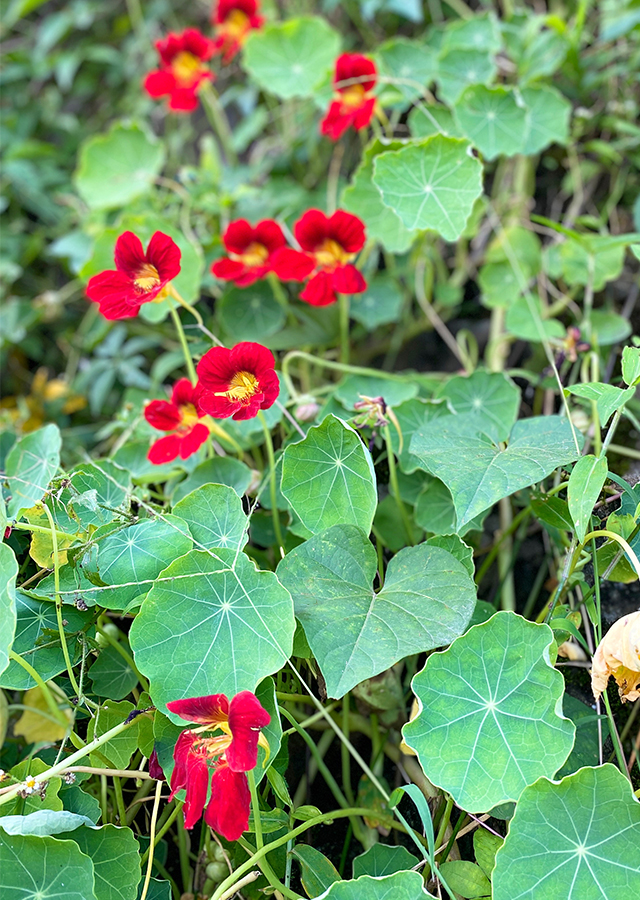
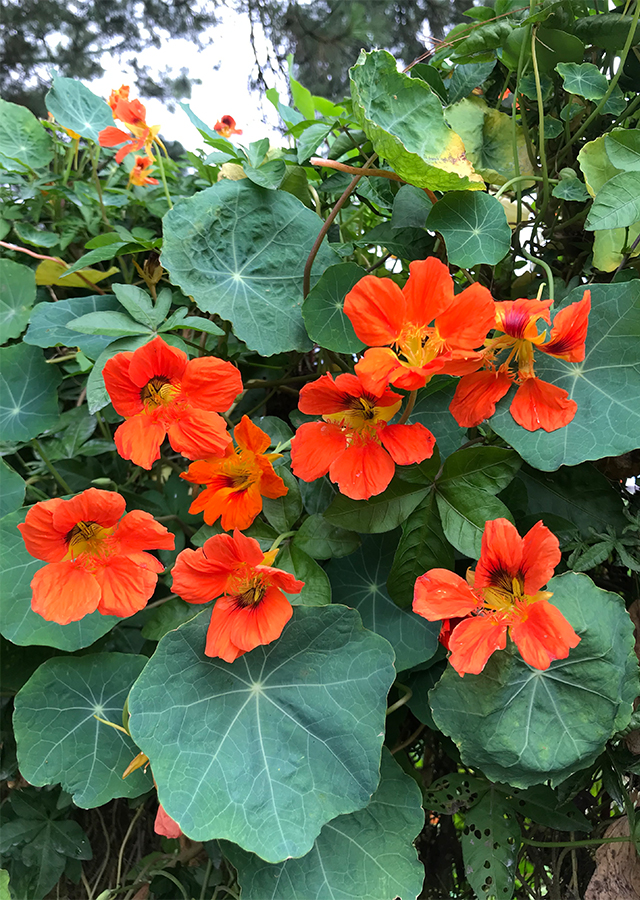
- Leaves green or grayish green above but pale below, borne on petioles 5-30 cm long and attached to the lower middle of the leaf (peltate leaf). These leaves (4-15 cm) are round (orbicular) with entire, wavy, or slightly lobed margins. Leaves hairless, with many prominent veins radiating out from the center of the blade.
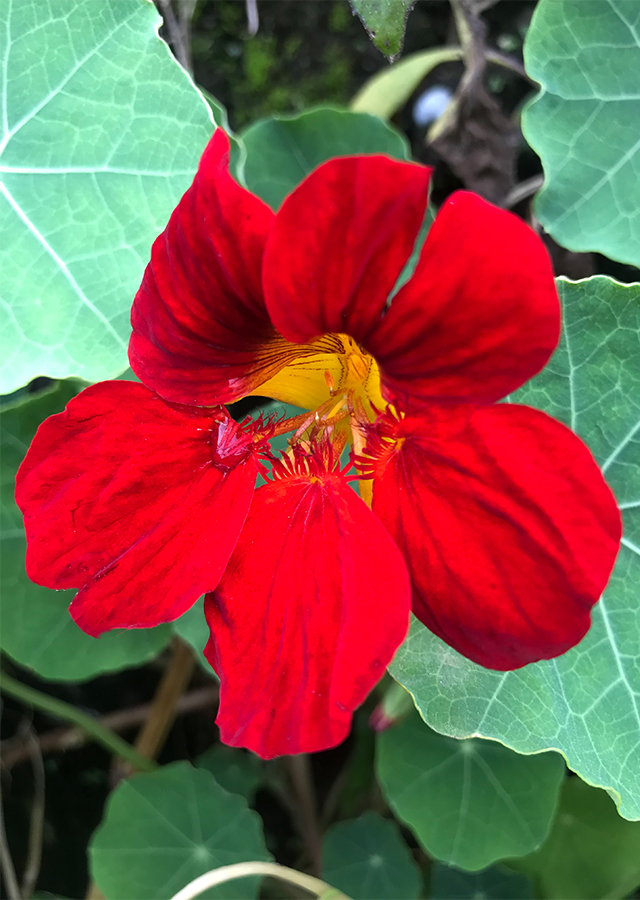
- Flowers hermaphroditic, resembling small trumpets, 2.5-7 cm in size and having five yellow, orange, or red petals 2.5-6 cm long and five sepals 1-2 cm long fused at the base. One of these sepals is formed into a nectar-containing spur (2.5-4 cm long) that is straight or slightly curved. Has eight stamens and an ovary above with a style and stigma. Fertile flowers are followed by fruit.
- Fruit a schizocarp splitting into three wrinkled mericarps, each segment/carpel with one large seed, ovoid shaped with prominent elongated ridges, pale green at first, turning pale brown when ripe.
Cultivation
Propagation is generative through seed. Seeds usually germinate within 2 weeks and flowering occurs after 8-10 weeks.
Chemical Content
Carotenoids (violaxanthin, antheraxanthin, lutein, zeaxanthin, zeinoxanthin, β-cryptoxanthin, α-carotene, β-carotene), beta-carotene, glycosides, flavonoids (quercetin, isoquercetin, quercetin 3-glucoside, myricetin, kaempferol, pelargonidin, delphinidin, cyanidin, hydroxycinnamic acid derivatives), polyphenols, glucosinolates (benzyl glucosinolate (glucotropaeolin), sinalbin), fatty acids (erucic acid, oleic acid, linoleic acid).
Benefits
Heals wounds (a natural disinfectant), relieves sore throat, lowers the risk of diabetes, boosts resistance to bacterial infections, clears the nose and nasal mucosa inflammation, reduces cataract formation, maintains respiratory system health (cough, bronchitis, asthma), treats wounds and urinary tract infections, stimulates hair growth, promotes new blood cell formation, maintains digestive health, improves liver function and performance and increases the organ's bile secretion, relieves muscle pain and improves physical and mental health, nourishes and improves brain function, helps address insomnia, regulates the menstrual cycle in women and increases sexual desire in men, addresses various skin disorders (rashes, injuries, removing acne), boosts the immune system, relieves inflammatory and cardiovascular disease, a laxative. Has antibacterial, antifungal, antiseptic, antioxidant, anti-inflammatory, depurative, diuretic, emmenagogue, expectorant, aphrodisiac, sedative, stimulant, antibacterial and antiviral, antibiotic, anticancer, antiseptic, and antiscorbutic activity.
Local Names
Informasi tidak ditemukan. Butuh penelusuran lebih lanjut.
Traditional Recipes
The following recipes reflect traditional knowledge passed down through generations, not a substitute for professional medical diagnosis or advice. Consult a healthcare provider before use.
1. Clears the nose and nasal mucosa inflammation
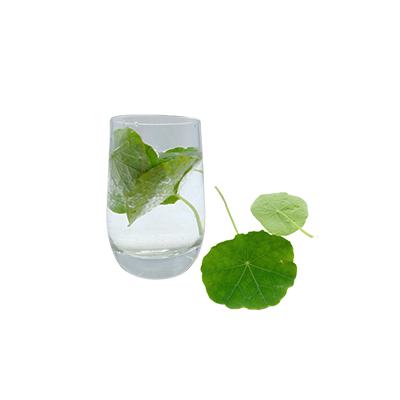
- Take an adequate amount of nasturtium leaves and wash until clean.
- Soak in a glass of water or infuse the leaves and wait for a while.
- Strain then use the infused water to clear the nose and nasal mucosa inflammation.
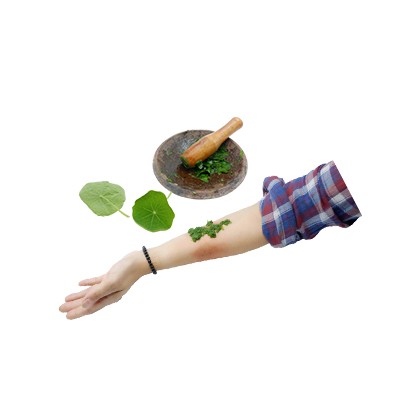
2. Wounds
- Prepare an adequate amount of nasturtium leaves and wash until clean.
- Grind until it becomes a paste.
- Apply the leaf paste to the wound.
Reference Sources
- Royal Botanic Gardens. Plants of the World Online. Tropaeolum majus L. https://powo.science.kew.org/taxon/urn:lsid:ipni.org:names:310974-2. 28-06-2022.
- Healthbenefitstimes.com. Health benefits of Indian Cress. https://www.healthbenefitstimes.com/indian-cress/. 28-06-2022.
- IDN Medis. 2022. Nasturtium: Manfaat – Efek Samping dan Cara Penggunaan. https://idnmedis.com/nasturtium. 28-06-2022.
- Tropical Plants Database, Ken Fern. 2021. Tropaeolum majus. https://tropical.theferns.info/viewtropical.php?id=Tropaeolum+majus. 28-06-2022.
- K. Jakubczyk, K. Janda, K. Watychowicz. et al. 2018. GARDEN NASTURTIUM (TROPAEOLUM MAJUS L.) - A SOURCE OF MINERAL ELEMENTS AND BIOACTIVE COMPOUNDS. Rocz Panstw Zakl Hig, 69(2):119-126.
- Brondani et al. 2016. Traditional usages, botany, phytochemistry, biological, biological activity abd toxicology of Tropaeolum majus L. A Review. Boletín Latinoamericano y del Caribe de Plantas Medicinales y Aromáticas 15 (4).