Typhonium trilobatum (L.) Schott
Summary
Keladi puyuh (Typhonium trilobatum) is a tuberous herb up to 85 cm tall of the Araceae family, distributed from Nepal to Southeast China and Sri Lanka. In Thailand, its tuber is traditionally used as a poultice for boils, while in India and Bangladesh its leaves and tubers are cooked as vegetables. Keladi puyuh is also currently being researched for its potential as a modern antidepressant candidate.
Agroecology
Grows well in lowlands and shaded places. Commonly found in tropical secondary forests, thickets, grasslands, and roadsides. Grows in open places up to elevations of 1,000 m above sea level.
Morphology
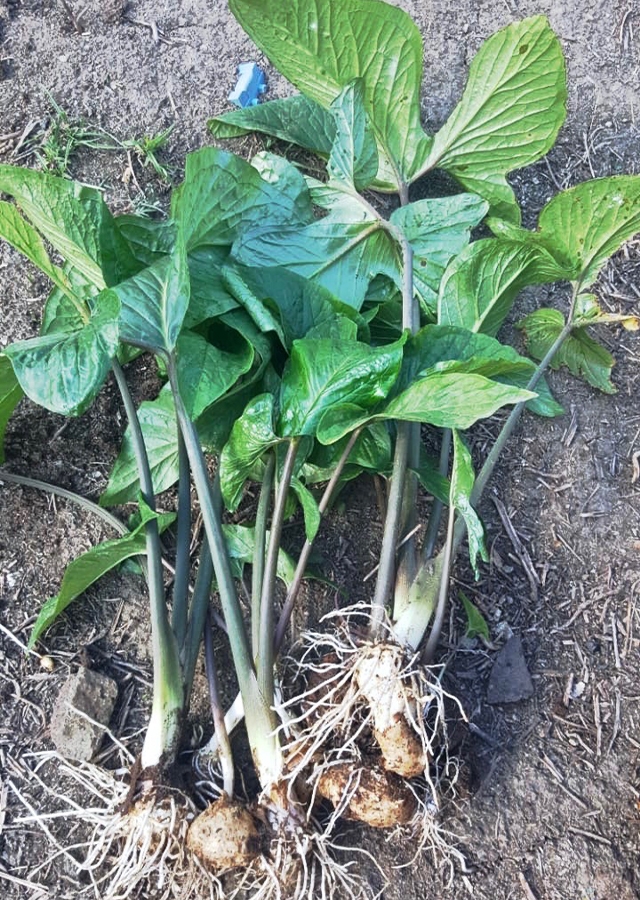
- Tuber cylindrical, up to 5 cm wide, white in color.
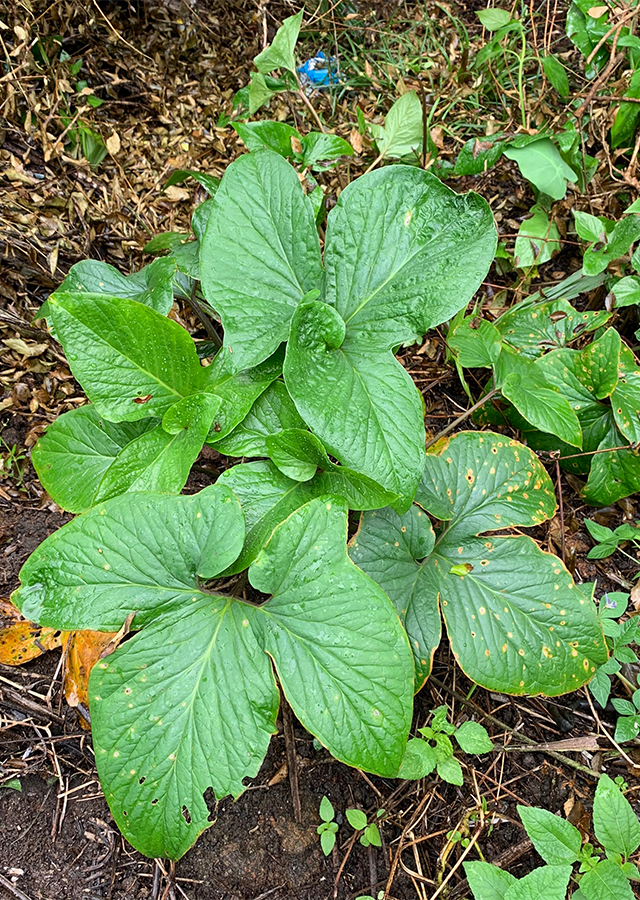
- Leaves green in color, petiole length up to 25-40 cm, leaf diameter up to 20 cm, ovate-heart-shaped (cordate), wavy, pointed tip, has 3 lobes.
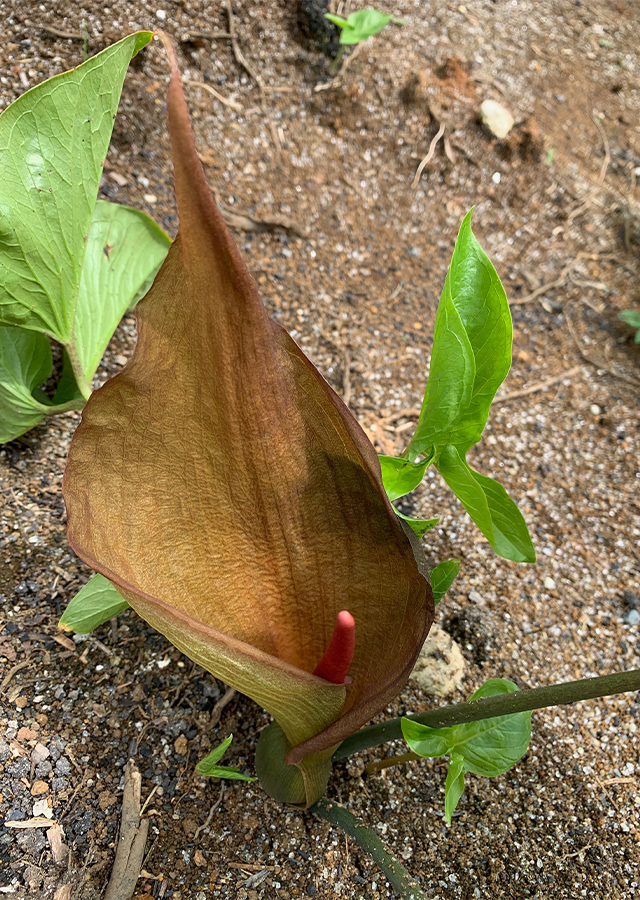
- Flowers densely arranged, sepal widening resembling a tongue, glossy purple or reddish in color.
- Fruit green in color, purple-speckled when young and white when ripe, elliptical in shape.
- Seeds 1-2 in number in each fruit.
Cultivation
- Propagated using seed and tuber.
- In the first year of growth, the plant forms vegetative organs and in the second year produces seeds.
Chemical Content
β-sitosterol, phenol, flavonoid, alkaloid, glycoside, phytosterols, carotene, folic acid, niacin, thiamine, sterols.
Benefits
Improves pancreatic function, treats boils, burns, snake bites, colic, cough, fever, stomach and abdominal complaints, body pain, rheumatism, constipation and tumors.
Simplisia
- Prepare fresh keladi puyuh tuber. Wash and clean off dirt with running water.
- Slice the tuber. Dry for several days.
- Once dry, place the simplisia in a sterile, airtight container.
Local Names
Tampasi.
Traditional Recipes
The following recipes reflect traditional knowledge passed down through generations, not a substitute for professional medical diagnosis or advice. Consult a healthcare provider before use.
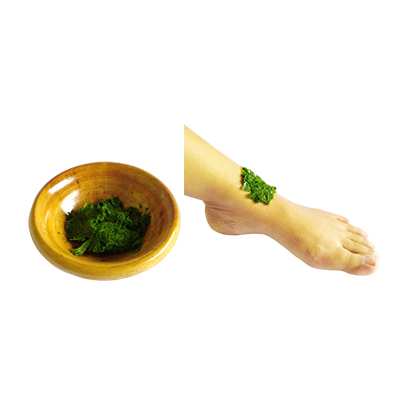
1. Snake bite
- Pound young keladi puyuh leaves and petioles as needed until fine.
- Apply to the affected area.
2. Improving pancreatic function
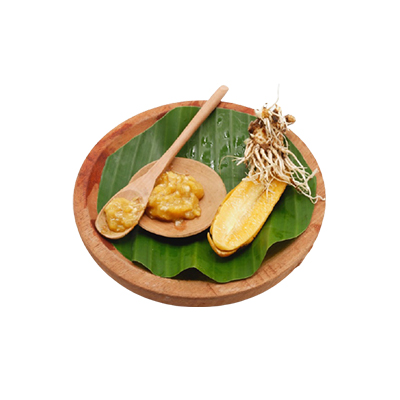
- Prepare keladi puyuh root as needed.
- Mash together with banana.
- Eat 4 times a day for a week.
3. Boils
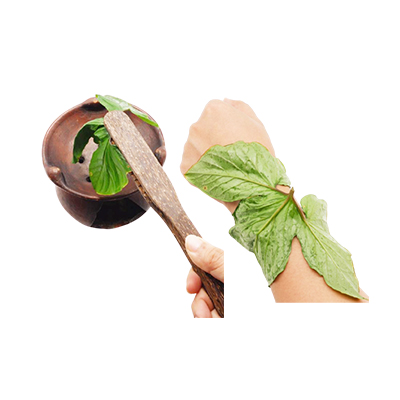
- Prepare thoroughly washed keladi puyuh leaves as needed.
- Heat over medium fire until wilted.
- Apply to the boil.
Reference Sources
- Motaleb Mohammad Abdul. 2013. Commonly Used Medicinal Herbs and Shrubs by Traditional Herbal Practitioners. International Union for Conservation of Nature and Natural Resources. (Gigitan Ular dan
- Meningkatkan fungsi pancreas)
- Indiabiodiversity.org.Typhonium trilobatum (L.) Schott.https://indiabiodiversity.org/species/show/231421 14-01-2021
- Reseachgate. Phytochemical and pharmacological investigation of the crude extract of Thyponium trilobatum(l.)Schott, http://researchgate.net/PhytochemicalandpharmacologicalinvestigationofthecrudeextractofThyponiumtrilobatum(l.)Schott 14-01-2021