Urena lobata L.
Summary
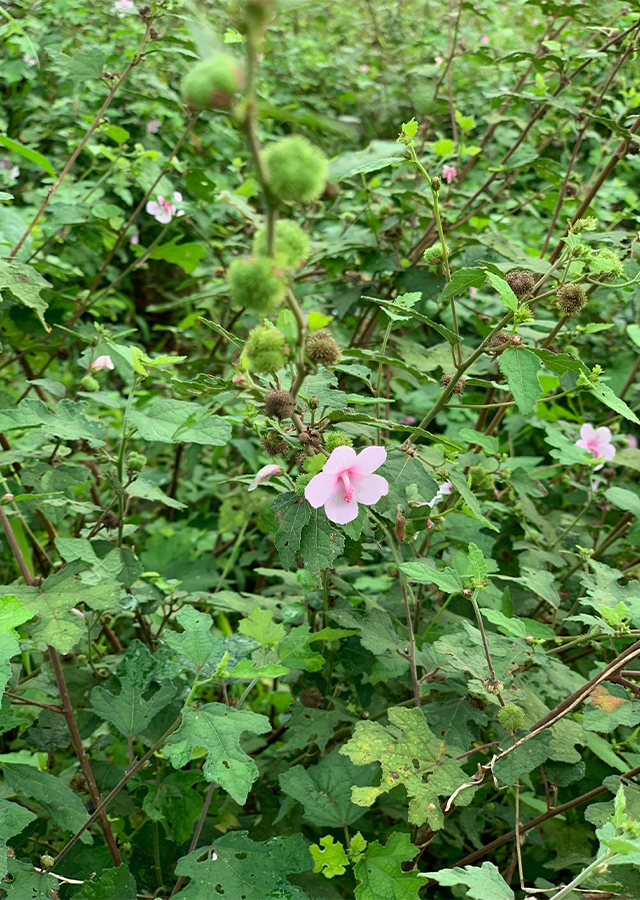
Pulutan, or caesarweed (Urena lobata), is an erect shrub up to 1 meter tall of the Malvaceae family, native to Asia or Africa and now growing wild across nearly all tropical and subtropical regions of the world. Its stem produces fiber used for making coarse cloth and traditional rope. Beyond that, pulutan is traditionally believed to relieve intestinal inflammation, influenza, and snakebites.
Agroecology
Caesarweed requires a hot and humid climate with adequate sunlight and abundant rainfall. Favors an average temperature of 21-27 °C, relative humidity of 73-85%, and rainfall of 160-210 mm/month during the growing season. Usually found from lowlands up to 2,000 m above sea level.
Morphology
- Roots taproot about 20-40 cm, also lateral roots up to 2 m long.
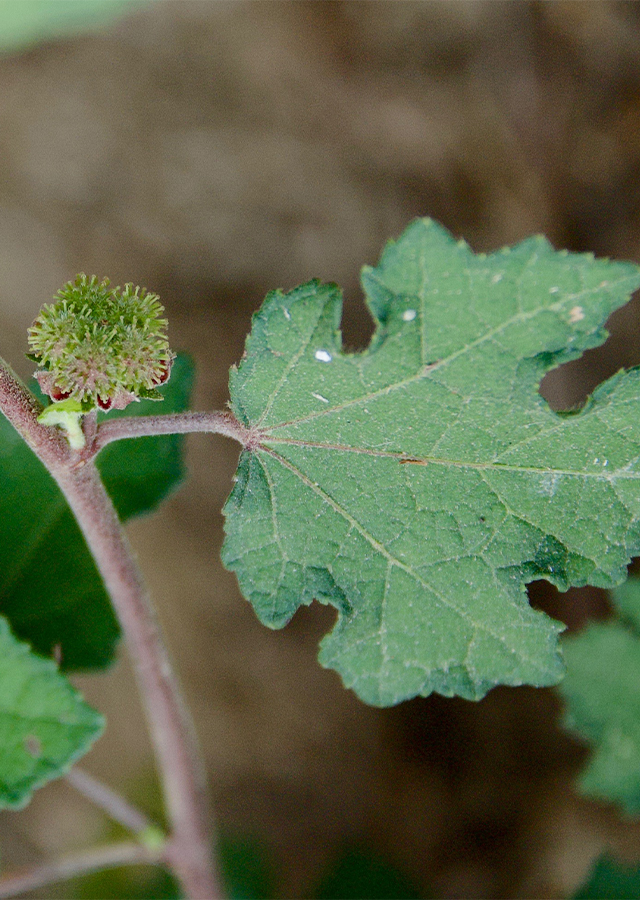
- Stem round in cross-section, heavily branched, purplish-brown, slightly hairy.
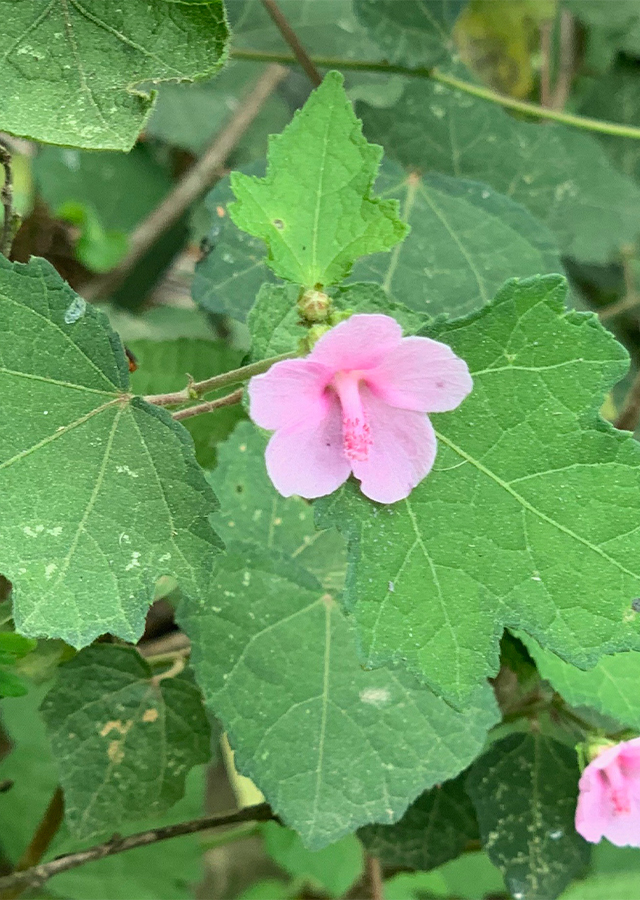
- Leaves alternate (spirally arranged), variable in size and shape, pointed at the tip, green. Petiole length about 0.2-12 cm and the leaf surface is hairy.
- Flowers emerge in the leaf axils, in clusters of 2-3, bell-shaped, pink. The caesarweed calyx is oval-shaped, about 1.5 cm in size. The anther is located on the upper disc, purple, with white pollen.
- Fruit consists of 5 triangular segments, non-splitting, 1 ovule, about 4-5 mm long, covered with spiny hairs and a thick, star-like hair coating.
- Seeds kidney-shaped, 2.5-3.5 mm long, hard, hairy to hairless, brown.
Cultivation
Propagated generatively (using seed).
Chemical Content
Alkaloids, tannins, terpenoids, flavonoids, saponins, steroids, phlobatannin sterol, glycosides, quercetin, β-sitosterol-3-O-β-D-glucopyranoside, imperatorin, and furocoumarin.
Benefits
Anti-inflammatory, antioxidant; treats intestinal inflammation, bladder problems, stomach ache, diarrhea and dysentery, colic, influenza, gonorrhea, fever, malaria; used externally for fractures, wounds, mastitis, snakebites, goiter, digestive disorders, vaginal discharge, malaria, rheumatism, tonsillitis, toothache; acts as a dewormer.
Simplisia
- Collect fresh, non-rotten caesarweed leaves. Wash thoroughly under running water.
- Sun-dry in the shade for several days until dry or the moisture content is below 10%.
- Store in a clean container/plastic bag.
Local Names
Caesarweed.
Traditional Recipes
The following recipes reflect traditional knowledge passed down through generations, not a substitute for professional medical diagnosis or advice. Consult a healthcare provider before use.
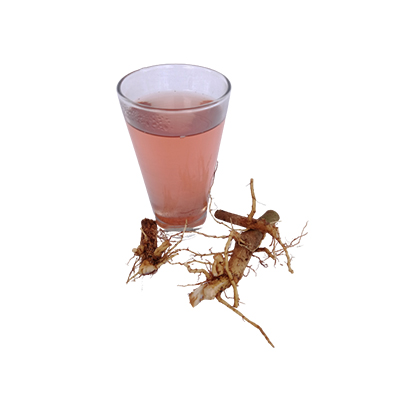
1. Influenza
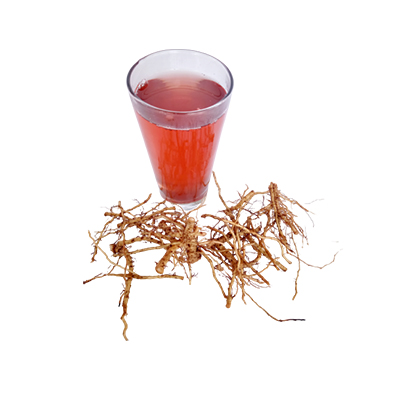
- Wash 24 g caesarweed root thoroughly.
- Boil in a sufficient amount of clean water.
- Once cool, drink the decoction.
2. Dysentery, Diarrhea, and Rheumatism
- Boil 30-60 g dried caesarweed root in a sufficient amount of clean water.
- Drink the decoction.
3. Vaginal Discharge and Boils
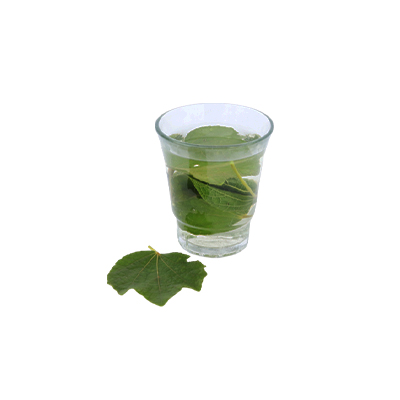
- Steep 7 caesarweed leaves in 1 cup of warm water. Let the leaves expand and steep.
- Drink the mixture while warm.