Vallaris glabra (L.) Kuntze
Summary
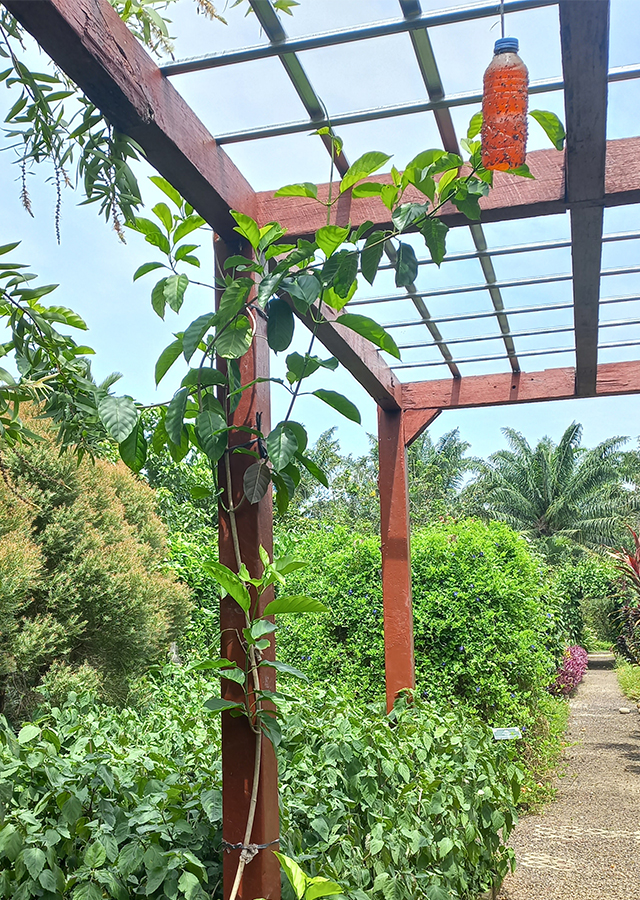
Bunga kesidang (Vallaris glabra) is a climbing plant 2-3 meters tall from the Apocynaceae family, native to Indonesia and famous in Thailand and Malaysia for its aroma resembling pandan leaves or freshly cooked rice. This plant is popular as a pergola ornamental in Southeast Asian gardens. Bunga kesidang is traditionally used to relieve bone pain caused by rheumatism, and research shows its potential as an anticancer agent.
Agroecology
Bunga kesidang grows well in fertile, well-drained, moist loamy soil, with individual spacing of 0.3-0.4 m. Provide a sturdy pergola or trellis to train the plant to climb. This plant flowers best in full sun, as shaded conditions inhibit flowering. Mulching the plant with compost is needed to prevent the soil from drying out or the roots from overheating.
Morphology
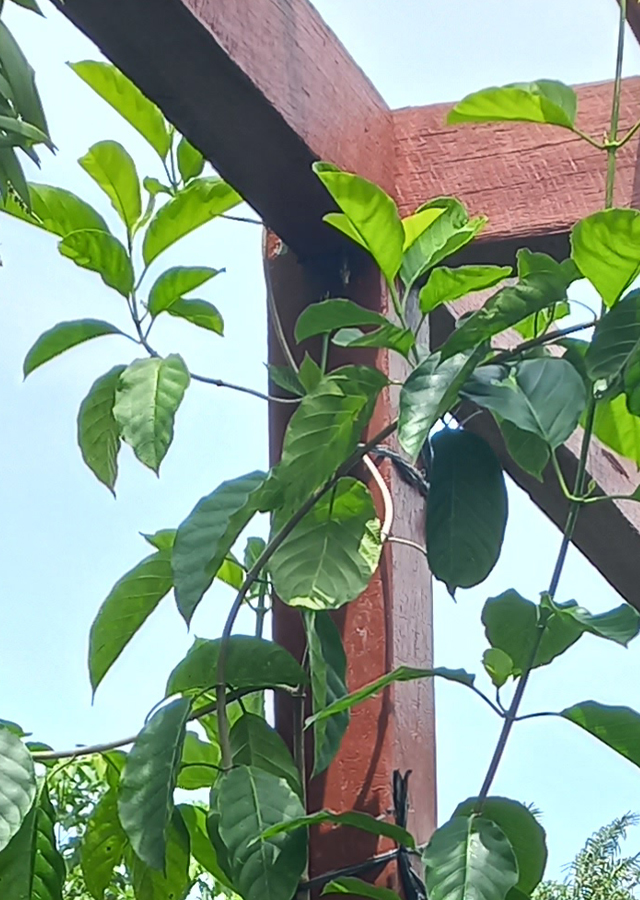
- Stem thin and woody, light gray, bark smooth.
- Leaves light green, glossy, opposite, elliptic or ovate with wavy margins. Leaf tip pointed or with a distinct drip tip.
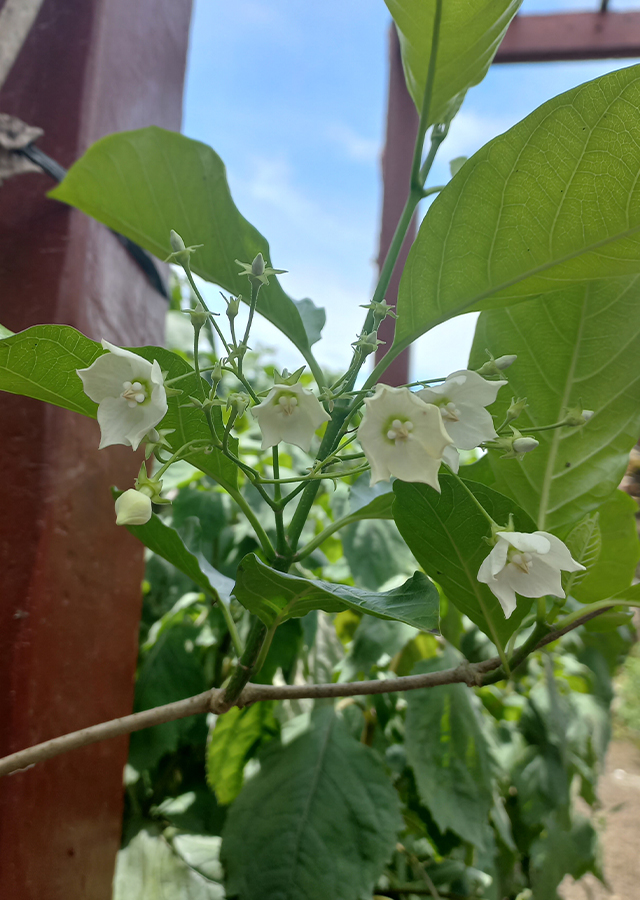
- Flowers borne in large clusters, cup-shaped and white, located near the branch tips. Flowers about 1.0 to 1.5 cm in diameter, with 5 pointed, slightly overlapping petals. The outer edge of each petal curves inward to form a sharp point in the center. They open in the morning, but the pandan or toasted-rice aroma is strongest at night.
- Fruit oblong, beaked, splitting into 2 dry, dehiscent fruits known as follicles.
Cultivation
- Propagation is done by budding, air layering/ground layering, and stem cuttings.
- Propagation by layering. Peg the stem down to the soil with a brick or similar object, and roots will form on the stem within about 2 weeks. The stem can then be separated from the parent plant and planted elsewhere.
Chemical Content
Terpenoids, tannins, saponins, cardiac glycosides, fatty acids, phenolic acids, 2-acetyl-1-pyrroline. The plant contains a mixture of the known glycoside vallarisoside, 3β-O-(α-acofriosyl), along with a new glycoside, benzyl 2-O-β-apiofuranosyl-(1→2)-β-D-glucopyranosyl-2 (Ahmed et al 2010), and 0-acetyl-solanoside (0-acetyl-acofreosyl digitoxigenin). Fresh flowers have 50 volatile components.
Benefits
Traditionally used for wounds, strengthening teeth, and rheumatism. Has analgesic, antiproliferative, anticancer, antimalarial activity, and strong cytotoxicity.
Local Names
Bunga wangi pandan, Siku Dengan, Bunga Tongkan, Kerak Nasi, Kesedengan.
Traditional Recipes
The following recipes reflect traditional knowledge passed down through generations, not a substitute for professional medical diagnosis or advice. Consult a healthcare provider before use.
1. Rheumatism
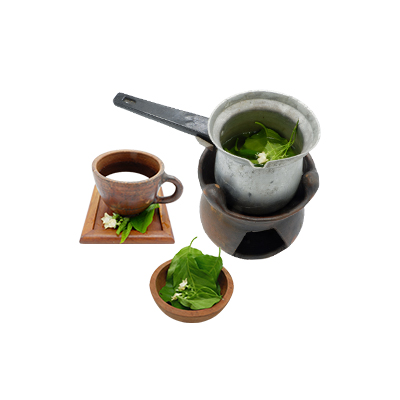
- Take an adequate amount, 3 flower blossoms and 4 fresh bunga kesidang leaves, and wash until clean.
- Boil both ingredients with 3 glasses of water until 1 glass of water remains.
- Strain then drink while warm before bed, once every 3 days.
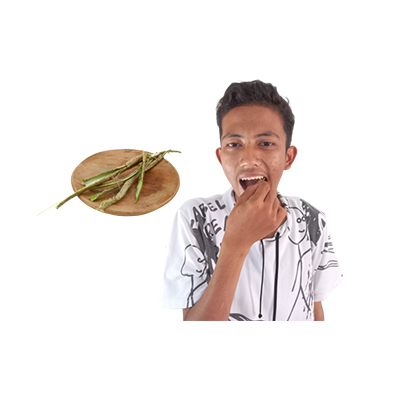
2. Strengthens teeth
- Take the bark of the bunga kesidang plant and wash until clean.
- Chew the bark to strengthen damaged teeth.
Reference Sources
- Royal Botanic Gardens. 2017. Vallaris glabra (L.) Kuntze. https://powo.science.kew.org/taxon/urn:lsid:ipni.org:names:82646-1#synonyms. 09-03-2022.
- Flora Fauna Web. 2021. Vallaris glabra (L.) Kuntze. https://www.nparks.gov.sg/florafaunaweb/flora/1/5/1529. 09-03-2022.
- Advanced Medical and Dental Institute (IPPT), Universiti Sains Malaysia (USM). Kerak nasi. https://www.amdi.usm.my/kerak-nasi-plantdatabase. 09-03-2022.
- Siu Kuin Wong, Eric Wei Chiang Chan. 2013. Botany, uses, phytochemistry and pharmacology of Vallaris: A short review. Pharmacognosy Journal 5 (2013) 242e246.
- Pustaka Flora. 2013. Vallaris glabra. https://pustakaflora.blogspot.com/2018/05/vallaris-glabra.html. 09-03-2022.
- Bebeja. 2014. Aroma Pandan Bunga kerak Nasi. https://www.bebeja.com/aroma-pandan-bunga-kerak-nasi/. 09-03-2022.