Vigna unguiculata subsp. unguiculata (L.) Walp.
Summary
Cowpea (Vigna unguiculata subsp. unguiculata) is an erect or climbing annual herb up to 4 meters tall from the Fabaceae family native to Cape Verde and tropical Southern Africa. Its seeds are processed into soups, cakes, and even a coffee substitute after being roasted and ground. Cowpea is traditionally used to help heal broken bones and treat insect bites.
Agroecology
Cowpea grows in tropical lowlands, and can also be cultivated at elevations up to 1,500 m asl. It grows best in areas where the mean annual daytime temperature is in the range of 20-35°C, but can tolerate 10-40°C. This plant cannot tolerate frost. It prefers mean annual rainfall in the range of 600-1,500 mm, but tolerates 400-4,100 mm. It prefers a position in full sun, tolerating light shade. It succeeds in various soil types, from sandy loam to loam, as long as the soil is well-drained. It prefers a pH in the range of 5.5-7.5, tolerating 4.3-8.8. Good yields have been obtained in peat soils, but the plant dislikes alkaline soil as this reduces bacterial nodulation on the roots and causes leaf chlorosis.
Morphology
- Roots a taproot with well-developed lateral roots. Cowpea has large root nodules shaped like pea seeds.
- Stem consists of several nodes, with each node producing one petiole. Several branches usually arise from the lower nodes of the main stem. Flowers occur on the main stem or on branches, which can reach up to 15 nodes, with the number of fertile nodes per plant reaching 5 to 10 fertile nodes.
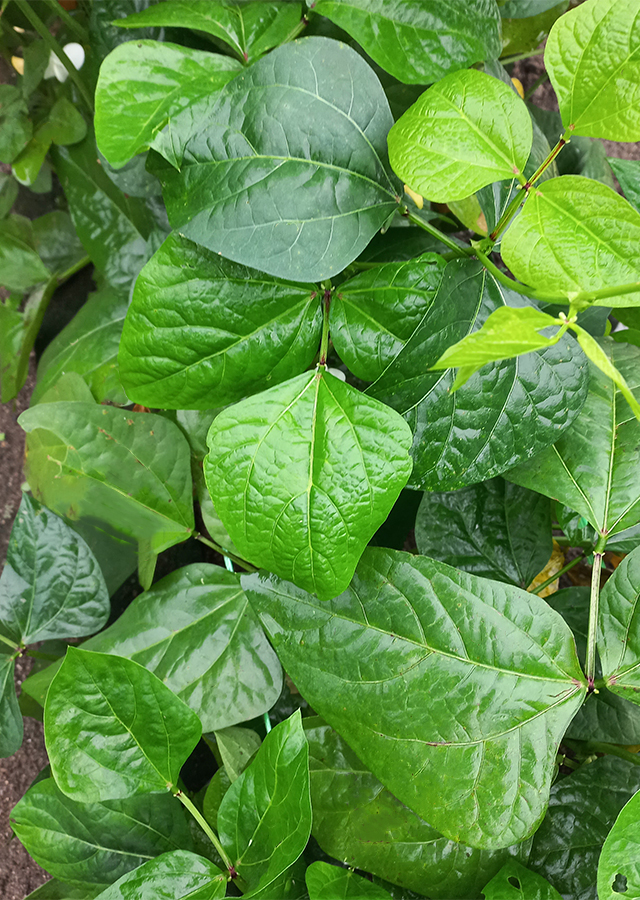
- Leaves consist of three leaflets (trifoliate) arranged alternately. The leaves are green, oval (ovate) or lanceolate shaped with leaf length ranging from 6.5-16 cm and leaf width 4-10 cm, with a petiole length of 5-15 cm.
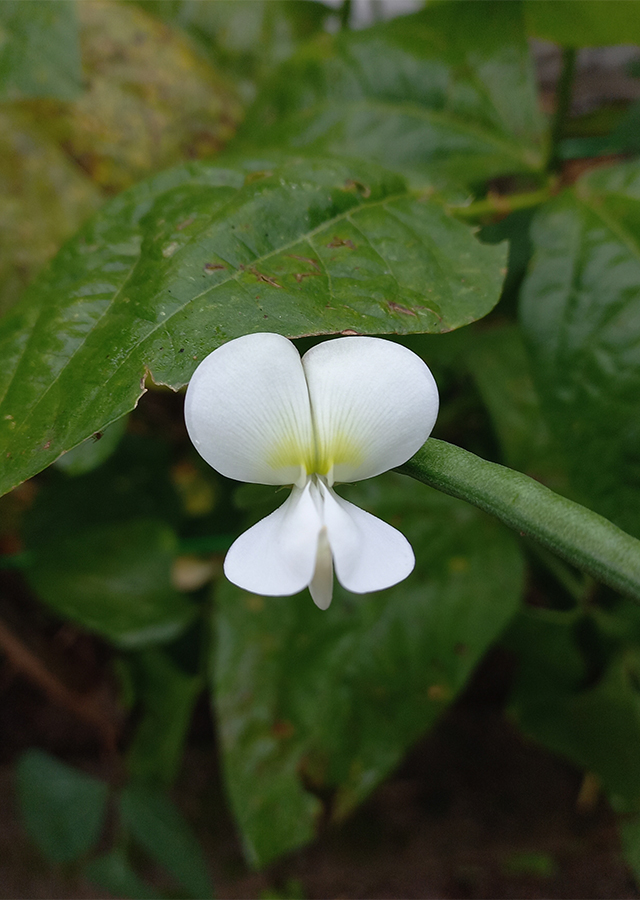
- Flowers arranged in the form of a raceme borne on the tip of a flower stalk (peduncle) that arises from the leaf axil, with each raceme containing 6 to 12 flower buds with a very short pedicel. The flower consists of: (1) a bell-shaped green calyx, (2) a corolla consisting of 5 petals (1 standard, 2 wings, and 2 keel petals) that are white, yellow, or purple in color, (3) 10 stamens grouped into 2 groups (diadelphous), namely 1 free and 9 united, with identical anthers. The ovary consists of several chambers.
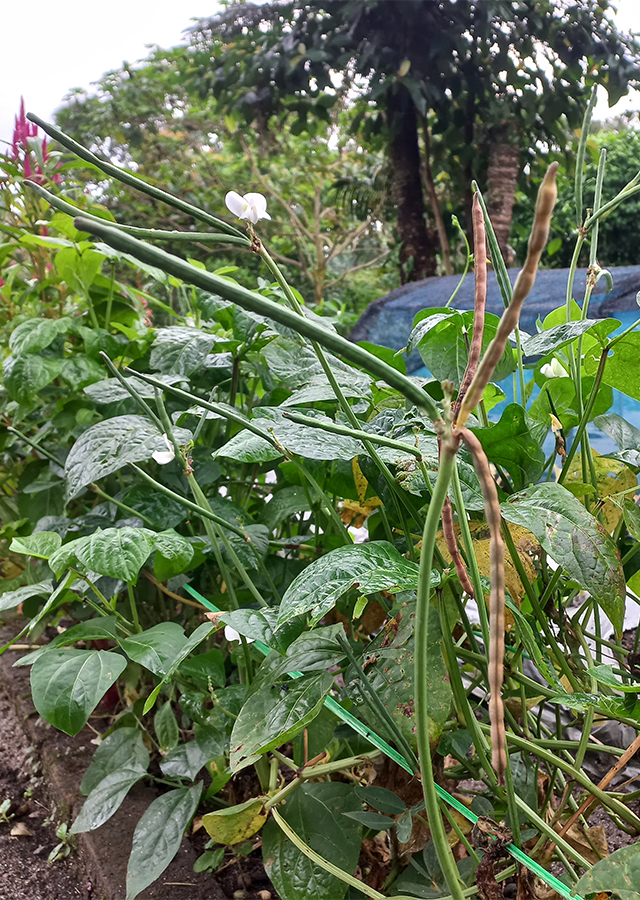
- Fruit (pod) of cowpea is light green or dark green when young and turns cream, brown, or black when mature, measuring 8-10 x 0.8-1 cm, containing 8 to 20 seeds.
- Seeds of cowpea vary in size, shape, and color (cream, brown, black, mottled, and red) with a weight per 100 seeds of between 10 to 25 g. Seed length ranges between 2-10 mm and has a white hilum surrounded by a black ring.
Cultivation
Propagation is done generatively with seed. Soak the seed for 12 hours in warm water first and sow it 1-3 cm deep in the soil. Seeds germinate best when the soil temperature is above 21°C.
Chemical Content
Flavonoids, phenolic compounds (protocatechuic acid, p-hydroxybenzoic acid, caffeic acid, p-coumaric acid, ferulic acid, 2,4-dimethoxybenzoic acid, and cinnamic acid).
Benefits
Heals and binds broken bones, treats swelling and skin infections, acts as a mild laxative, treats toothache, fights intestinal worms, insect bites, an antidote to snake bites, treats epilepsy, chest pain, constipation, dysmenorrhea, and headaches.
Simplisia
- Prepare cowpea seeds and wash until clean.
- Dry under the sun or with an oven at 40°C until the moisture content reaches 10%.
- Grind using a blender until it becomes powder, then sift to obtain an 80 mesh size.
- Store in a clean, airtight container.
Local Names
Kacang dadap, Kacang landes, Kacang otok, and Kacang tolo (Java).
Traditional Recipes
The following recipes reflect traditional knowledge passed down through generations, not a substitute for professional medical diagnosis or advice. Consult a healthcare provider before use.
1. Treats toothache
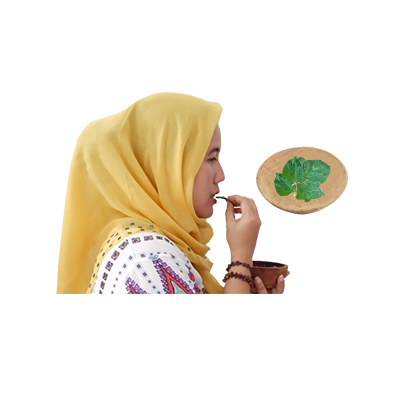
- Take an adequate amount of cowpea leaves and wash until clean.
- Chew the leaves to treat toothache.
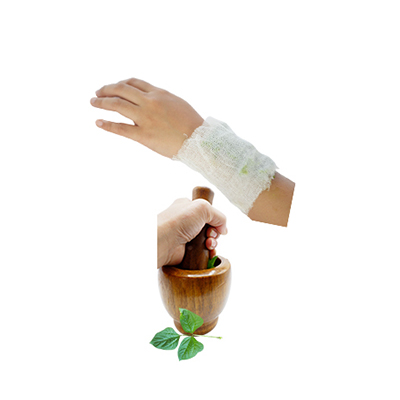
2. Heals and binds broken bones
- Prepare an adequate amount of cowpea leaves and wash until clean.
- Grind until it becomes a paste.
- Apply as a poultice to heal and bind broken bones
Reference Sources
- Useful Tropical Plants Database. 2021. Vigna unguiculata unguiculata. https://tropical.theferns.info/viewtropical.php?id=Vigna+unguiculata+unguiculata. 11-11-2021.
- Royal Botanic Gardens. 2017. Plants of the World Online: Vigna unguiculata subsp. unguiculata. http://powo.science.kew.org/taxon/urn:lsid:ipni.org:names:101661-3. 11-11-2021.
- Umberto Quattraocchi, F.L.S. 2012. CRC World Dictionary of Medicinal and Poisonous Plants. Common name, Scientific Name, Eponyms, Synonyms and etymology. CRC Press Taylor & Francis Group, LLC. United States. https://www.google.co.id/books/edition/CRC_World_Dictionary_of_Medicinal_and_Po/-37OBQAAQBAJ?hl=id&gbpv=1&dq=vigna+unguiculata+subsp.+unguiculata&pg=PA3908&printsec=frontcover. 11-11-2021.
- Trustinah. 1998. Biologi Kacang Tunggak. Monograf Balitkabi No. 3-1998, hlm. 1-19. Pemulia Tanaman,Balai Penelitian Tanaman Kacang-kacangan dan Umbi-umbian. https://balitkabi.litbang.pertanian.go.id/wp-content/uploads/2016/02/kt_1_edt-1.pdf. 11-11-2021.
- Amira Putri, Ni Wayan Wisaniyasa, I Putu Suparthana. Pengaruh Lama Perkecambahan Terhadap Total Fenol, Flavonoid, Dan Aktivitas Antioksidan Tepung Kecambah Kacang Tunggak (Vigna unguiculata L. Walp.). Itepa: Jurnal Ilmu dan Teknologi Pangan, ISSN : 2527-8010 (Online) A. Putri dkk. /Itepa 10 (1) 2021 1-13. https://simdos.unud.ac.id/uploads/file_penelitian_1_dir/6e095e13c2a878a9094b3183ccf84e12.pdf. 11-11-2021.