Vincetoxicum indicum (Burm.f.) Mabb.
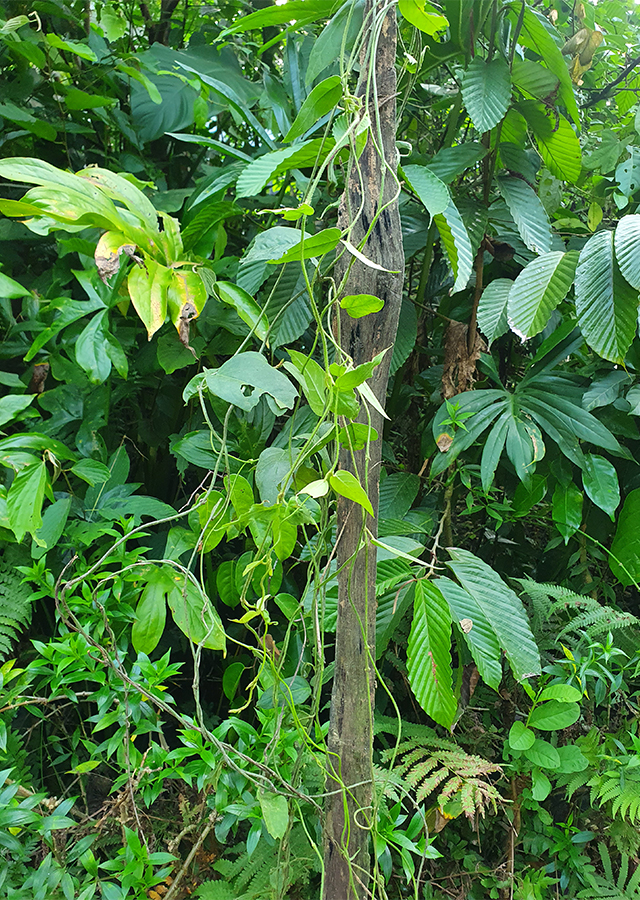
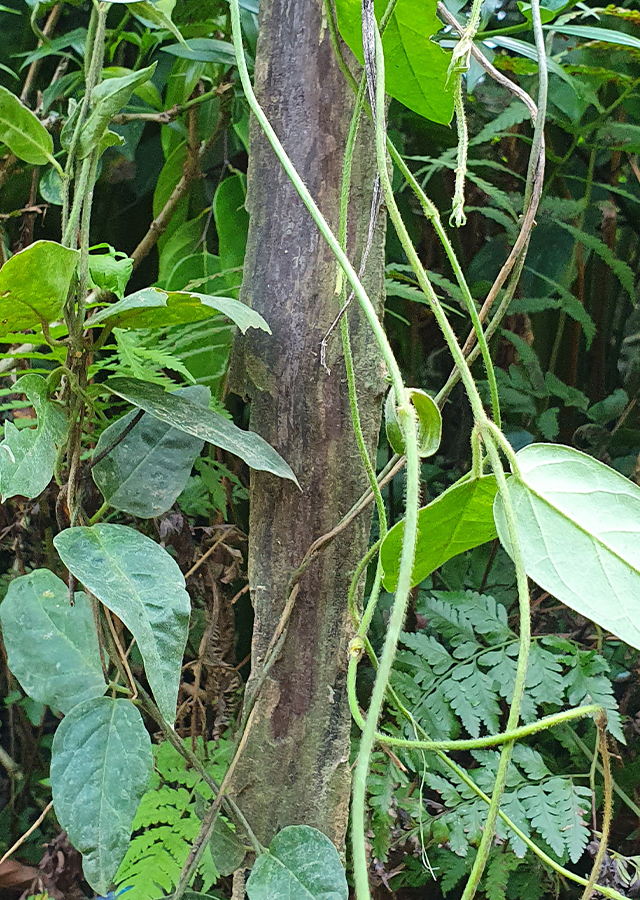
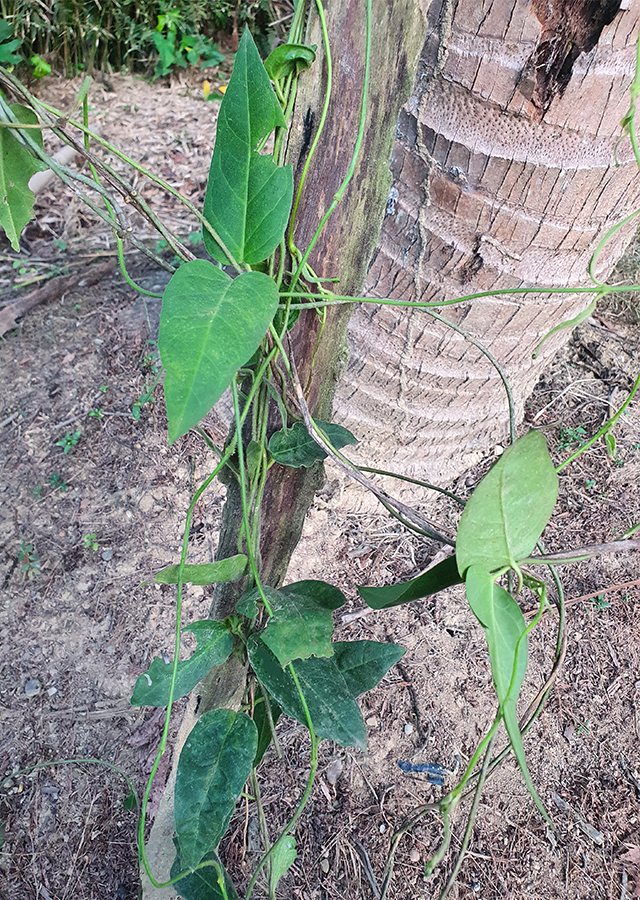
Summary
Vincetoxicum indicum, known as Indian ipecac, is a climbing plant that has become endangered due to overexploitation across Africa, Asia, and Australia. Its stem produces fine, strong fiber, while in the Ayurveda and Siddha medicine systems this plant has long been used and was even officially recorded in the 1884 Bengal Pharmacopoeia to address asthma, tuberculosis, and various inflammations.
Agroecology
Indian ipecac is generally found growing along coastlines in sandy soil, especially in stabilized sand dunes and sandy coconut plantations, from sea level up to elevations of 900 m asl. Also distributed in flat areas, hilly slopes, moist forests, and narrow valleys in Asia, Africa, Australia, the Oceanic Islands, Ceylon, the Malay Peninsula, and Kalimantan. Indian ipecac can also thrive in areas with annual rainfall of about 1,000-1,500 mm at elevations of 900 m asl up to 1,260 m asl in the sub-Himalayan belt and optimum temperatures of 5-25°C. Grows well in sunny areas with full sun or partial shade and prefers organic-rich, well-drained soil.
Morphology
- Roots a long, fleshy nodular cluster, with light brown cork bark.
- Stem much-branched, long-haired, growing climbing and twining with the help of tendrils, with yellowish sap.
- Leaves arranged opposite, dark green, glossy, blade ovate-oblong to elliptic-oblong, with a narrow tip, heart-shaped or rounded at the base, thin, velvety below when young, smooth above. Petiole up to 1.2 cm long.
- Flowers small at the tip of hairy stalks in the leaf axils, arranged in umbellate cymes. Flowers bisexual, corolla 5-lobed, fused at the base, oblong-pointed shaped, hairy and greenish purple or greenish yellow. Sepal tube divided almost to the base, densely hairy outside. Sepals spear-shaped or narrowly triangular, tip pointed. Anthers with a small membranous appendage at the tip.
- Fruit a fusiform follicle, 5-8.5 cm long, branching, oblong-lanceolate, tapering at the tip, and hairless (glabrous).
- Seeds numerous, oval shaped (0.6-0.8 × 0.3-0.4 cm), with a white coma of hairs.
Cultivation
- Plant propagation through seed and in vitro propagation techniques.
- Seed germination begins within 10 days and can be transplanted to a permanent field after 90 days. Transplanting gives the best results when done during the rainy season.
Chemical Content
Alkaloids (tylophorinine, tylophorine, 6-desmethyltylophorine, tylophorinidine, 5-hydroxy-O-methyltylophorinidine, tyloindicine A, tyloindicine-B, 14-hydroxyisotylocrebrine, 4,6-desdimethylisotylocrebrine, tyloindicine A-J, the indolizidine alkaloid septicine, and isotylocrebrine), saponins, tannins, terpenoids, stigmasterol, β-sitosterol, tetratriacontanol, octacosanyl octacosanoate, quercetin, α- and β-amyrins, phytosterol.
Benefits
Heals asthma, tuberculosis, bronchitis, cough, colds, inflammation, jaundice, snake bites, gout, diarrhea, dysentery, rheumatism, syphilis, addresses headache, reduces fever. Is a blood purifier, laxative, stimulant, emetic, diaphoretic. Has antibacterial, antipsoriatic, antimicrobial, antiulcer, anxiolytic, antidiabetic, hepatoprotective, antitumor, antioxidant, anticonvulsant, antirheumatic, antineuroinflammatory, and diuretic activity.
Local Names
Informasi tidak ditemukan. Butuh penelusuran lebih lanjut.
Traditional Recipes
The following recipes reflect traditional knowledge passed down through generations, not a substitute for professional medical diagnosis or advice. Consult a healthcare provider before use.
1. Cough
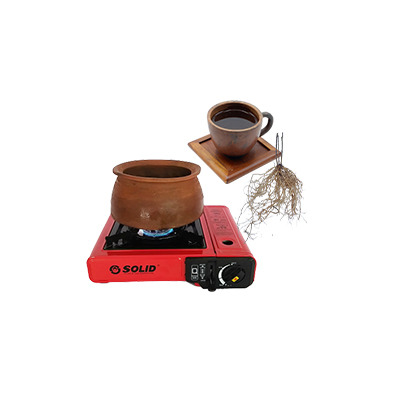
- Take an adequate amount of Indian ipecac root and wash until clean.
- Boil until it boils.
- Let it cool to warm/cold.
- Strain then drink.
Reference Sources
- Royal Botanic Gardens. Plant of the World Online: Vincetoxicum indicum (Burm.f.) Mabb. https://powo.science.kew.org/taxon/urn:lsid:ipni.org:names:77164260-1. 12-05-2022.
- S. Nazar, M.A. Hussain, A. Khan, G. Muhammad, S. N. A. Bukhar. 2020. An alkaloid rich plant Tylophora indica; current trends in isolation strategies, chemical profiling and medicinal applications. Arabian Journal of Chemistry. doi: https://doi.org/10.1016/j.arabjc.2020.05.037.
- Tropical Plants Database, Ken Fern. 2021. Tylophora indica. http://tropical.theferns.info/viewtropical.php?id=Tylophora+indica. 12-05-2022.
- Plant Resources of Tropical Africa. 2014. Tylophora indica (PROTA). https://uses.plantnet-project.org/e/index.php?title=Tylophora_indica_(PROTA)&mobileaction=toggle_view_desktop. 12-05-2022.
- Flowers of India. Indian Ipecac. http://www.flowersofindia.net/catalog/slides/Indian%20Ipecac.html. 12-05-2022.