Viola inconspicua Blume
Summary
Calung-calung (Viola inconspicua) is a herb without a distinct stem from the Violaceae family distributed from China and Japan to Indonesia, first recorded by Blume in 1825 from China and Java. Its young parts can be eaten as a vegetable. Calung-calung is traditionally used to treat conjunctivitis, acne, mastitis, and sore throat.
Agroecology
Lives across an elevation range from lowlands up to 1,600 m and sometimes up to 2,400 m, and in the Malesia region generally 500 to 1,700 m. Grows in grassland, hiking trail edges, and forest margins.
Morphology
- Rhizome upright or slightly leaning, 1-2 cm long, 2-8 mm in diameter.
- Roots taproot, white.
- Stem has very densely packed internodes.
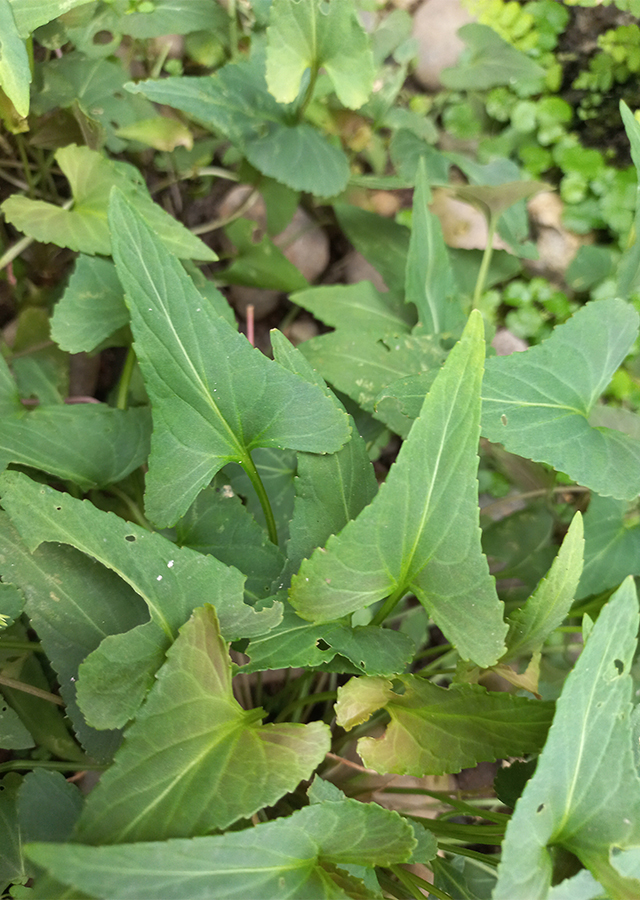
- Leaves arranged almost in a rosette, petiole with stipules fused about ¾ of their length to the petiole, the free part of the petiole 2-7 cm long, blade ovate-triangular, 1.5-9 × 1-7 cm, base heart-shaped, apex tapering or pointed.
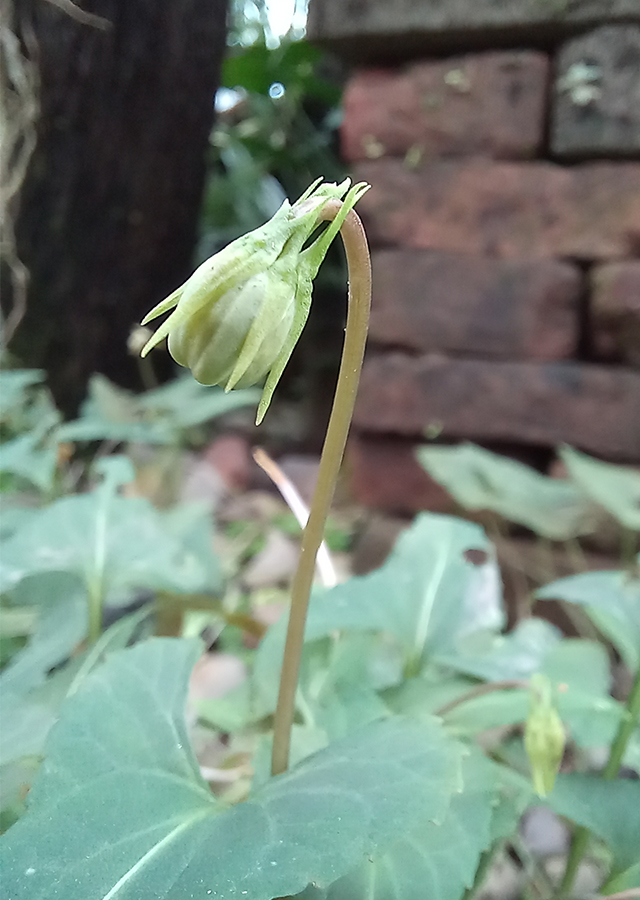
- Flowers bisexual with single symmetry, usually with a slender, long stalk, nearly equal to or slightly longer than the leaves. Flower with an ovate-lanceolate segmented calyx, corolla oblong-obovate, 7-9 mm long, anterior segment 1-1.2 cm long including the spur. Ovary round with a baseball-bat-shaped style.
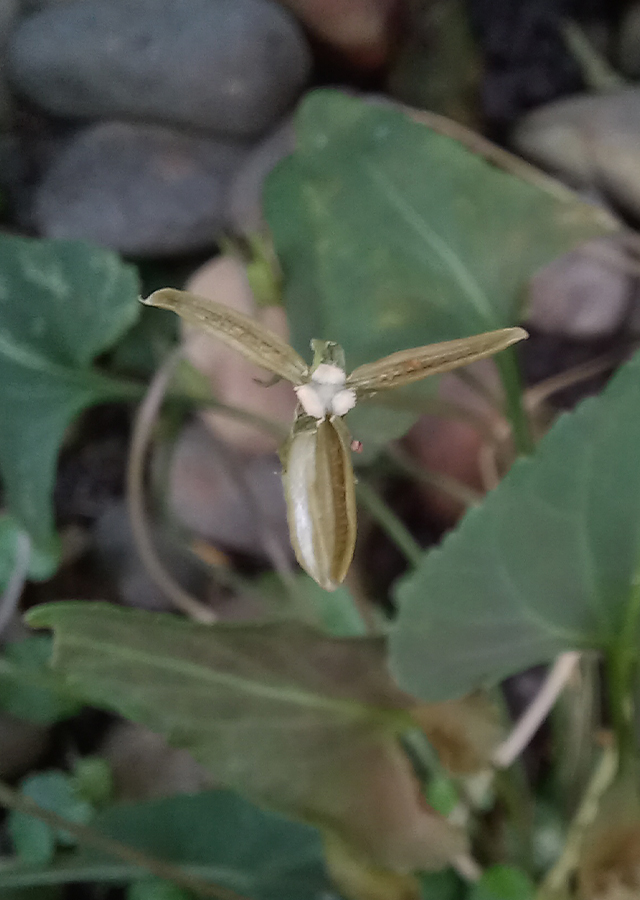
- Fruit a 3-loculed capsule, oblong, 8 to 10 mm long.
- Seeds green, ovate-round, 1-1.5 × 0.8 mm in size.
Cultivation
Propagation is done generatively with seed, which can develop well, and vegetatively with clump division and cuttings.
Chemical Content
Alkaloid compounds.
Benefits
Viola inconspicua Blume is used for conjunctivitis, acne, mastitis, wounds, sore throat, yellow fever, diarrhea with vomiting, relieves stomach ache, colds, and improves blood flow.
Local Names
Informasi tidak ditemukan. Butuh penelusuran lebih lanjut.
Traditional Recipes
The following recipes reflect traditional knowledge passed down through generations, not a substitute for professional medical diagnosis or advice. Consult a healthcare provider before use.
1. Wounds
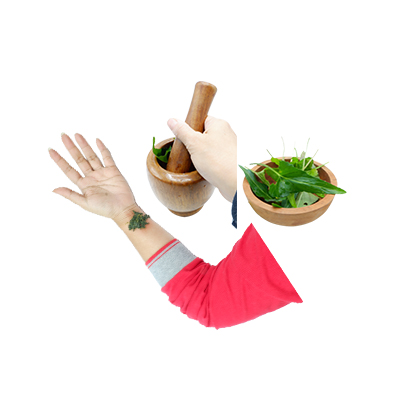
- Wash fresh calung-calung leaves until clean.
- Grind until it becomes a paste.
- Apply to the wound.
2. Stomach ache
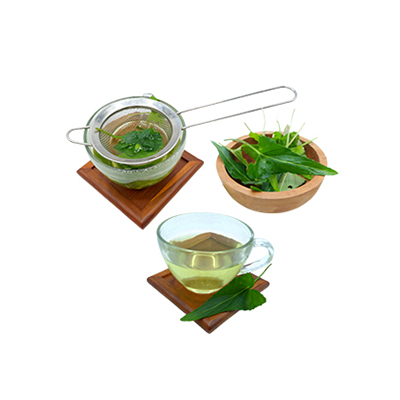
- Take an adequate amount of calung-calung leaves and wash until clean.
- Boil the leaves until it boils.
- Let it cool to warm/cold.
- Strain then drink.
Reference Sources
- Royal Botanic Gardens. 2017. Plants of the World Online: Viola inconspicua Blume. http://www.plantsoftheworldonline.org/taxon/urn:lsid:ipni.org:names:868371-1. 24-11-2021.
- PROSEA. Viola L.. https://prota4u.org/prosea/view.aspx?id=1367. 24-11-2021.
- Flora of China. Viola inconspicua Blume. FOC Vol. 13 Page 78, 98. http://www.efloras.org/florataxon.aspx?flora_id=2&taxon_id=200014373. 24-11-2021.
- Marina Silalahi, Endang C. Purba, Wendy A. Mustaqim. 2019. TUMBUHAN OBAT SUMATERA UTARA Jilid II: DIKOTILEDON. UKI PRESS. Jakarta.. http://repository.uki.ac.id/649/1/draft_pt2.pdf. 24-11-2021.