Vitex pinnata L.
Summary
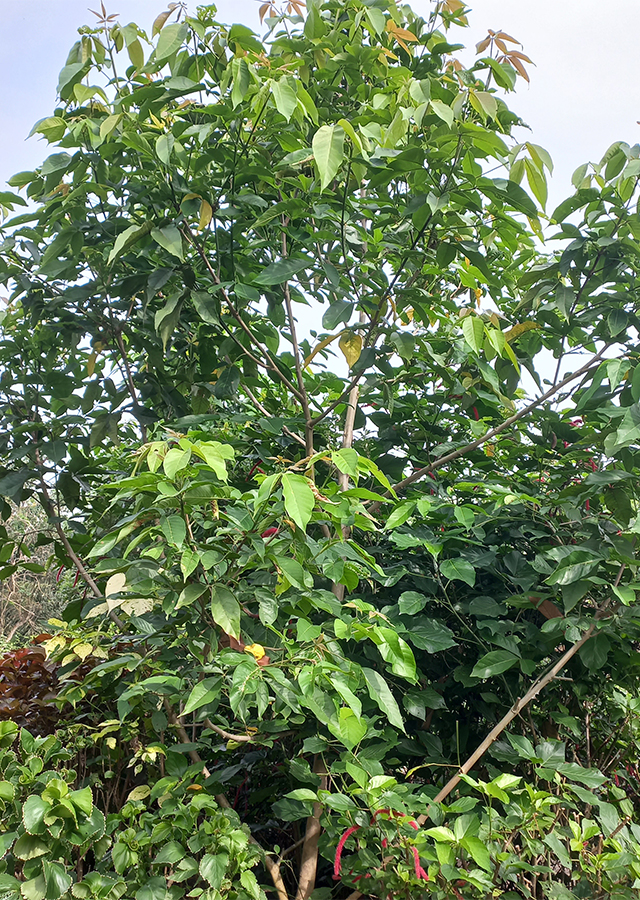
Laban (Vitex pinnata) is a tree up to 25 meters tall from the Lamiaceae family that originates from Tropical Asia, spread from Myanmar to Indonesia. Its strong, water-resistant wood is used to make doors, windows, and furniture, while the Dayak people use its leaves as a remedy for dysentery. Laban is traditionally used to treat stomach pain, fever, and malaria.
Agroecology
Vitex pinnata is commonly found in relatively dry lowland forest areas, where it can be found at elevations up to 1,000 meters. This plant is found in areas with full sun where average annual rainfall is in the range of 590-1,500 mm, and average annual temperature is 20-32 °C.
Morphology
- Roots a strong taproot.
- Stem woody, cylindrical, bark yellowish-gray or light brown, smooth to scaly and sometimes grooved.
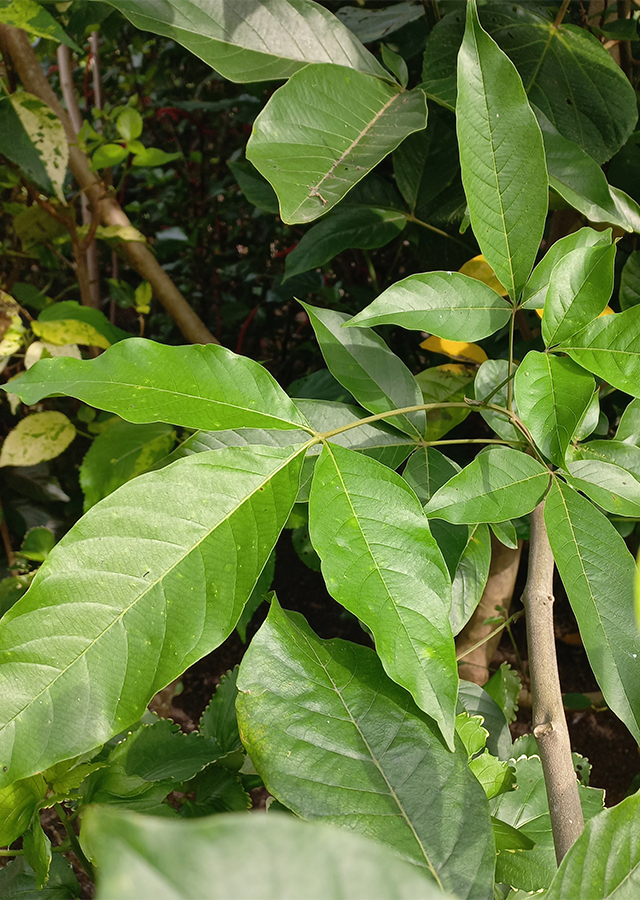
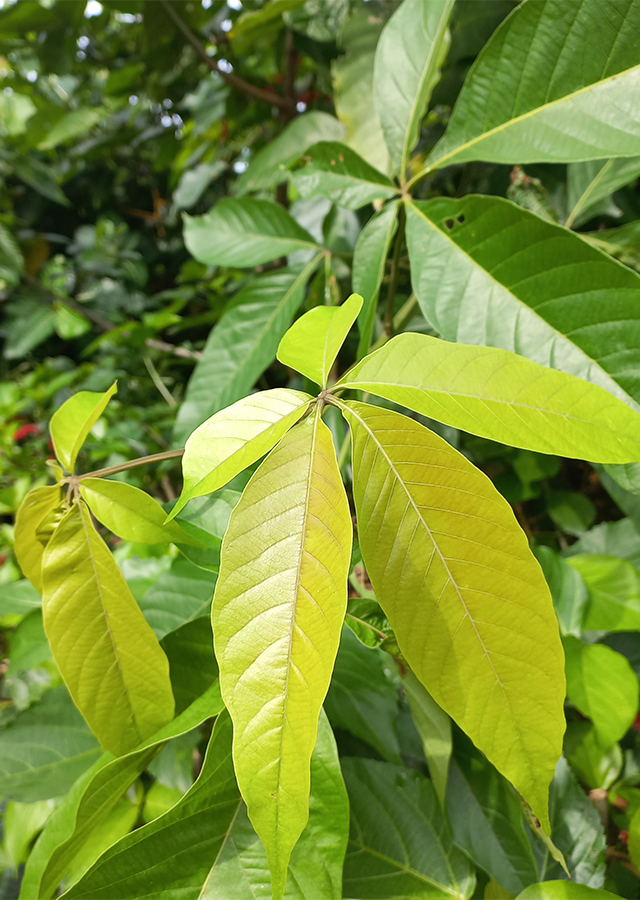
- Leaves compound, 3 or 5 leaflets, the middle leaflet elliptical and nearly sessile, the two outer ones usually much smaller than the others, ovate or elliptical, 3-25 cm long, 1.5-10 cm wide; base rounded to wedge-shaped, tip tapering, margin smooth, pinnate venation with 10-20 pairs of veins, with yellowish-green hairs present.
- Flowers in terminal panicles, each flower (about 8 mm in diameter) with 5 fragrant white to purple petals.
- Fruit purplish-black (about 5-8 cm in diameter), round, glossy and fleshy.
- Seeds enclosed by a hard, stony endocarp.
Cultivation
Laban is propagated by seed. Before planting, seeds are soaked for 15 seconds in hot water to stimulate and improve germination. Seeds begin to germinate 10-40 days after sowing with a germination rate of 60-80%.
Chemical Content
Saponins, tannins, an iridoid glucoside (pinnatoside), three flavonoids (viscioside, apigenin, and luteolin).
Benefits
Treats stomach pain, dysentery, fever, malaria, wounds.
Local Names
Laban, Amola, Gagil, Humulawan, Kalapapa, Kulimpapa batu, Kulimpapa, Leban (Dayak), Simpor, Kulumpapa, Daun menjari Laban, Laben, Leban, Pagil (Kalimantan), Hiketaroe (Sumba Island), Pampa (Komodo Island), Kopiher (Karo language), Aloban-Batu, Aloban Kardoek or Aloban bunga (Sumatra).
Traditional Recipes
The following recipes reflect traditional knowledge passed down through generations, not a substitute for professional medical diagnosis or advice. Consult a healthcare provider before use.
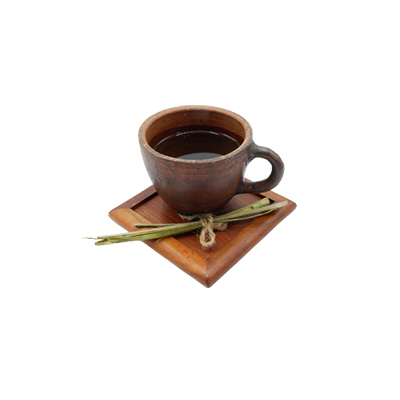
1. Stomach pain
- Take laban bark as needed.
- Wash the bark under running water until clean.
- Boil until boiling.
- Strain the decoction.
- Drink while warm.
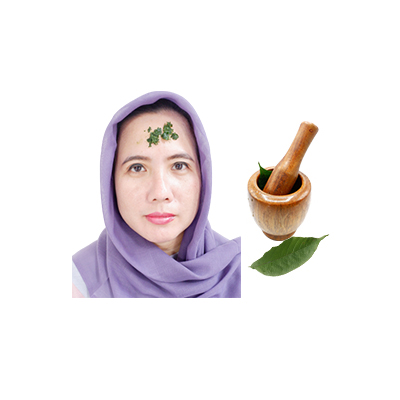
2. Fever
- Wash fresh laban leaves as needed until clean.
- Grind the material finely into a paste.
- Apply the mixture to the forehead.
- Repeat until the fever subsides.
Reference Sources
- Rusyana Yaya. 2011. Laban (Vitex pinnata.) http://floranegeriku.blogspot.com/2011/06/laban-vitex-pinnata.html. 14-09-2021.
- Useful Tropical Plants Database. 2021. Vitex pinnata. http://tropical.theferns.info/viewtropical.php?id=Vitex+pinnata. 14-09-2021.
- Royal Botanic Gardens. 2017. Plants of the World Online: Vitex pinnata L.. http://plantsoftheworldonline.org/taxon/urn:lsid:ipni.org:names:865935-1. 14-09-2021.
- Flora Fauna Web. 2021. Vitex pinnata. https://www.nparks.gov.sg/florafaunaweb/flora/5/6/5628. 14-09-2021.
- A. Muhammad, Genoveva M. Lenny. 2018. Uji Toksisitas dan Identifikasi Fitokimia Ekstrak Ranting Leban (Vitex Pinnata) dari Putussibau, Kalimantan Barat. Majalah Kedokteran UKI. Vol. 34 No. 2 (2018) : APRIL - JUNI.
- A. Athar, Nathan Mbong, Chad D. Iverson, dkk. 2009. Minor Chemical Constituents of Vitex Pinnata First Published January 1, 2009 Research Article https://doi.org/10.1177/1934578X0900400102.