Volkameria inermis L.
Summary
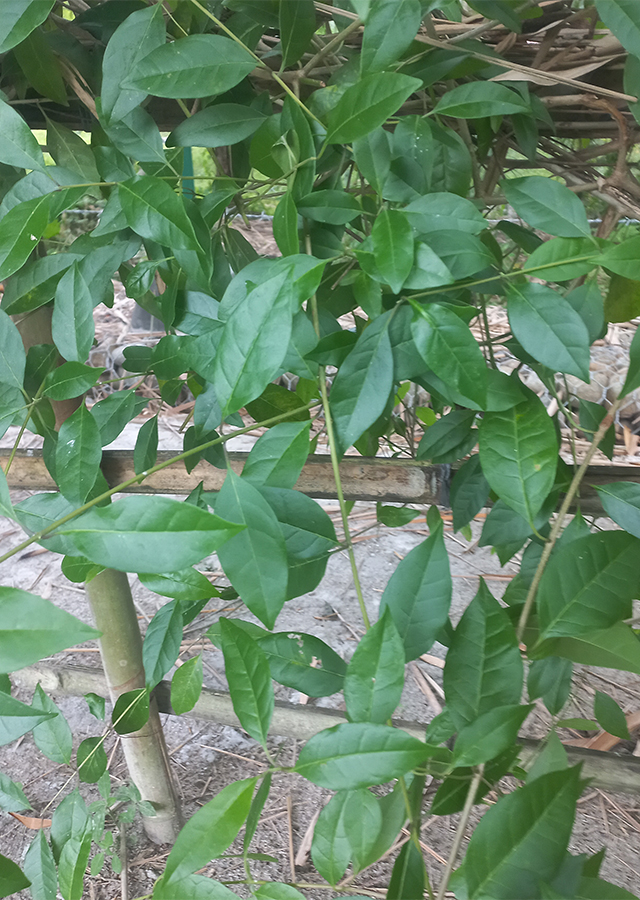
Gambir laut (Volkameria inermis) is an upright or climbing shrub 1-4 meters tall, even reaching 13 meters when climbing, from the Lamiaceae family spread from India to Australia and the Pacific. This plant is often planted on beaches to control erosion, while its fragrant aroma is used as a perfume ingredient. In Ayurvedic medicine, gambir laut is traditionally used to address urinary and heart disorders.
Agroecology
Gambir laut grows mainly in open coastal areas, along beaches, in mangrove forests, along tidal rivers, but also along rivers and in swamps further inland up to an elevation of 100 m. Usually grows easily in sandy soil, but also in clay, dry/drought soil, moist soil, waterlogged soil (drainage sites), well-drained soil, saline soil, fertile loamy soil. Requires full sun or partial shade.
Morphology
- Stem upright or climbing/liana that can reach 13 m in length. Its branches are slender while the nodes are not annulated.
- Leaves ovate, oblong-ovate or oblong ovate, 4 to 8 cm long, 2 to 5 cm wide, glossy, smooth, entire and pointed at the tip.
- Flowers inflorescence (cyme) usually consisting of three flowers, located in the leaf axils. Calyx green, narrowly funnel-shaped, and equipped with 5 very short teeth. Corolla about 3 cm long and consists of a thin, spreading white tube, purple lobes about 7 millimeters long. Stamens elongated, and purple in color.
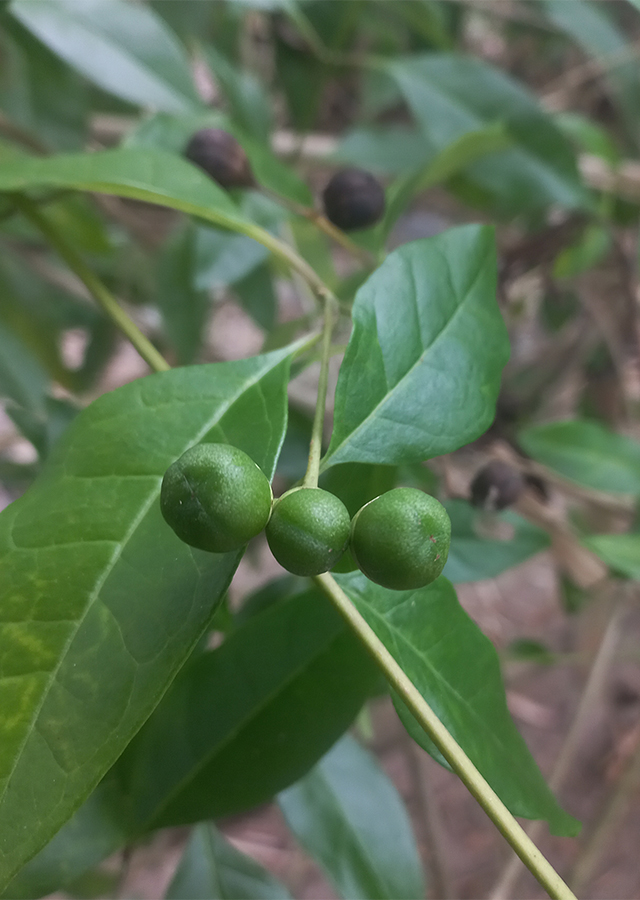
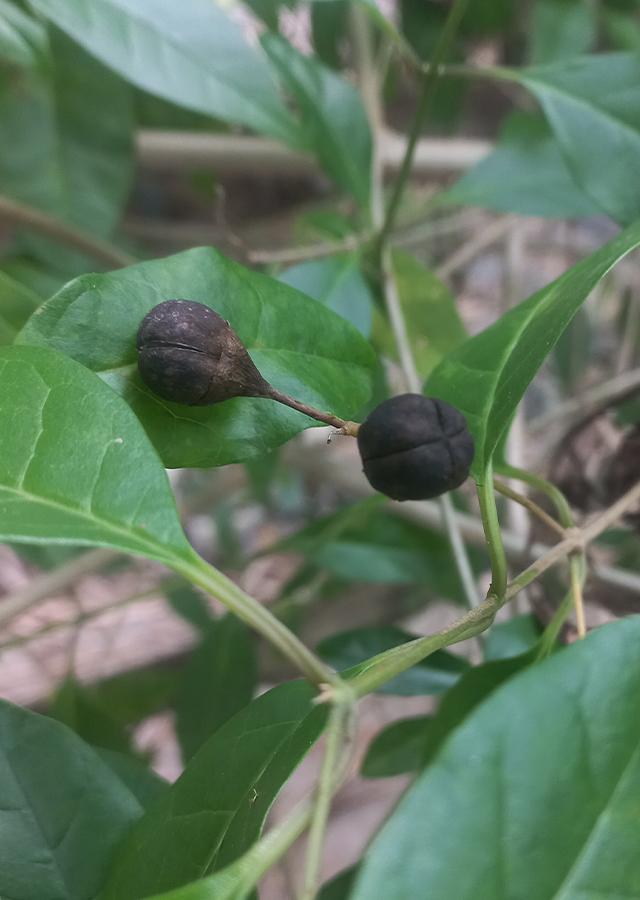
- Fruit ovate, about 1.5 cm long, and splits into 4 pyrenes. The calyx within the fruit is about 1 cm in diameter.
Cultivation
Gambir laut can be propagated by seed and stem cuttings.
Chemical Content
Phytochemical studies reveal the presence of flavonoids, sterols, flavones, triterpenes, diterpenes, quinones, neolignans, a fragrant stearoptin with an apple-like smell, pentadecanoic acid-β-D-glucoside, acetin and apigenin, new clerodane diterpenoids, cleroindermin, apigenin, cardiac glycosides, anthraquinones, phenolic saponins, tannins, iridoids, steroids, carbohydrates, fixed oil, essential oil, and lignin.
Benefits
Fever-reducing remedy, liniment for rheumatism, intermittent fever, swelling to prevent pus formation, scrofulous and venereal diseases, elephantiasis, asthma, topical treatment for burns, buboes, mania and itching, increases appetite, dysentery remedy, treats hypertension, coughs, skin rashes, boils, treats umbilical cord infections and cleanses the uterus, treatment of urinary and heart disorders, edema, muscle pain, skin diseases, beriberi, antidote for fish/seafood poisoning, crab poisoning, for clear vision.
Simplisia
- Prepare fresh gambir laut leaves as needed, wash clean with running water then drain.
- Dry under sunlight or with an oven at 40 °C until moisture content reaches 10%.
- Blend into powder.
- Store in a clean, airtight container.
Local Names
Akar kerujo, Temporapang (Kalimantan).
Traditional Recipes
The following recipes reflect traditional knowledge passed down through generations, not a substitute for professional medical diagnosis or advice. Consult a healthcare provider before use.
1. Itching
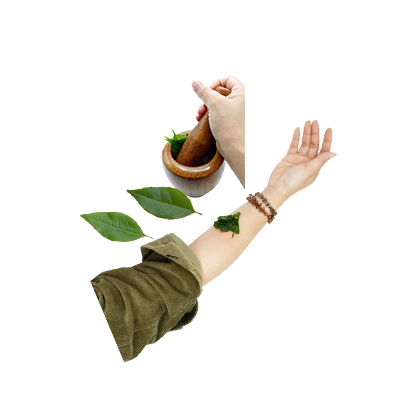
- Take gambir laut leaves as needed and wash until clean.
- Mash into a paste.
- Apply the leaf paste to the itchy skin.
Reference Sources
- Flora Fauna Web. 2021. Volkameri inermis L. https://www.nparks.gov.sg/florafaunaweb/flora/1/8/1823. 23-09-2021.
- Royal Botanical Gardens. 2017. Plants of the World Online : Volkameria inermis L. http://www.plantsoftheworldonline.org/taxon/urn:lsid:ipni.org:names:866113-. 23-09-2021.
- Stuartxchange. Philipphine Medicinal Plants:Mañgoñgot. http://www.stuartxchange.org/Mangongot. 23-09-2021.
- Asian Plan. Clerodendrum inerme (L.) Gaertn. Fruct. Sem. Pl. 1 (1788). https://asianplant.net/Lamiaceae/Clerodendrum_inerme.htm. 23-09-2021.