Wrightia antidysenterica (L.) R.Br.
Summary
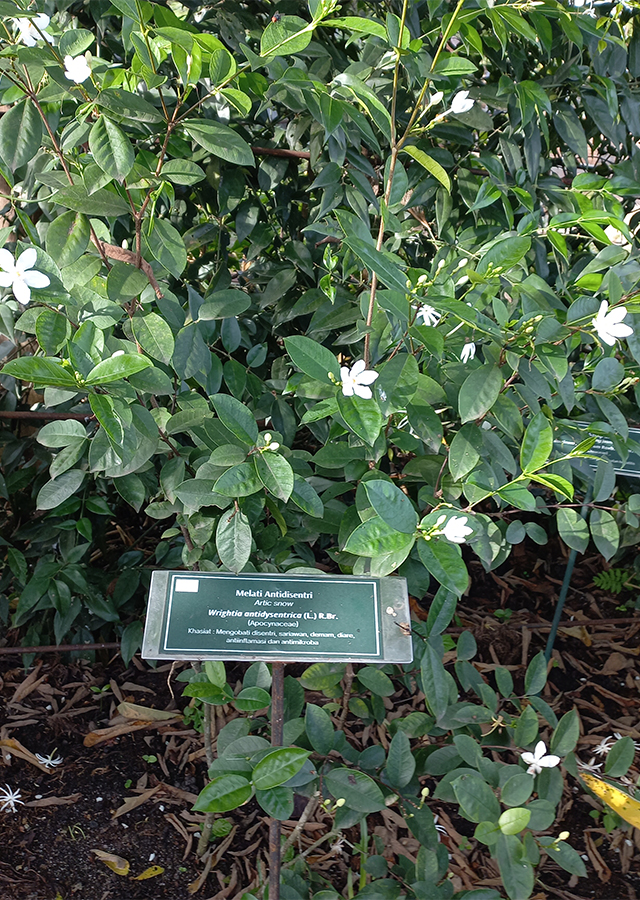
Melati antidisentri (Wrightia antidysenterica) is a shrub up to 1.5 meters tall from the Apocynaceae family that originates from Sri Lanka, popular as an ornamental plant as well as a valuable medicine in India. Its bark juice is used to treat canker sores, while its leaves are used to address skin disorders such as psoriasis. Melati antidisentri is also believed to be effective in treating gut motility disorders.
Agroecology
Melati antidisentri grows at elevations of 10-1,800 m asl at temperatures of 12-34 °C. This plant prefers fertile, well-drained soil with an average annual rainfall of 1,200-2,500 mm, in full sun or partial shade. Maintenance requires pruning.
Morphology
- Roots taproot.
- Stem solid round, woody, branching near the ground.
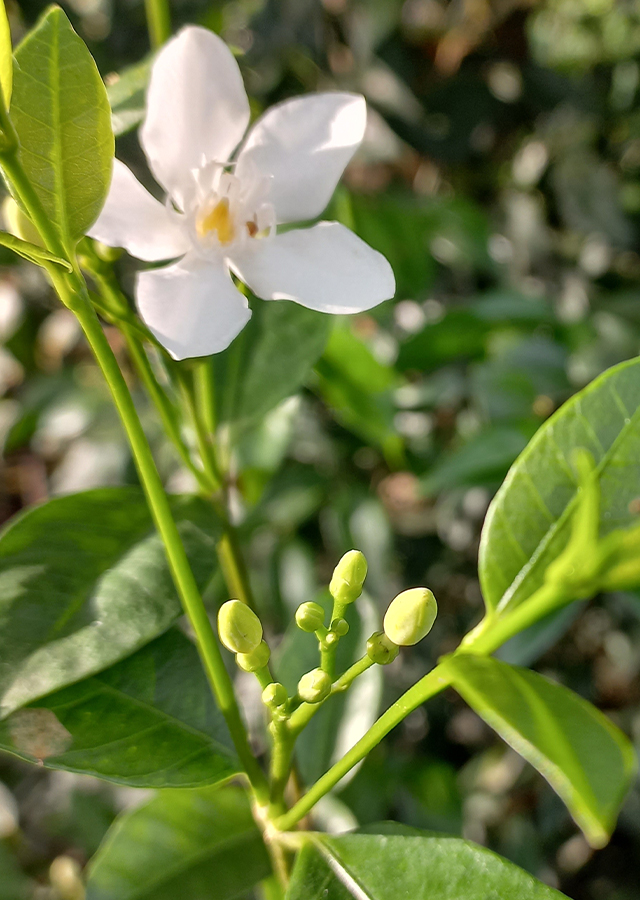
- Leaves green, ovate to elliptical, oppositely arranged, about 2.5-6 cm long and 1.5-2.5 cm wide, pinnate venation, smooth margin.
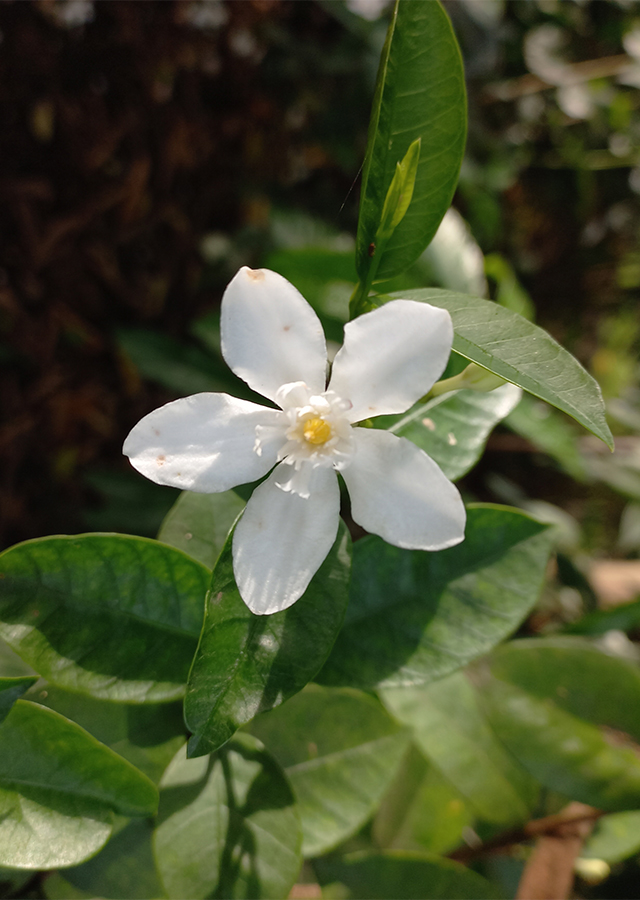
- Flowers emerge from the stem tip, white and fragrant, 5 petals with a yellow center, about 2.5 cm wide, corolla tube very slender and about 2-2.5 cm long.
- Fruit a pod-like follicle.
Cultivation
Propagation by seed, stem cuttings, and layering.
Chemical Content
2-aminobenzoyl O-β-D-apiofuranosyl-(1→6)-β-D-glucopyranoside, two new megastigmane glycosides (wrightiaionosides A and B), four benzoxazinoid glycosides, one indole diglycoside, three simple aromatic glycosides, three megastigmane glycosides, five flavonoid glycosides, and one lignan.
Benefits
Has anti-inflammatory and antimicrobial activity, used in treating dysentery, canker sores, fever, diarrhea, worms, skin disorders, psoriasis, nonspecific dermatitis, astringent, and antipyretic.
Local Names
Melati tempel.
Traditional Recipes
The following recipes reflect traditional knowledge passed down through generations, not a substitute for professional medical diagnosis or advice. Consult a healthcare provider before use.
1. Dysentery
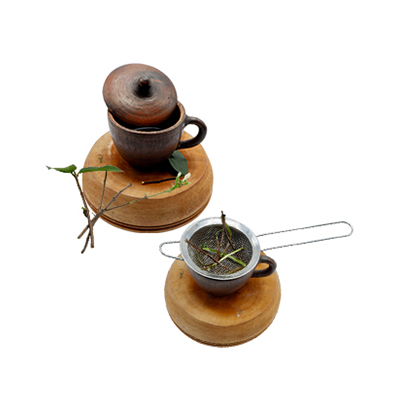
- Take melati antidisentri bark and wash until clean.
- Boil the bark with water until boiling.
- Strain the decoction.
- Drink while warm.
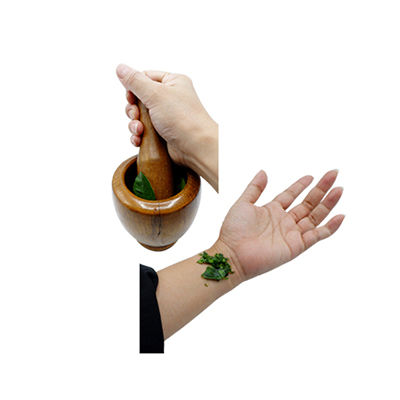
2. Addressing skin disorders
- Take melati antidisentri leaves as needed and wash until clean.
- Mash the leaves into a paste.
- Apply the leaf paste to the affected skin.
Reference Sources
- Planter and Forester. 2020. Wrightia antidysenterica, Snow Flake, Tanaman mirip Bunga Melati yang sangat Indah. https://www.planterandforester.com/2020/12/wrightia-antidysenterica-snow-flake.html. 18-09-2021.
- Useful Tropical Plants Database. 2021. Wrightia antidysenterica. http://tropical.theferns.info/viewtropical.php?id=Wrightia+antidysenterica. 18-09-2021.
- Flora Fauna Web. 2021. Wrightia antidysenterica. https://www.nparks.gov.sg/florafaunaweb/flora/2/5/2554. 18-09-2021.
- C. Srinroc, Sahakitpichan. P, Techasakul. S, Chimnoi. N, Ruchirawat. S, Kanchanapoom. T. 2019. 2-Aminobenzoyl and megastigmane glycosides from Wrightia antidysenterica. Jurnal Phytochemistry Letters 2019 Vol.29 pp.61-64. Chulabhorn Research Institute, Kamphaeng Phet 6, Talat Bang Khen, Lak Si, Bangkok 10210, Thailand. https://www.cabdirect.org/cabdirect/abstract/20203424548. 18-09-2021.