Xiphidium caeruleum Aubl.
Summary
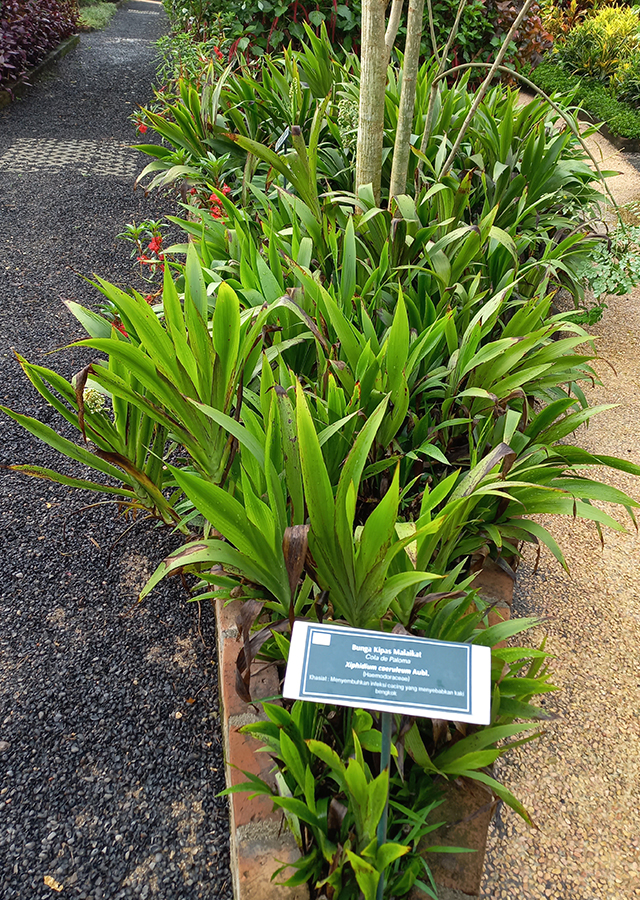
Bunga kipas malaikat (Xiphidium caeruleum) is a herb 50-100 cm tall of the Haemodoraceae family, native to Mexico, North America. In Guyana, this plant is used to heal worm infections causing bowed legs, while in Suriname it is used to treat torn foot soles. Its beautiful flowers make bunga kipas malaikat popular as an ornamental in neotropical countries.
Agroecology
This plant is found growing at elevations of 0-2,000 m above sea level. Easily adapts to a very wide range of conditions, whether in shaded, partially shaded or open areas. Prefers moist soil and is not tolerant of waterlogged conditions.
Morphology
- Rhizome cylindrical, creeping in the soil, interior white to reddish-brown, 4-20 cm long, 1 cm in diameter.
- Root fibrous.
- Stem semi-upright.
- Leaves narrow linear arranged like a folded fan forming a fountain-like structure. Leaf surface glossy and hairless with a wavy texture, parallel veins, green in color, flat leaf edges, tapering leaf tip.
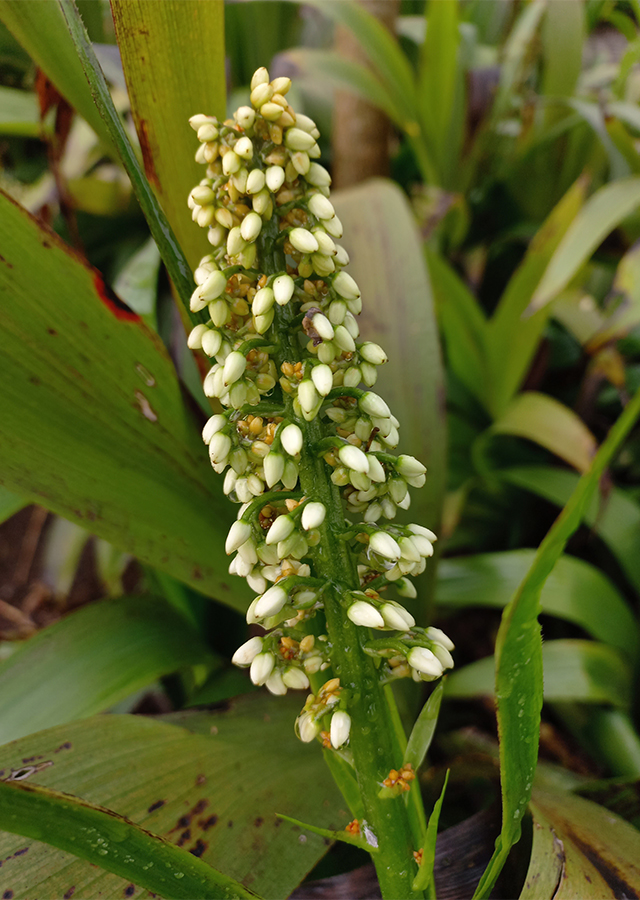
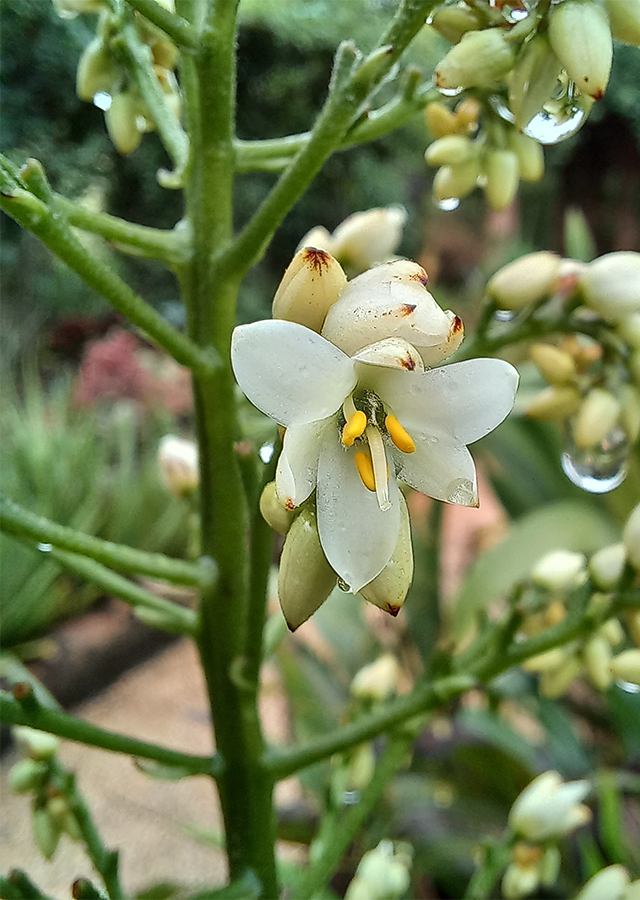
- Flowers in a cluster, emerging from the stem base, small, ovate when still in bud, white in color, when blooming tube-shaped hanging downward and slightly open at the tip.
- Fruit a 3-locular capsule, round, small, green when young ripening to red-orange and finally becoming black, 5-10 mm in diameter.
- Seeds small round, red in color, 0.5-1 mm in diameter.
Cultivation
Propagation can be done with seed, clump/offset division or rhizome cutting.
Chemical Content
Phenylphenalenone, flavonoid, and phenolic compounds.
Benefits
Heals worm infections that cause bowed legs, remedy for torn foot soles (ebesere).
Local Names
Poderosa.
Traditional Recipes
The following recipes reflect traditional knowledge passed down through generations, not a substitute for professional medical diagnosis or advice. Consult a healthcare provider before use.
1. Worm infections causing bowed legs
- Prepare the whole angel fan flower plant then wash thoroughly.
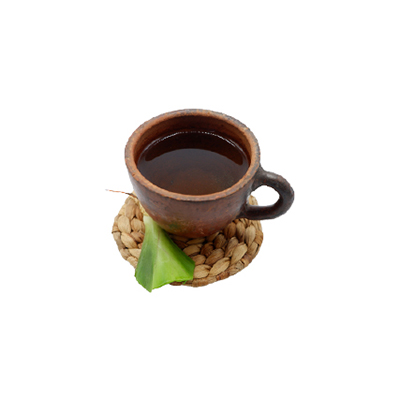
- Boil the material until boiling.
- Let it become warm/cool.
- Strain then drink.
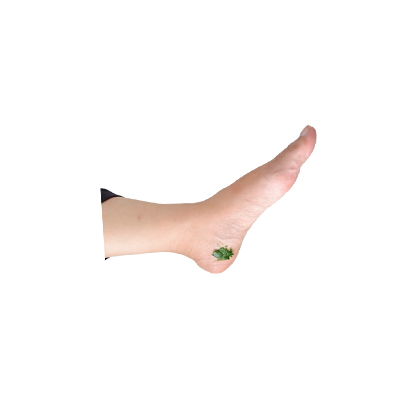
2. Treating torn foot soles
- Take the whole angel fan flower plant then wash thoroughly.
- Grind the material into a paste.
- Apply the paste to the torn foot sole.
Reference Sources
- Flora Fauna Web. 2020. Xiphidium caeruleum Aubl. https://www.nparks.gov.sg/florafaunaweb/flora/2/5/2563. 08-09-2021.
- Royal Botanic Gardens. 2017. Plants of the World Online: Xiphidium caeruleum Aubl. http://www.plantsoftheworldonline.org/taxon/urn:lsid:ipni.org:names:304977-2. 08-09-2021.
- Puccio Puetro. Monaco Nature Encyclopedia: Xiphidium caeruleum. https://www.monaconatureencyclopedia.com/xiphidium-caeruleum-2/?lang=en. 08-09-2021.
- Flora of the Guianas. Xiphidium caeruleum. http://portal.cybertaxonomy.org/flora-guianas/node/2270?destination=node/2270#?c=&m=&s=&cv=&manifest=http%3A%2F%2Fapi.cybertaxonomy.org%2Fflora-guianas%2Fiiif%2Ftaxon%2Fde25a574-8447-4092-8b4c-00f47d061b6a%2Fmanifest%3Ftype%3DImageFile%26relationships%3D%26relationshipsInvers%3D%26includeTaxonDescriptions%3D1%26includeOccurrences%3D%26includeTaxonNameDescriptions%3D%26includeTaxonomicChildren%3D&xywh=-259%2C0%2C1540%2C1470. 08-09-2021.
- J. Fang, dkk. 2012. Co-occurrence of phenylphenalenones and flavonoids in Xiphidium caeruleum Aubl. https://eurekamag.com/research/052/150/052150017.php. 08-09-2021.