Youngia japonica (L.) DC.
Summary
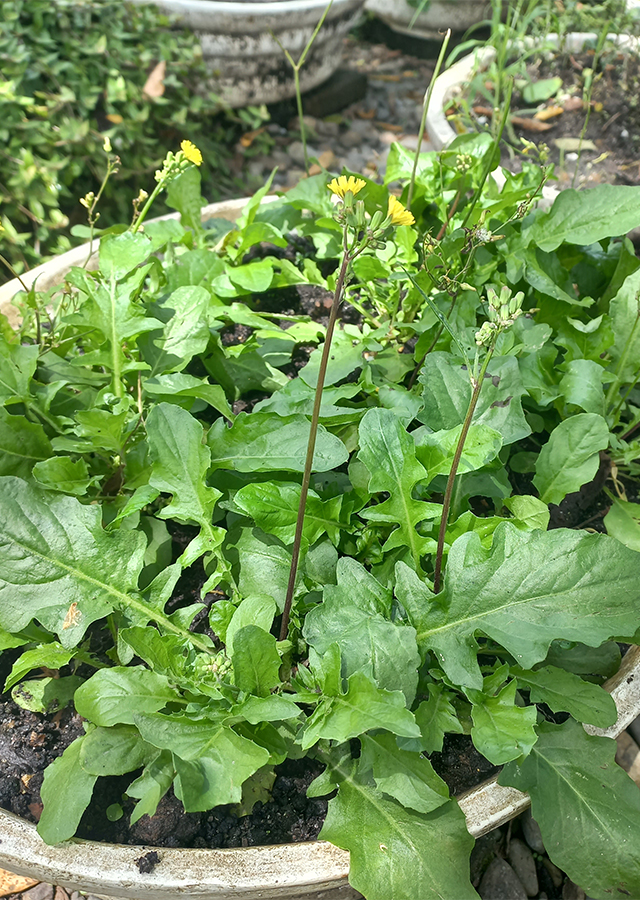
Jukut kamanilan (Youngia japonica) is an erect annual or biennial herb up to 150 cm tall from the Asteraceae family, a plant native to China, Japan, and Korea now spread as far as Mexico and Europe. Its young leaves and young plants are consumed as a vegetable in Asia, while in traditional Chinese medicine it is used to reduce fever and detoxify. Jukut kamanilan is also believed to help treat boils and allergies.
Agroecology
This plant is commonly found growing along roadsides, disturbed areas, mountain slopes, mountain valleys, forests, forest edges, grasslands in forests, riverbanks, footpaths, roadside areas, and humid areas, at elevations of 200-4,500 m asl. It prefers open areas but tolerates shade. It grows well in areas with an average annual rainfall of 800-2,000 mm.
Morphology
- Roots taproot.
- Stem cylindrical, 0.5-6 mm in diameter, grooved, monopodial branching, glabrous to nearly pubescent (short, fine hairs), producing milky white latex.
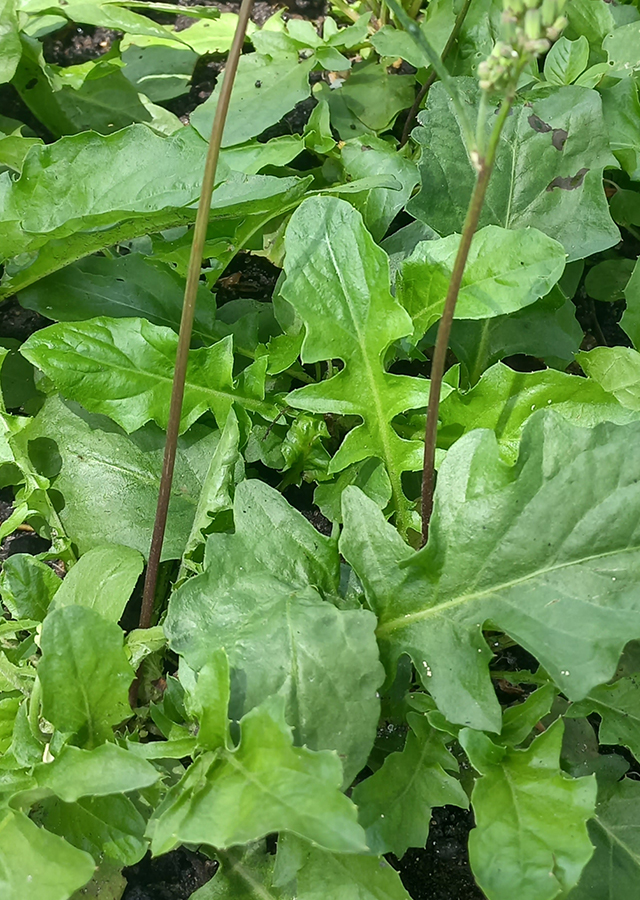
- Leaves single, arranged alternately, basal rosette, stipules present or absent, spatula-shaped, tapering base, rounded tip, finely serrated to finely lobed margins, pinnate venation, glabrous.
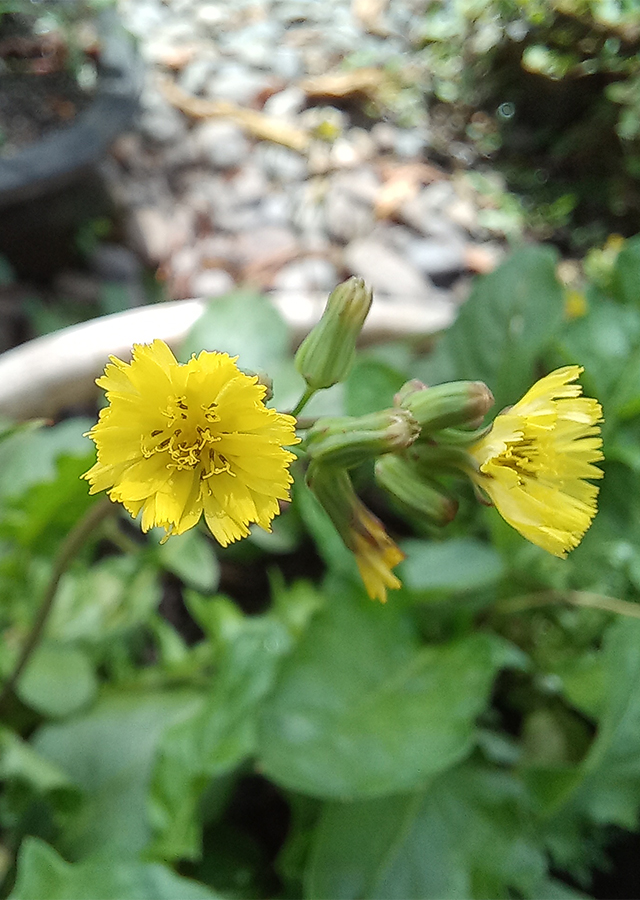
- Flowers bright yellow with dark brown to black serrated tips, ray florets consisting of 10-20 strands, with 5-8 sepals. Anthers dark green (purplish when dry), style and style branches yellow. Inflorescence a compound panicle of heads.
- Fruit elongated ovoid, surface with successive grooves, dark brown, 1.2-2 mm long, 1-chambered, pappus white.
Cultivation
- Propagation generatively (seeds).
- Seed dispersal is aided by wind.
Chemical Content
Guaiane-type sesquiterpenes, taraxasteryl acetate, n-docosanol, β-sitosterol, stigmasterol, retinol, β-daucosterol, docosanoic acid, apigenin compounds.
Benefits
Treats wounds, used as a blood-cleansing remedy, addresses digestive problems such as constipation, reduces fever, boils, snake bites, detoxification, atopy (allergies), angina, vaginal discharge, mastitis (inflammation of breast tissue), conjunctivitis, rheumatism, has antitussive properties. Has anticancer and antiviral activity.
Local Names
No information found. Further research needed.
Traditional Recipes
The following recipes reflect traditional knowledge passed down through generations, not a substitute for professional medical diagnosis or advice. Consult a healthcare provider before use.
1. Wounds
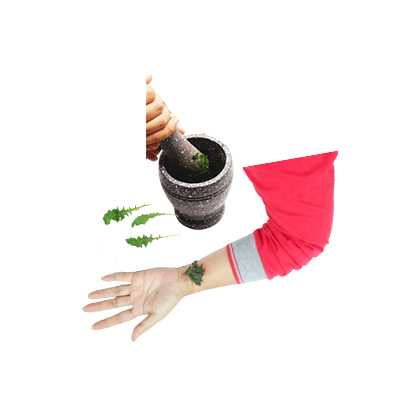
- Take fresh jukut kamanilan leaves as needed and wash until clean.
- Mash into a paste.
- Apply the leaf paste to the wound.
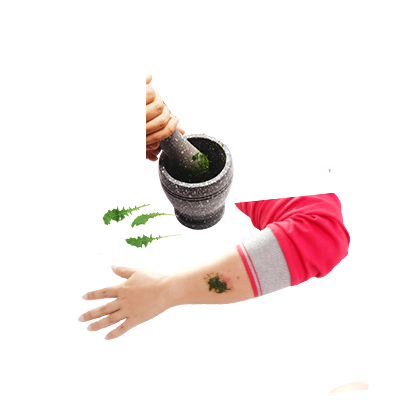
2. Boils
- Prepare fresh jukut kamanilan leaves as needed and wash until clean.
- Mash into a paste.
- Apply the leaf paste to the boil.
Reference Sources
- Royal Botanical Garden. 2017. Plants of the World Online: Youngia japonica (L.) DC. http://www.plantsoftheworldonline.org/taxon/urn:lsid:ipni.org:names:1124129-2. 13-09-2021.
- CAB International. 2021. Invasive Species Compendium: Youngia japonica (oriental false hawksbeard). https://www.cabi.org/isc/datasheet/117921#tosummaryOfInvasiveness. 13-09-2021.
- Useful Tropical Plants Database. 2021. Youngia japonica. http://temperate.theferns.info/plant/Youngia+japonica. 13-09-2021.
- Wakhidah AZ. 2019. KARAKTERISASI VARIASI MORFOLOGI Youngia japonica (L.) DC. (ASTERACEAE) DARI PULAU SUMATERA, INDONESIA. Jurnal Pro-Life 6(2): 112-121.
- Munira S et al. 2018. Pharmacological Activities of Youngia japonica Extracts. Annual Research & Review in Biology 25(5): 1-14. DOI: 10.9734/ARRB/2018/40629.