Zantedeschia aethiopica (L.) Spreng.
Summary
Zantedeschia aethiopica or calla lily is native to Lesotho, South Africa, and Swaziland, named in honor of Italian botanist Giovanni Zantedeschi, and is now widely naturalized across continents as both an ornamental and commercial cut flower. In South Africa, this plant is one of the valuable medicinal plants used to address up to 33 types of diseases, although its leaves and stems contain calcium oxalate crystals that irritate if eaten raw and must be cooked first. Calla lily is even recorded as one of the leading causes of plant poisoning cases in Johannesburg and New Zealand.
Agroecology
In South Africa, Z. aethiopica has been recorded growing in sandy or rocky areas, streams, along coastlines, mountain grasslands, at elevations from 20 m to 2,250 m asl. Its growth prefers moist, water-rich locations.
Morphology
- Roots contractile in form (arising from above the stem tuber and between the leaves). Roots white, fleshy, rhizome thick.
- Stem grows upright, round shaped, soft, not woody, about 30-60 cm long. The underground stem part is thick.
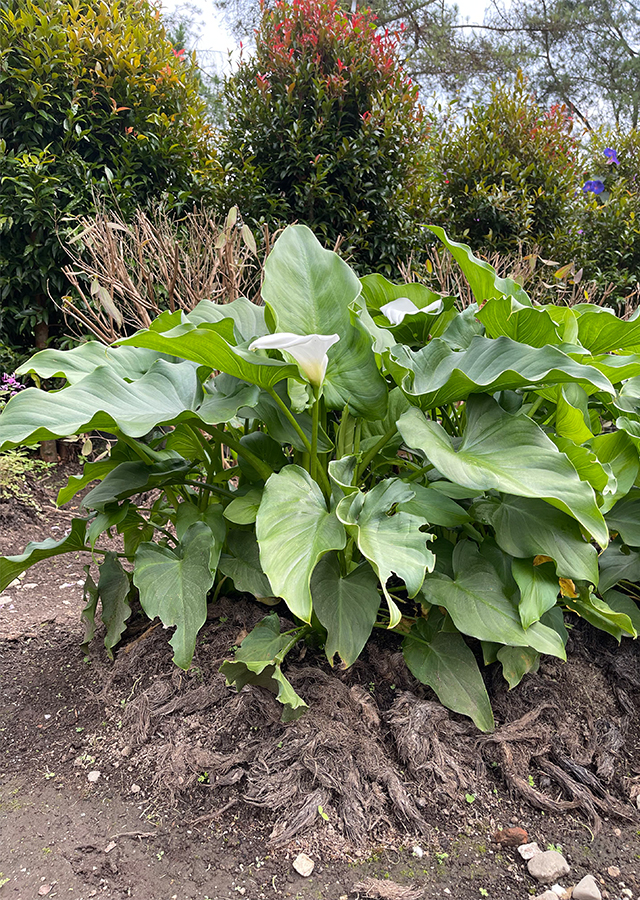
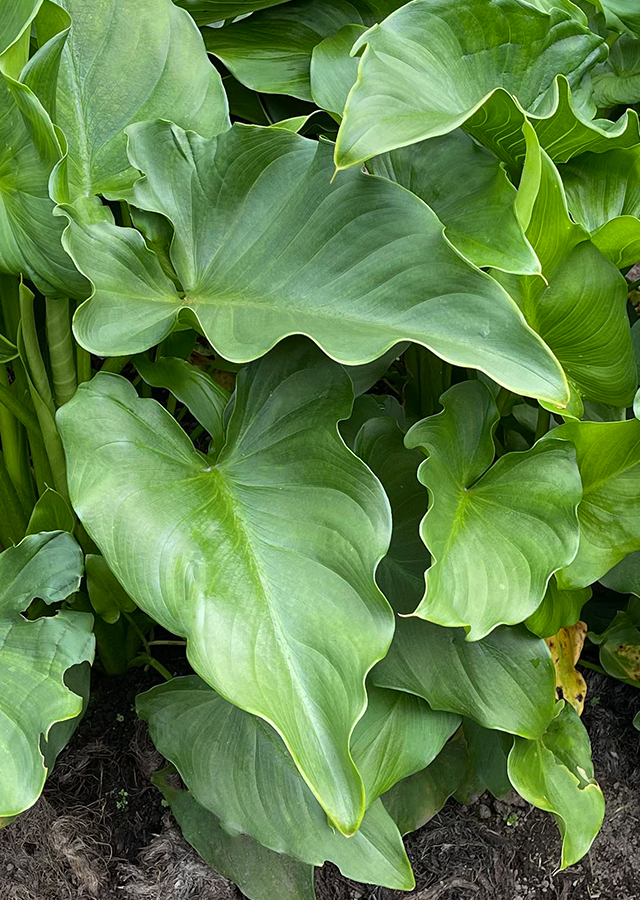
- Leaves dark green, glossy, fleshy, large, rough and hairless, ovate or ovate-cordate or arrowhead shaped, with a pointed tip. Veins parallel-pinnate, marked by a thick and pliable petiole.
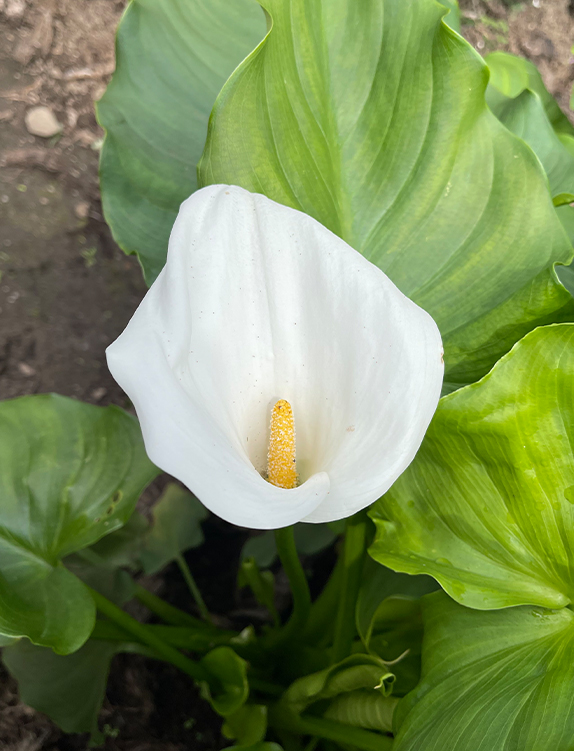
- Flowers monoecious, funnel-shaped narrowing toward the tip. The outer envelope, the spathe, is a wide leaf-like structure, white to creamy white, fleshy. Inside the spathe is the spadix (shorter than the spathe), bright yellow in color.
- Fruit small berry-like and numerous, round shaped, growing at the base of the spadix. The fruit tapers toward the base, green, turning orange when ripe.
- Seeds starchy, subglobose or ovate, numbering 1-12.
Cultivation
Plant propagation through seed and clump division.
Chemical Content
Anthraquinones, cardiac glycosides, flavonoids, saponins, steroids, sucrose, tannins, terpenoids, cytokinins, cycloartane triterpenes, galactolipids, galactosyldiacylglycerol, phytosterols.
Benefits
Treats boils, burns, gout, inflammation, insect bites, rheumatism, sores and wounds, addresses respiratory disorders (including asthma and bronchitis), colds, flu, headache, heartburn, infections, infertility, sore throat, reduces fever. Has antibacterial, antifungal, antithrombotic and anticoagulant, antioxidant, and antihistamine activity.
Local Names
Bunga Calla.
Traditional Recipes
The following recipes reflect traditional knowledge passed down through generations, not a substitute for professional medical diagnosis or advice. Consult a healthcare provider before use.
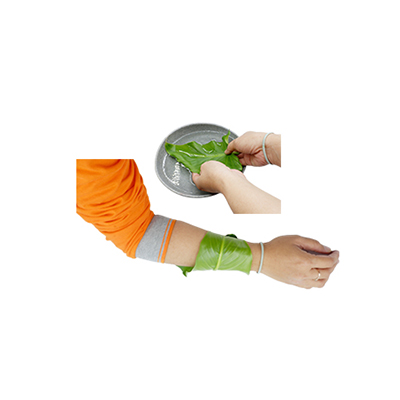
1. Treats boils
- Take a leaf of calla lily and wash until clean.
- Wrap the leaf on the affected area.

2. Treats asthma
- Take an adequate amount of calla lily rhizome and wash until clean.
- Boil until it boils.
- Let it cool to warm/cold.
- Strain and add an adequate amount of honey then drink.
Reference Sources
- Royal Botanic Gardens, Kew. Plants of the World Online: Zantedeschia aethiopica (L.) Spreng.. https://powo.science.kew.org/taxon/urn:lsid:ipni.org:names:89403-1. 08-12-2022.
- Westford Bridge. Zantedeschia aethiopica. www.westfordbridge.co.za/zantedeschia_aethiopica.htm. 08-12-2022.
- Maroyi A. 2019. ZANTEDESCHIA AETHIOPICA (L.) SPRENG.: A REVIEW OF ITS MEDICINAL USES, PHYTOCHEMISTRY, AND BIOLOGICAL ACTIVITIES. Asian Jounal of Pharmaceutical and Clinical Research. 12(8).