Zingiber officinale Roscoe
Summary
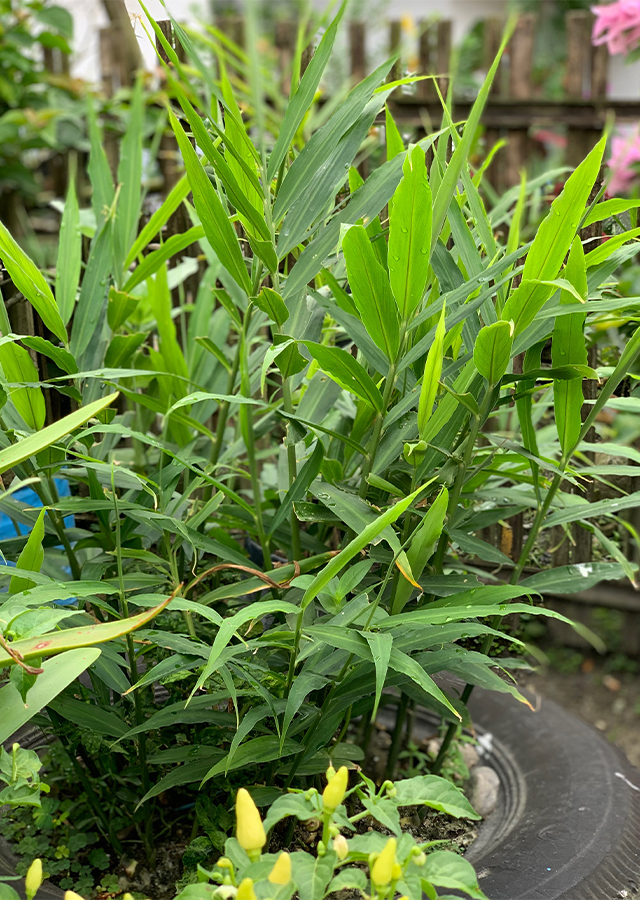
Ginger (Zingiber officinale) is an annual upright herb 30-60 cm tall of the Zingiberaceae family, originating from India and South China, with three main varieties: elephant ginger, red ginger, and small ginger (bahing). Its rhizome is one of the world's most iconic spices and cooking seasonings, as well as a perfume ingredient. Ginger is traditionally believed to relieve sore throats, nausea, and boost immunity.
Agroecology
Grows well in tropical to subtropical regions, at elevations of 200-1,000 m above sea level, rainfall between 2,500-4,000 mm/year, pH 6-7 and receives sunlight (70-100%) throughout the day with an optimum temperature of 20-35 °C. Prefers sandy clay soil and fertile, loose lateritic soil rich in organic matter.
Morphology
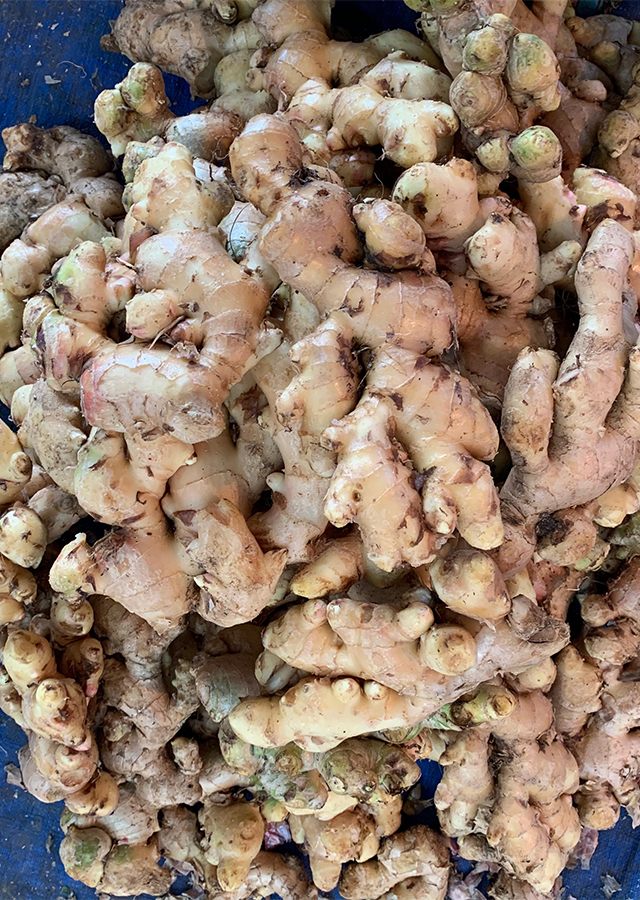
- Roots in the form of a rhizome, a) branching, thick, wide (not cylindrical), pale yellow; b) red, scaly, slender, very spicy taste and very aromatic; c) yellowish-brown, small size, spicy taste and aromatic.
- Stem pseudostem; a) grooved, green; b) dark green, round, coated with fine hairs; c) round, small diameter, reddish-green.
- Leaves single, green, lance-shaped, alternating.
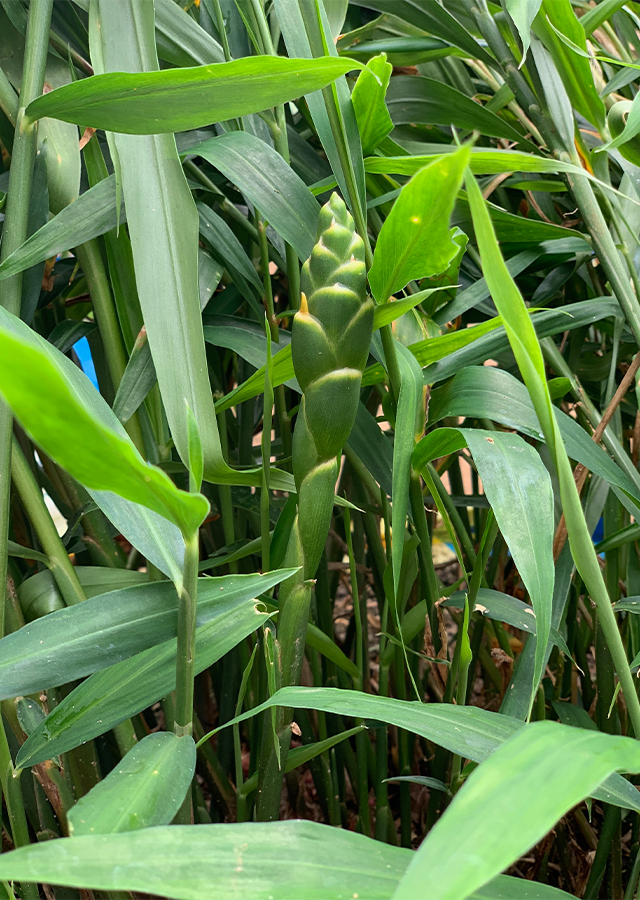
- Flowers compound, cone-shaped, a) and b) reddish-green, c) purple.
- Fruit a capsule, elongated round, brown.
- Seeds round, black in color.
Cultivation
Propagated by rhizome from a quality parent plant (genetic, physiological, and physical quality).
Chemical Content
Geraniol, sesquiterpene, cadinol, limonene, zingerone compounds, essential oils (including a) zingiberene, gingerol, camphene, limonene, shogaol, paradols, b) α-zingiberene, arcurcumene β-bisabolene, β-sesquiphellandrene, monoterpenoid), farnesol, aspartic acid, chlorogenic acid.
Benefits
Treats sore throat, cough, colic, diarrhea, influenza, rheumatism, aches, back and stomach pain, boosts appetite, worm infections, immunity, Alzheimer's therapy, antioxidant, antibacterial, anticancer, antidiabetic, antihyperlipidemic, antihypertensive.
Simplisia
- Wash fresh rhizome thoroughly with running water.
- Slice to a thickness of 5-7 mm.
- There are two drying methods: using a heating device (oven) at 50-60 °C, or sunlight. During drying, turn over every 4 hours for even drying, do this for 3-5 days or until dry.
- Pack the dried material in a clean, airtight bag. Store in a dry place at room temperature.
Local Names
Bahing (Karo), Lahia (Nias), Haila (Aceh), Sipodeh (Minangkabau), Jahi (Lampung), Jae (Java), Jhai (Madura), Melito (Gorontalo).
Traditional Recipes
The following recipes reflect traditional knowledge passed down through generations, not a substitute for professional medical diagnosis or advice. Consult a healthcare provider before use.
1. Aches and Back Pain
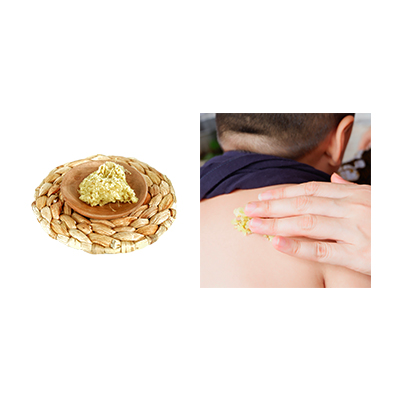
- Mash 50 g ginger, add 1 tbsp warm water.
- Apply to the aching/painful body part while massaging.
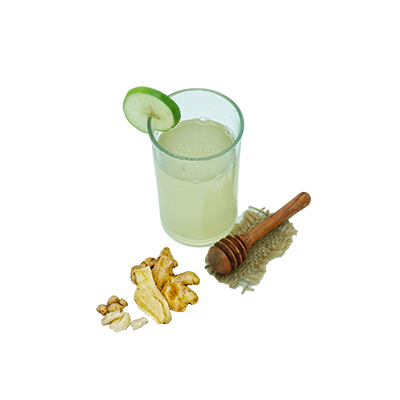
2. Relieving Cough
- Prepare 50 g ginger, 2 cm kencur, 200 ml water, 1 tbsp honey, 1 tbsp lime juice.
- Crush the ginger and kencur then boil until the water is reduced to 100 ml. Cool until warm, add honey and lime juice.
- Drink 3 times a day after meals, 1 tablespoon each time.
Reference Sources
- CABI. (No date). Invasive Species Compendium. Zingiber officinale (ginger). https://www.cabi.org/isc/datasheet/57537. 11-12-2020.
- Globinmed. (No date). Zingiber officinale var. rubrum Theilade (Rhizome). https://www.globinmed.com/index.php?option=com_content&view=article&id=104897:zingiber-officinale-roscoe-var-rubrum&catid=209&Itemid=143. 17-08-2020.
- Rini Daud Supu, Ajeng Diantini, Jutti Levita. (2018). RED GINGER (Zingiber officinale var. rubrum): ITS CHEMICAL CONSTITUENTS, PHARMACOLOGICAL ACTIVITIES AND SAFETY. https://journal.unpak.ac.id/index.php/fitofarmaka/article/view/1168.
- Stuartxchange. (2019). Philippine Medicinal Plants. Zingiber officinale. http://www.stuartxchange.com/Luya.html. 11-12-2020.
- The World wide Vegetables. (No date). Zingiber officinale Ginger. http://theworldwidevegetables.weebly.com/zingiber-officinale-ginger.html. 10-4-2015.