Zingiber purpureum Roscoe
Summary
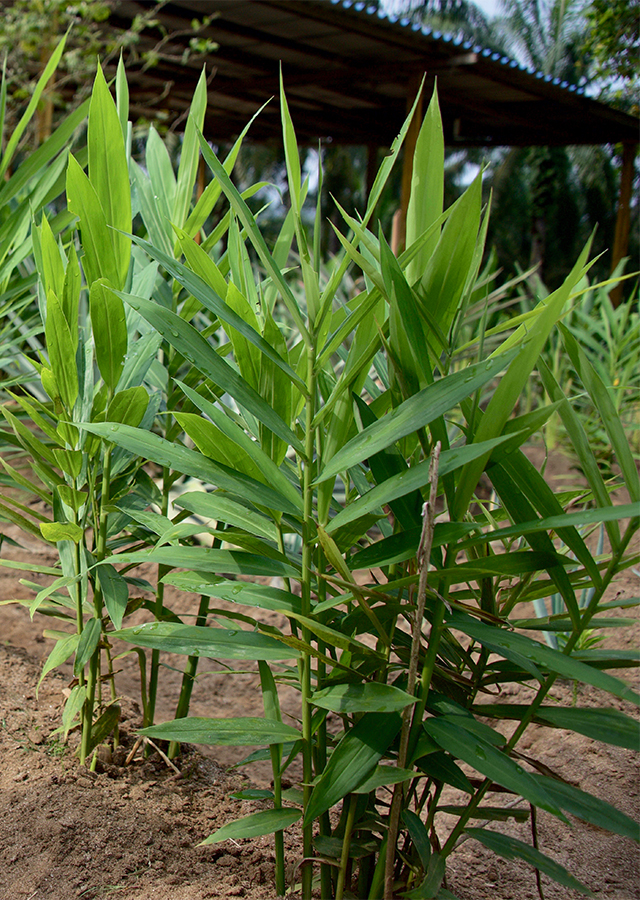
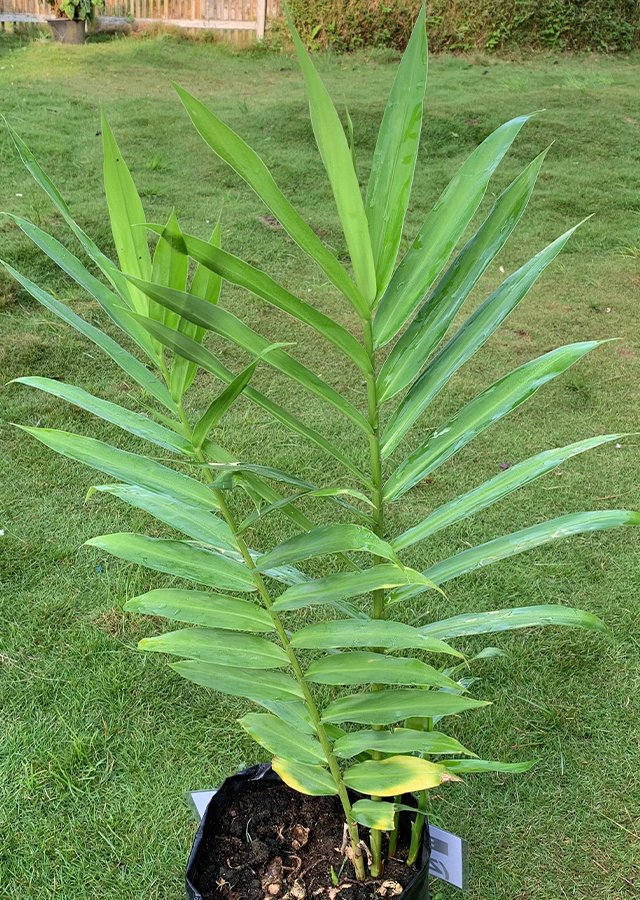
Bangle (Zingiber purpureum) is an upright herb 1.2-1.8 meters tall of the Zingiberaceae family, originating from South India and Southeast Asia, including Thailand, Vietnam, and Indonesia. Javanese communities have long used its rhizome to address skin redness, while traditionally it is also believed to keep newborn babies safe from spirits. Bangle is also believed to be anti-inflammatory and help relieve fever and migraine.
Agroecology
Grows in lowlands up to elevations of 1,300 m above sea level. Prefers open areas with adequate sunlight, well-drained soil, high organic matter.
Morphology
- Roots an irregularly round rhizome, creeping and fleshy yellow, skin yellowish-light brown.
- Stem pseudostem composed of a cluster of leaf sheaths that are bristly-haired at the edge tips, growing upright.
- Leaves single, alternating position, leaf blade oblong, thin, tapering tip, blunt base, smooth edges, finely hairy, pinnate venation, length 23-35 cm, width 20-40 cm, green, leaf underside hairy.
- Flowers compound, spike-shaped, emerging at the stem tip, egg-shaped. Calyx arranged like thick scales, tube-shaped, bright red.
- Fruit round shaped, 17 mm in size, has a thin fruit skin, many seeds, purple in color.
Cultivation
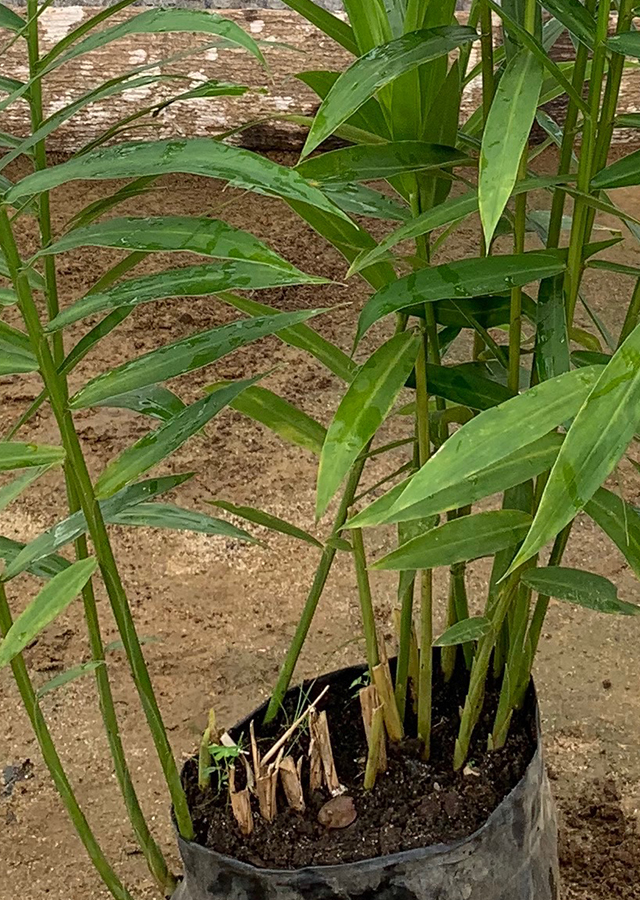
- Vegetative propagation (rhizome).
- Mature rhizomes weighing 25-40 g that have sprouted in a pot/polybag (1-1.5 months) can be transplanted to the field.
Chemical Content
Cineole, pinene, tannins, saponins, flavonoids, steroids, essential oils (sabinene, γ-terpinene, terpinen-4-ol, butadiene).
Benefits
Anti-inflammatory, fever reducer, diarrhea remedy, worm infections, migraine, vertigo, prevents malaria complications, speeds wound healing, rheumatism, swelling, colds in infants, warms the body.
Simplisia
- Wash bangle rhizome thoroughly. Drain and weigh then slice crosswise.
- Arrange on a tray then dry in the sun.
- After ± 6 days of drying, store bangle in a tightly closed container.
Local Names
Mungle (Aceh), Bengle (Sumatra), Banglai (Palembang), Pangle, Panglai (Sunda), Kunyit bolai (Bali), Bangalai (Kalimantan), Pandiyang (Madura), Bengle (Java).
Traditional Recipes
The following recipes reflect traditional knowledge passed down through generations, not a substitute for professional medical diagnosis or advice. Consult a healthcare provider before use.
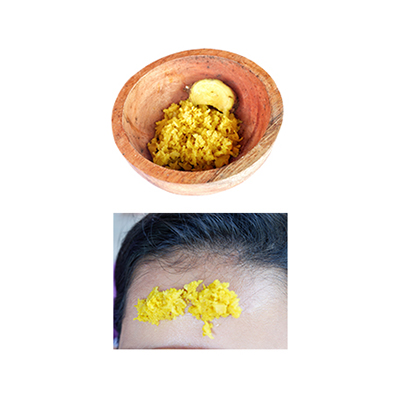
1. Migraine
- Take 50 g bangle rhizome.
- Clean the bangle then grate.
- Rub gently on the forehead or temples or back of the neck.
Reference Sources
- CABI. (2014). Invasive Species Compendium. Zingiber cassumunar. https://www.cabi.org/isc/datasheet/57536. 16-01-2021
- Pharmacognosy. (2015). Ethnobotany, Phytochemistry and Pharmacology of Zingiber cassumunar Roxb. (Zingiberaceae). Cb Singh, Manglembi N, Swapana N, Sb Chanu. Ethnobotany, Phytochemistry and Pharmacology of Zingiber cassumunar Roxb. (Zingiberaceae). J Pharmacogn Phytochem 2015;4(1):01-06. https://www.phytojournal.com/archives/?year=2015&vol=4&issue=1&ArticleId=535 16-01-2021
- Researchgate. (2009). Zingiber cassumunar. https://www.researchgate.net/publication/237046149_Chemical_Composition_and_Physical_Properties_of_Oil_from_Plai_Zingiber_cassumunar_Roxb_Obtained_by_Hydro_Distillation_and_Hexane_Extraction. 16-01-2021.